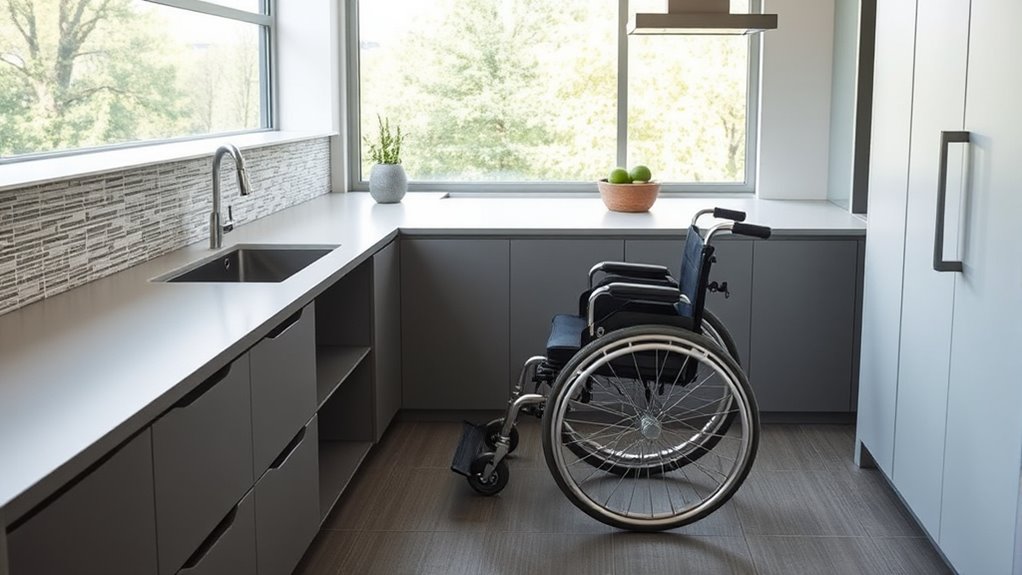

Lowering countertops for wheelchair accessibility can make your kitchen safer, more ergonomic, and easier to use. By adjusting the height to around 30 inches and choosing durable, easy-to-clean materials, you improve your independence and comfort. You might need to reconfigure appliances and storage to support the new layout. Incorporating safety features like rounded edges and non-slip surfaces guarantees a secure workspace. To discover tips on creating a truly accessible kitchen, keep exploring the details.
Key Takeaways
- Adjust countertop height to approximately 30 inches to accommodate wheelchair users and improve accessibility.
- Use durable, easy-to-clean materials like granite or quartz that resist stains and scratches.
- Reconfigure appliance and sink placement to ensure they are within easy reach from a lowered surface.
- Incorporate safety features such as rounded edges and non-slip surfaces to enhance user safety.
- Optimize kitchen layout with accessible storage solutions like pull-out shelves and open cabinetry for better reach.
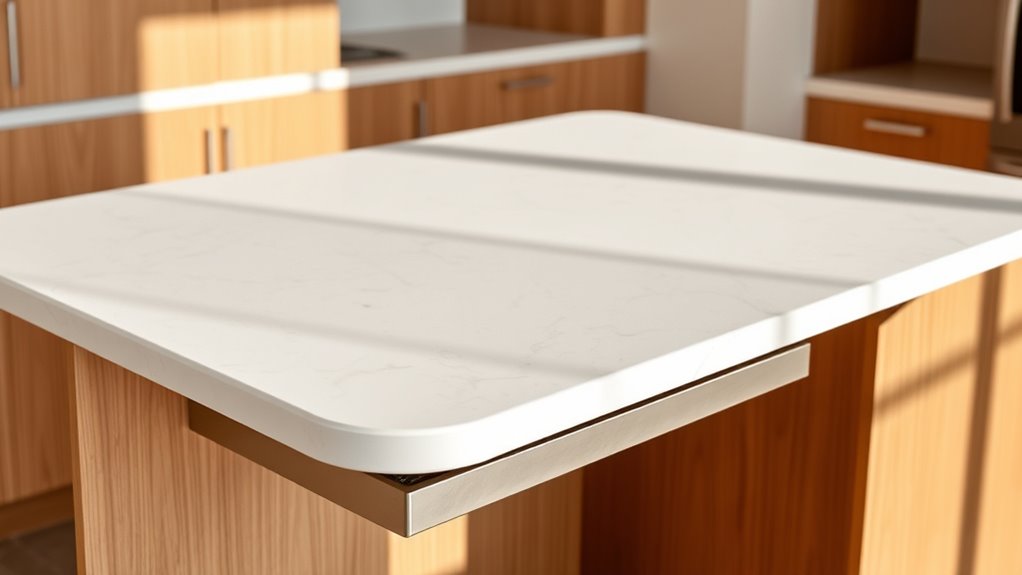
Making your kitchen more accessible for wheelchair users often involves lowering countertops to a comfortable height. When you adjust the height, you’re improving kitchen ergonomics, which means designing the space to fit the needs and movements of someone in a wheelchair. Properly lowered countertops eliminate the need to stretch or lean excessively, making cooking and prep work safer and more comfortable. This small change can dramatically enhance independence and reduce fatigue, allowing you or your loved ones to enjoy the kitchen without unnecessary strain. Additionally, considering the water chemistry of your kitchen fixtures and surfaces ensures durability and safety over time. Choosing the right countertop materials is essential when lowering surfaces. You want materials that are durable, easy to clean, and capable of supporting daily use. Popular options include granite, quartz, and solid surface materials, all of which resist scratches and stains while maintaining a sleek appearance. These materials also tend to be sturdy enough to withstand the weight of kitchen appliances and utensils, which is critical if you’re frequently preparing meals. When selecting your countertop material, consider how it will feel under your hands and whether it offers enough grip, especially if you have limited hand strength. Lowering countertops also presents an opportunity to rethink your overall kitchen layout. With the new heights, you may need to adjust the placement of appliances, sinks, and storage to maintain functionality. For example, installing pull-out shelves or open cabinetry at accessible heights can make reaching for utensils and ingredients easier. Keep in mind that the height should be tailored to the individual’s wheelchair specifications, typically around 30 inches from the floor, but it can vary based on personal needs. In addition to the physical modifications, pay attention to other ergonomic features like rounded edges and non-slip surfaces. Rounded edges on your lowered countertops reduce the risk of injury if you bump into them, while non-slip finishes provide added safety during food prep or cleanup. These details contribute to creating a kitchen environment that is not only accessible but also safe and comfortable. Ultimately, lowering countertops is a practical step toward making your kitchen more inclusive. By selecting the right materials and paying attention to ergonomic design principles, you’ll transform your space into one that promotes independence and ease of use. It’s about creating a kitchen that adapts to your needs, giving you confidence and freedom in your daily routines.
Frequently Asked Questions
What Is the Standard Height for Accessible Countertops?
You should aim for accessible countertops to be around 30 inches high, making them easier to reach from a wheelchair. When choosing countertop materials, consider durability and ease of cleaning. Also, think about design aesthetics—select styles and finishes that match your overall space. Lowering your countertops to this height guarantees both functionality and visual harmony, creating an inclusive environment without sacrificing style.
How Do I Ensure Safety When Lowering Countertops?
To guarantee safety when lowering countertops, start by choosing durable materials like granite or laminate that withstand adjustments. Securely support the structure during installation to prevent accidents, and consider potential installation challenges such as uneven floors or wall alignment. Use proper tools and follow manufacturer instructions carefully. Always double-check stability after lowering, and if unsure, consult a professional to avoid hazards and ensure the new height remains safe and functional.
Are There Cost-Effective Options for Modifying Existing Countertops?
They say, “A penny saved is a penny earned,” and that’s true for affordable renovations. You can explore DIY modifications like adding adjustable or removable countertops, which are budget-friendly options. Reusing existing materials or repurposing furniture can also help lower costs. With some effort, you’ll make your space more accessible without breaking the bank, turning a simple project into a smart, cost-effective upgrade.
How Long Does It Take to Retrofit a Countertop for Accessibility?
You can expect the installation timeline for retrofitting a countertop for accessibility to take about one to three days, depending on the complexity. Material considerations, like choosing durable laminate or sturdy wood, influence the process. If you opt for simple modifications, it’s quicker, but more extensive adjustments might need extra time. Planning ahead with your contractor helps guarantee a smooth, timely retrofit that meets your accessibility needs efficiently.
Can Custom Countertops Be Designed for Specific Wheelchair Types?
Yes, you can have custom countertops designed for specific wheelchair types. When you opt for custom design, professionals consider your wheelchair’s dimensions and turning radius to create a perfect fit. This guarantees easy access and comfort. You’ll want to discuss your specific wheelchair type with the designer so they can tailor the countertop height, depth, and clearance accordingly. Custom countertops help enhance independence and functionality in your space.
Conclusion
Think of lowering your countertops like opening a welcoming door for everyone. Just as a door invites all to enter freely, a lowered countertop invites independence and comfort. When you make this simple change, you’re creating a space where everyone can move easily, like a well-tuned orchestra. Your effort transforms your kitchen into a harmonious place where accessibility and inclusion play the sweetest melody, making life better for everyone who enters.