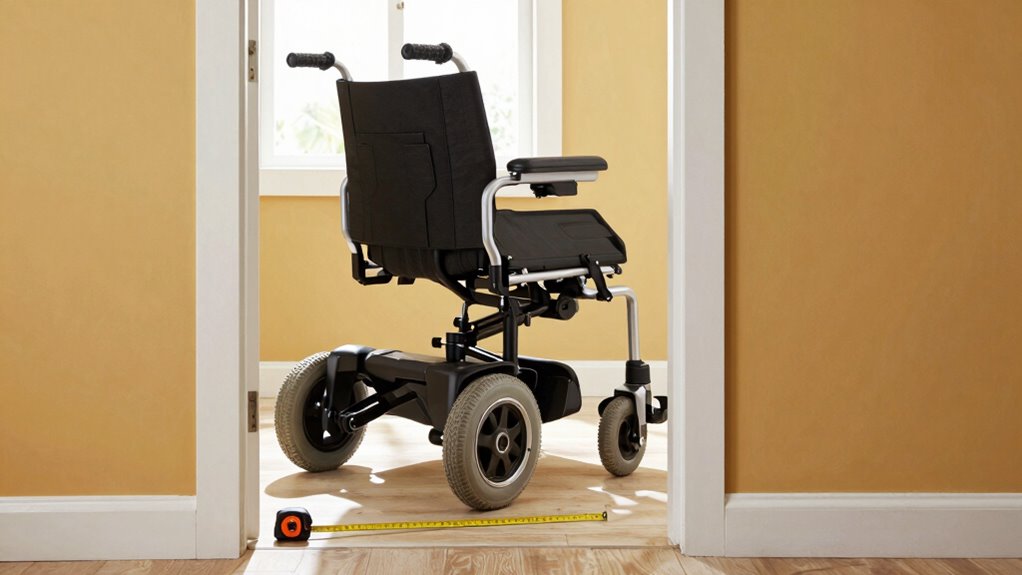
Don’t buy a power wheelchair until you measure your main entrance and five key doorways. Make sure your main entrance is at least 32 inches wide and check for any obstructions. Interior doorways should follow suit for smooth navigation. Hallways need to be 36 inches wide for easy turns, while bathrooms must have enough space for maneuverability. Finally, outdoor pathways should be clear and wide enough. Keep going to discover more essential accessibility tips!
Key Takeaways
- Measure main entrance door width; it should be at least 32 inches for power wheelchair access.
- Ensure interior doorways are also a minimum of 32 inches wide for smooth passage.
- Check hallway width; it must be at least 36 inches for easy maneuverability.
- Assess bathroom doorway width and floor space for comfortable wheelchair movement and turning.
- Measure outdoor pathways, ensuring at least 36 inches wide with a stable, paved surface.
How to Measure Your Main Entrance for Wheelchair Access?
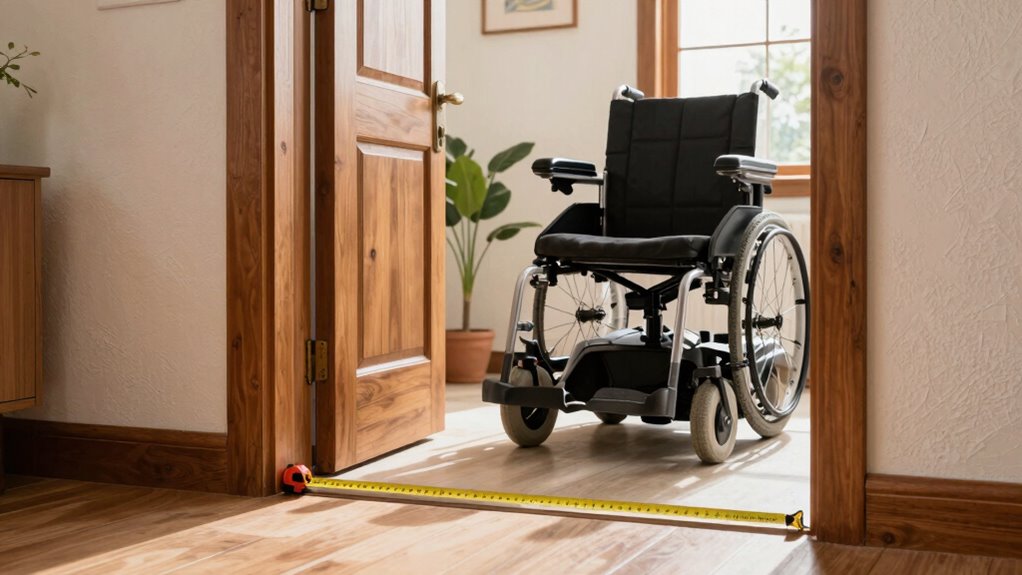
How do you guarantee your main entrance is wheelchair accessible? Start by measuring the door width; it should be at least 32 inches to accommodate most power wheelchairs. Next, check the threshold height—ideally, it shouldn’t exceed half an inch. If your threshold is higher, consider a ramp or a threshold adapter to prevent any obstacles.
You’ll also want to assess the door’s swing. A door that swings out can be more accessible than one that swings in, especially if you’re maneuvering a wheelchair. Finally, make sure there’s enough space outside and inside to navigate comfortably. By taking these steps, you can create a welcoming and accessible entrance for everyone.
Measuring Interior Doorways for Wheelchair Fit
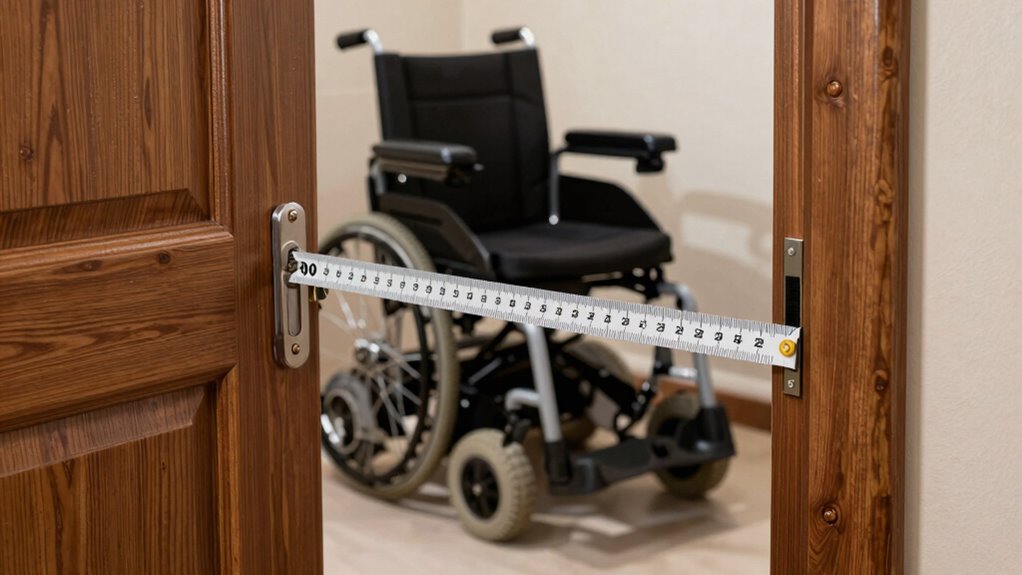
Once you’ve confirmed your main entrance is accessible, it’s time to focus on measuring interior doorways for wheelchair fit. Start by checking the doorway widths against your wheelchair dimensions. Most standard doorways are 32 inches wide, but you’ll want to guarantee your wheelchair can easily pass through without any hassle.
Ensure your interior doorways are wide enough for your wheelchair, measuring at least 32 inches for easy access.
- Use a tape measure to get accurate measurements.
- Note any door frames, handles, or obstructions that might narrow the passage.
- Consider the turning radius of your wheelchair as you plan your route.
Ensuring Hallways and Corners Are Wheelchair Accessible

While measuring interior doorways is essential, ensuring hallways and corners are wheelchair accessible is equally important for smooth navigation. Start by checking the hallway dimensions; they should be at least 36 inches wide to allow for easy wheelchair maneuverability. If your hallways are narrower, consider how that might affect your ability to turn or pass through.
Next, pay attention to corners. A tight corner can be a significant barrier, so look for options like rounded edges or wider paths. If possible, plan for a turning radius of about 60 inches for ideal mobility. By taking these factors into account, you’ll create a more accessible home environment, making your power wheelchair experience much more enjoyable and stress-free.
Assessing Bathroom Accessibility for Your Power Wheelchair
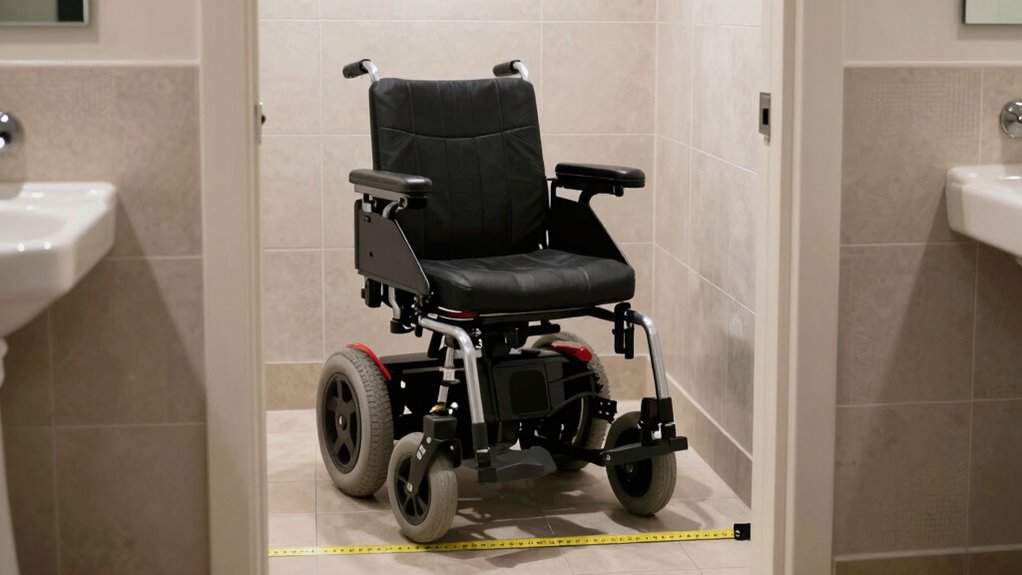
To guarantee your power wheelchair fits seamlessly into your bathroom, start by evaluating the space’s dimensions and layout. Make certain you can easily maneuver around key areas, especially during a toilet transfer. Consider these elements:
Evaluate your bathroom’s dimensions and layout to ensure smooth maneuverability for your power wheelchair, especially during toilet transfers.
- Doorway Width: Verify it’s wide enough for smooth entry and exit.
- Grab Bar Placement: Install grab bars next to the toilet for support and stability.
- Floor Space: Check for enough room to turn your wheelchair comfortably.
Pay attention to any obstacles, like cabinets or sinks, that could hinder your movement. Ensuring proper bathroom accessibility is essential for safety and independence. By taking these measurements, you’ll create a safer, more accessible environment, making your daily routines easier and more enjoyable. Don’t overlook these essential factors before making your power wheelchair decision!
Measuring Outdoor Pathways for Wheelchair Access

When you’re planning outdoor accessibility for your power wheelchair, measuring pathways is essential for ensuring smooth navigation. Start by checking the width of the pathways; they should be at least 36 inches to accommodate your chair comfortably. Next, consider the outdoor surfaces—paved paths are ideal, while gravel or grass can be more challenging. Look for any slopes as well; steep inclines can be difficult to navigate. Aim for a slope of no more than 1:12 ratio, meaning for every inch of height, there should be at least 12 inches of length. Don’t forget to measure any potential obstacles like tree roots or overhanging branches that might obstruct your path. With these measurements, you’ll create a safer outdoor experience.
Frequently Asked Questions
What Is the Average Width of a Power Wheelchair?
The average width of a power wheelchair typically ranges from 24 to 30 inches. When considering power wheelchair dimensions, it’s vital to think about wheelchair accessibility in your home and community. If your doorways or hallways are narrow, you might want to measure them before making a purchase. Ensuring your wheelchair fits comfortably through these spaces can greatly enhance your mobility and independence, so don’t overlook this important step.
How Much Does a Power Wheelchair Typically Weigh?
A power wheelchair typically weighs between 100 to 300 pounds, depending on its model and features. With this weight, you’ll need to take into account weight distribution for stability and comfort. If you want portability options, lighter models might suit you better, making transport easier. Balancing these factors is essential, so you can enjoy both mobility and convenience without compromise. Choose wisely, and you’ll find the right fit for your needs.
Can I Customize My Wheelchair for Narrow Spaces?
Yes, you can customize your wheelchair for narrow spaces! Look for narrow wheelchair options that fit your needs. Many manufacturers offer space-saving designs specifically aimed at enhancing maneuverability in tight areas. You can also consider collapsible features or adjustable widths to make traversing doorways and narrow hallways easier. Always consult with a professional to guarantee your customizations meet your safety and comfort requirements while maximizing space efficiency.
Are There Power Wheelchairs for Outdoor Use Only?
Yes, there are power wheelchairs designed specifically for outdoor use. These models tackle outdoor terrain effectively, making them ideal for overcoming mobility challenges in parks, trails, and uneven surfaces. When choosing one, consider features like larger wheels and enhanced suspension for better stability. You’ll want to guarantee it meets your specific needs for comfort and functionality, especially if you plan to spend a lot of time outdoors.
What Features Improve Maneuverability in Tight Spaces?
To improve maneuverability in tight spaces, look for power wheelchairs with a small turning radius and a compact design. These features let you navigate narrow hallways and crowded areas more easily. A smaller turning radius allows you to pivot without needing much room, while a compact design guarantees you can fit through doorways and around furniture. Together, these elements make your daily movements smoother and more manageable.
Conclusion
Before you take the plunge and buy a power wheelchair, remember: measuring doorways is like finding the right key to release your freedom. Each doorway and hallway tells a story of accessibility, guiding you toward a life less hindered. Picture yourself gliding through your home with ease, maneuvering corners, and accessing the bathroom without a hitch. By measuring wisely, you’re not just buying a wheelchair; you’re investing in a smoother journey through your daily adventures.