
To select anti-scald devices for your bathroom, consider installing thermostatic valves that automatically regulate water temperature and prevent burns. These valves offer precise control and maintain safe, comfortable water temperatures, especially important for children, seniors, or vulnerable users. Pressure-balancing valves can also help by adjusting water pressure to avoid sudden temperature swings. Ensuring compatibility with your plumbing and choosing certified safety devices will maximize protection—keep going to discover how to make the best choice for your home.
Key Takeaways
- Prioritize thermostatic valves for precise temperature control and enhanced safety in preventing scalds.
- Ensure the device is certified to meet local safety standards and regulations.
- Consider installation complexity and compatibility with existing plumbing fixtures.
- Evaluate the presence of AI or advanced safety features for improved regulation and user protection.
- Balance cost, ease of maintenance, and reliability when choosing between thermostatic and pressure-balancing devices.

Choosing the right anti-scald device is vital for ensuring safety in your bathroom, especially if you have children, seniors, or anyone vulnerable to burns. One of the most critical aspects to consider is how the device manages temperature regulation. You want a system that consistently keeps water at a safe, comfortable temperature, preventing sudden surges of hot water that can cause injuries. Effective temperature regulation is achieved through various valve types, each offering unique benefits and suited for different plumbing setups.
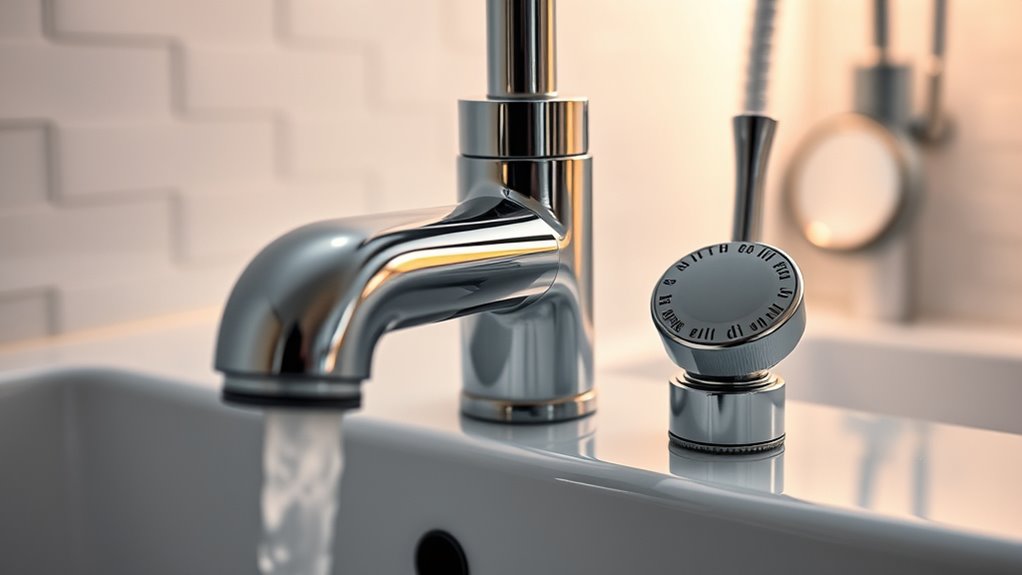
When selecting an anti-scald device, understanding valve types is crucial because they determine how well the device controls water temperature. Thermostatic valves are among the most popular options because they automatically adjust the mix of hot and cold water to maintain a preset temperature. This means once you set the desired temperature, the valve actively works to keep it stable, regardless of fluctuations in your household water supply or other appliances running simultaneously. This feature provides peace of mind, especially in homes with multiple users or high water demand.
Pressure-balancing valves are another common type. They work by adjusting the water pressure to prevent sudden temperature swings caused by changes in your plumbing system—like someone flushing a toilet or running a washing machine. While they don’t regulate temperature directly, they help maintain a consistent water flow and minimize the risk of scalding. If your priority is simplicity and cost-effectiveness, pressure-balancing valves could be sufficient, but they might not offer the same precise temperature control as thermostatic valves.
It’s also worth considering the installation and compatibility of these valve types with your existing plumbing. Thermostatic valves often require more precise installation to ensure they function correctly, but they deliver superior safety features. Pressure-balancing valves are generally easier to install and maintain, making them a practical choice for many homes. Moreover, advances in on-device AI capabilities are improving the safety features of modern valves, providing even more reliable temperature regulation. Whichever valve type you choose, make sure it’s certified for safety standards and compatible with your fixtures.
Frequently Asked Questions
Can Anti-Scald Devices Be Used With All Types of Water Heaters?
Yes, anti-scald devices can be used with most water heaters. You should check water heater compatibility to guarantee proper fit and function. These devices are designed for durability, so they can withstand regular use and hot water exposure. Always verify the specific model’s compatibility with your water heater type and temperature settings to ensure safety and effectiveness. Proper installation maximizes protection and device longevity.
How Often Should Anti-Scald Devices Be Tested or Maintained?
Imagine your anti-scald device as a tiny superhero guarding your bath—would you let it go untested? You should check it at least once a year, following a regular maintenance schedule. Testing frequency isn’t just for peace of mind; it’s to make certain your safety hero still works. Don’t wait for a scalding surprise—stay vigilant, test, and maintain your device regularly to keep your bathroom safe.
Are Anti-Scald Devices Suitable for Elderly or Disabled Users?
Yes, anti-scald devices are suitable for elderly safety and disabled accessibility. They help prevent burns by controlling water temperature, making bathrooms safer for those with limited mobility or sensory issues. You should guarantee devices are properly installed and regularly maintained to keep them functioning effectively. Using anti-scald devices provides peace of mind, reduces injury risk, and promotes independence for elderly and disabled users in the bathroom.
Do Anti-Scald Devices Affect Water Pressure or Flow Rate?
Anti-scald devices can slightly affect water pressure and flow rate, but they’re designed to minimize pressure impact while maintaining safety. You might notice a minor reduction in flow considerations, especially if your water pressure is already low. However, most modern anti-scald devices balance safety with flow performance, ensuring you still get adequate water flow. Proper installation and choosing the right device help prevent significant pressure or flow issues.
What Is the Average Installation Cost for Anti-Scald Devices?
A stitch in time saves nine, and budgeting for anti-scald device installation is no different. You can expect the average cost to range from $100 to $300, but this varies due to cost variation and installation complexity. Simpler installations might be on the lower end, while more complex setups with plumbing adjustments can push costs higher. Always get multiple quotes to find the best fit for your needs and budget.
Conclusion
Choosing the right anti-scald device can prevent burns and save lives. Did you know that scalding injuries are responsible for nearly 20% of bathroom burns? By installing these devices, you markedly reduce the risk of accidents, especially for children and seniors. Take the time to select and properly install the right safety measures. Your family’s safety depends on it—making your bathroom a safer, more comfortable space for everyone.