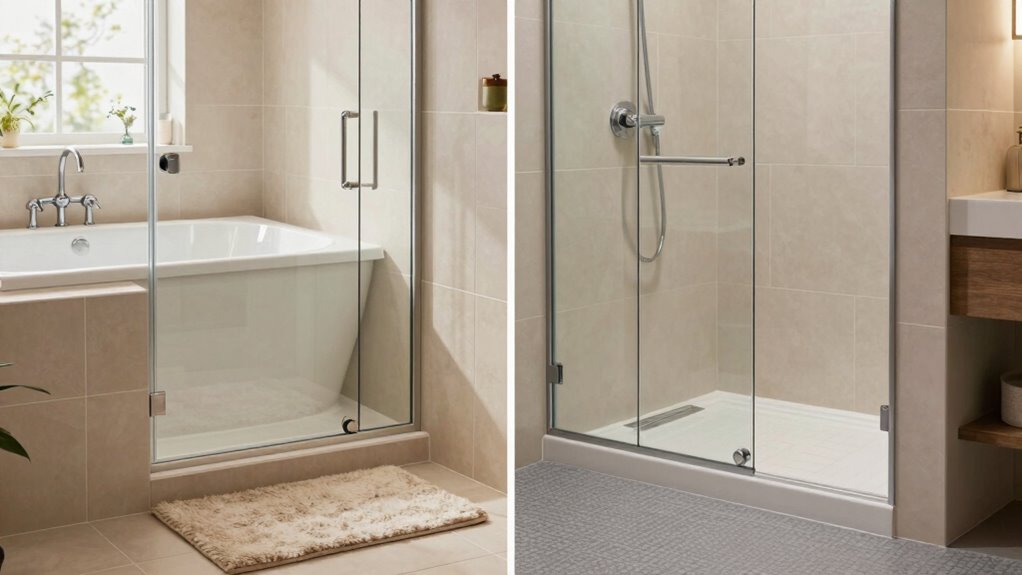

If you’re looking for long-term safety and comfort, a walk-in tub offers luxurious features like hydrotherapy and heated surfaces that support aging in place, though it comes with higher costs and complex installation. A low-threshold shower is simpler, easier to maintain, and ideal for quick, daily use, making it practical and budget-friendly. Your choice depends on your priorities for comfort versus ease and affordability—explore further to find what suits your needs best.

Get decor and gifts delivered free with Prime
- Fast, free delivery on millions of items
- Prime Video, Amazon Music and more included
- Member-only deals all year
Key Takeaways
- Walk-in tubs offer enhanced safety features and comfort that support long-term aging in place.
- Low-threshold showers are simpler, easier to maintain, and more cost-effective for quick, daily accessibility.
- The enclosed design of walk-in tubs provides greater privacy and stability for users with mobility issues.
- Showers are easier to upgrade or modify over time, supporting evolving accessibility needs.
- Both options promote safety, but walk-in tubs better accommodate long-term comfort and aging-related challenges.
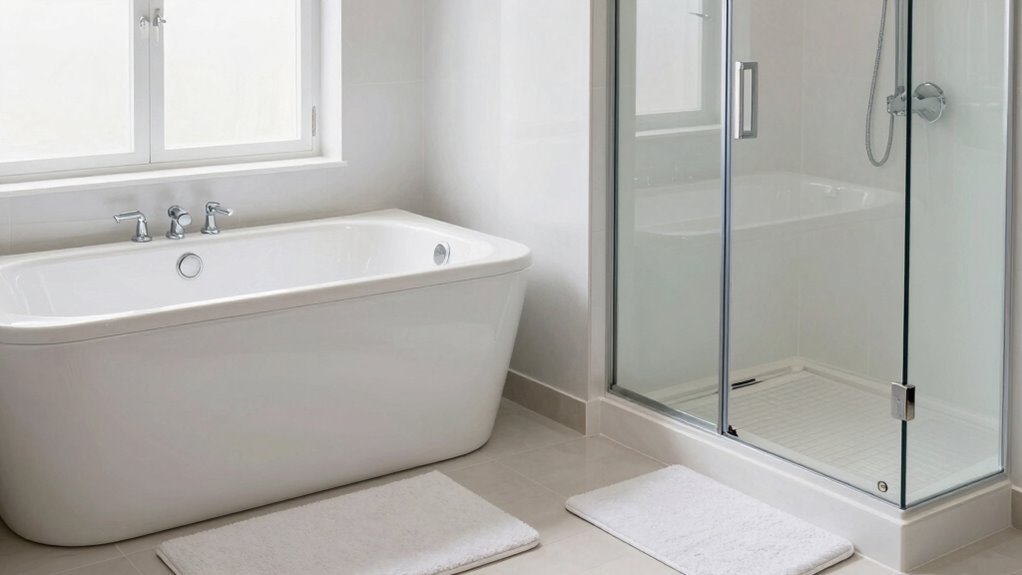
When choosing a safe and accessible bathing option, understanding the differences between walk-in tubs and low-threshold showers can make all the difference. Both options aim to enhance safety and convenience, but they serve different needs and preferences. As you consider your upgrade, weigh the features, costs, and long-term benefits. Walk-in tubs often come with luxury features such as built-in seats, hydrotherapy jets, and heated surfaces, transforming bathing into a spa-like experience. These features can provide added comfort and relaxation, especially for those with joint pain or arthritis. However, these luxury features typically increase the installation costs, which can be considerably higher than installing a basic low-threshold shower. The installation process for a walk-in tub is more complex, often requiring modifications to the bathroom plumbing and space, leading to higher upfront expenses. On the other hand, low-threshold showers are simpler and generally more affordable to install. They usually involve replacing a traditional shower with a step-in or zero-threshold design, making entry easy and reducing the risk of tripping or falling. Because of their straightforward design, installation costs are usually lower, and the process is quicker and less invasive. This makes low-threshold showers a practical choice if you’re looking for a cost-effective, accessible upgrade without sacrificing style or function. When it comes to longevity and aging in place, both options have their advantages. Walk-in tubs provide a comfortable, enclosed space that can accommodate those with mobility issues, offering a sense of security and privacy. The luxury features can also improve quality of life, especially if you enjoy hydrotherapy or heated surfaces. Additionally, accessible bathroom features like these can help prolong independence as you age. Installing adaptable bathroom fixtures can also make future modifications easier, further supporting independent living. Investing in bathroom accessibility solutions can also prevent accidents and reduce the need for costly modifications later. Moreover, choosing features aligned with aging-in-place principles can ensure that your bathroom remains safe and functional as your needs change. Properly designed walk-in tubs can also provide a safe and comfortable bathing environment, especially if installed with safety features. Conversely, low-threshold showers are convenient for quick, daily use and are easier to clean, which can be a substantial advantage for maintaining hygiene and reducing maintenance costs over time. Ultimately, your choice depends on your lifestyle, mobility needs, and budget. If you prioritize luxury features and don’t mind a higher installation cost, a walk-in tub might be the better investment for long-term comfort. If affordability, simplicity, and ease of use are more important, a low-threshold shower offers a practical and accessible solution. Both upgrades aim to improve safety and independence, but only you can decide which suits your aging needs better.
walk-in tub with hydrotherapy jets
As an affiliate, we earn on qualifying purchases.
As an affiliate, we earn on qualifying purchases.
Frequently Asked Questions
Which Option Is More Cost-Effective Long-Term?
A low-threshold shower is more cost-effective long-term because it typically costs less upfront and requires less maintenance. While a walk-in tub offers a luxury appeal and a variety of aesthetic options, it can be pricier to install and maintain over time. If budget and practicality matter most, a shower provides better long-term value, but if comfort and style are priorities, the walk-in tub might justify the higher cost.
Are There Specific Safety Features to Consider?
You’ll want to look for safety features like emergency buttons or hand-held showerheads, which provide quick support if needed. Did you know that falls account for nearly 30% of injuries among seniors? Non-slip surfaces are essential, preventing slips and falls. Make sure your upgrade includes these safety features, giving you peace of mind while maintaining independence and reducing accident risks in your daily routines.
How Much Installation Time Is Required?
Installation time varies based on accessibility improvements and aesthetic considerations. A walk-in tub typically takes longer, often 4 to 6 hours, due to plumbing and sealing needs. A low-threshold shower usually installs faster, around 2 to 4 hours, since it requires less structural work. Your choice depends on how quickly you want the upgrade completed and how the new design blends with your bathroom’s aesthetics.
Can These Upgrades Increase Home Value?
Adding a walk-in tub or low-threshold shower can boost your home’s value, thanks to enhanced aesthetic appeal and design flexibility. For example, a homeowner upgraded to a stylish walk-in tub, attracting buyers seeking accessible features. These upgrades modernize your bathroom, making it more attractive and functional. Potential buyers appreciate the safety features, increasing your home’s market appeal and resale value, especially as accessibility becomes more important.
Are There Any Maintenance Differences Between Them?
You’ll find that maintenance differs between a walk-in tub and a low-threshold shower. Aesthetically, a walk-in tub may require more upkeep due to its larger size and additional features, while a low-threshold shower typically has simpler plumbing, making repairs easier. The plumbing complexity of the walk-in tub can lead to more frequent or costly maintenance, whereas the shower’s straightforward design usually means less maintenance over time.
Conclusion
When it comes to aging comfortably at home, both walk-in tubs and low-threshold showers offer their own gentle nudge toward independence. Think of each as a friendly hand guiding you to safer, more relaxed bathing experiences. Your choice depends on your preferences and needs, but either way, you’re making a thoughtful step toward smoother, more enjoyable mornings. After all, a little upgrade now can make a big difference in how gracefully you embrace the years ahead.
Fall Picks
fall essentials
As an affiliate, we earn on qualifying purchases.