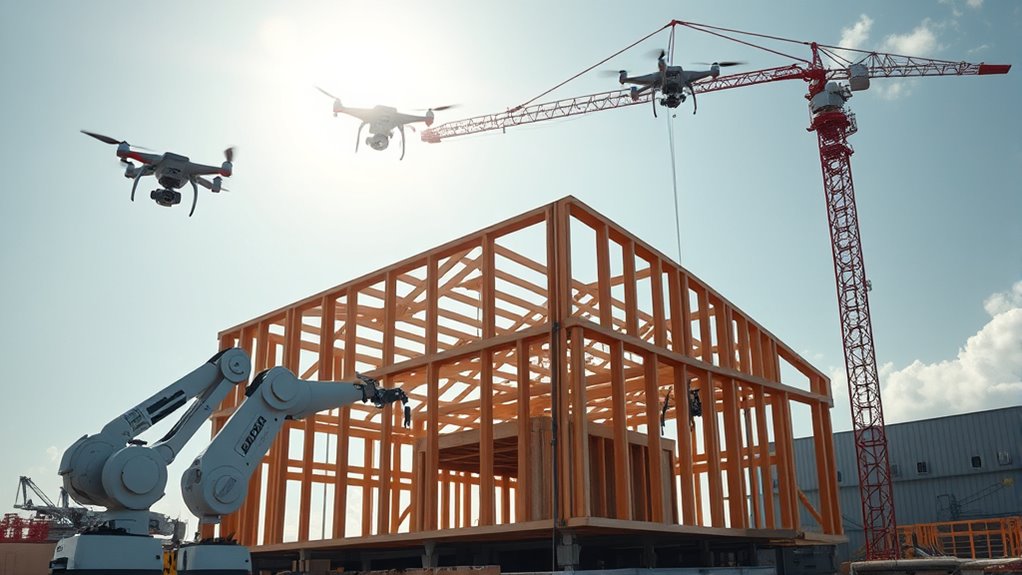

AI and robotics are transforming homebuilding by making processes faster, safer, and more precise. Automation streamlines tasks, improves safety standards, and increases overall project efficiency. However, adopting these technologies presents challenges like system integration and workforce adaptation. Ethical concerns around job security and data privacy also arise. As these innovations continue to evolve, understanding their impact can help you stay ahead and discover how responsible implementation shapes the future of construction.
Key Takeaways
- AI and robotics streamline homebuilding processes, improving efficiency, safety, and project speed through automation.
- Adoption challenges include system integration, site compatibility, and infrastructure investment.
- Workforce impacts require retraining, reskilling, and addressing ethical concerns about job security and data privacy.
- Ensuring data quality, safety, and transparency is crucial to prevent bias and maintain oversight in AI-driven construction.
- Responsible integration of AI and robotics will create safer, smarter, and more sustainable homebuilding practices in the future.
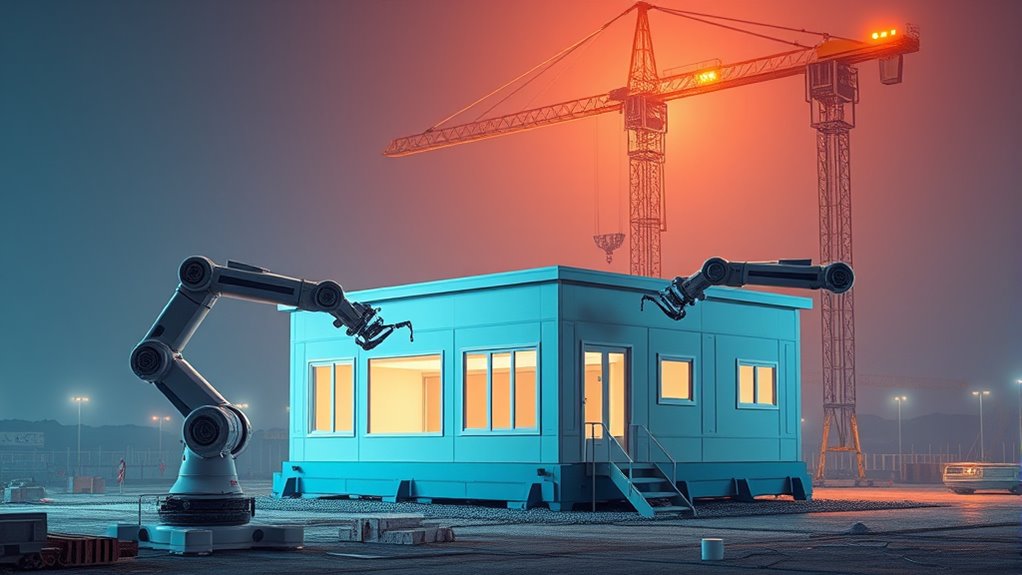
Artificial intelligence and robotics are transforming the construction industry by streamlining processes, improving safety, and increasing efficiency. As you explore how these technologies reshape homebuilding, you’ll notice that automation plays a significant role. However, embracing automation isn’t without its hurdles. Automation challenges, like integrating new systems into existing workflows or guaranteeing compatibility with diverse construction sites, can slow down progress. You might find that some tasks are easier to automate than others, and addressing these challenges requires careful planning and investment. There’s also the concern of workforce displacement; as robots and AI take over repetitive or dangerous tasks, you need to contemplate how to retrain or reskill workers to adapt to this new landscape.
Automation in construction boosts efficiency but faces challenges like system integration and workforce adaptation.
Beyond technical hurdles, ethical considerations come into play. As you adopt AI and robotics, questions about job security, data privacy, and decision-making accountability become more pressing. For instance, if a robotic system makes a mistake on-site, who’s responsible—the manufacturer, the contractor, or the AI itself? This gray area raises important discussions about liability and transparency. Additionally, there’s the ethical dilemma of replacing human labor with automation—while it boosts efficiency, it can also lead to job losses and economic disparities. Guaranteeing responsible implementation means balancing technological advancement with social responsibility, which can be complex and sometimes controversial.
You might also grapple with the broader implications of AI decisions. Many AI systems learn from data, but data quality and bias can influence outcomes, potentially leading to unsafe or unfair practices. You need to be vigilant about monitoring these systems and maintaining oversight to prevent unintended consequences. Furthermore, safety remains a top priority. While automation can reduce accidents caused by human error, you should remain aware of how machines interact with their environment and workers. Proper training, safety protocols, and clear guidelines are essential to prevent accidents and guarantee everyone understands how to operate and work alongside these advanced tools.
In the end, your journey into AI and robotics in construction requires a balanced approach. Overcoming automation challenges and addressing ethical considerations will be key to successfully integrating these technologies into homebuilding. By doing so thoughtfully, you can maximize benefits such as faster project completion, enhanced safety, and precision, all while traversing the complex landscape of societal and moral responsibilities. This evolution isn’t just about technology; it’s about shaping a future where construction is smarter, safer, and more sustainable.
Frequently Asked Questions
How Cost-Effective Are Ai-Driven Homebuilding Solutions?
AI-driven homebuilding solutions are quite cost-effective over time. You’ll see significant cost savings through increased efficiency, reduced labor costs, and minimized material waste. Although initial investment costs might seem high, they pay off quickly as the technology streamlines processes and prevents delays. Overall, adopting AI in homebuilding can lead to smarter spending, faster construction, and long-term financial benefits for your projects.
What Are the Safety Concerns With Robotics on Construction Sites?
You should be aware that robotics on construction sites pose safety concerns, especially if safety protocols aren’t strictly followed. Robots can cause accidents if they malfunction or aren’t properly maintained. To prevent injuries, you must implement hazard mitigation strategies, such as proper training and secure zones. Regular safety checks and clear communication will help guarantee that robotic systems operate safely alongside human workers, reducing risk and promoting a safer work environment.
How Do AI Systems Adapt to Unpredictable Construction Challenges?
Imagine a robot on-site encountering an unexpected obstacle like fallen debris. You see AI systems adapt seamlessly through sensor integration, allowing real-time decision making to reroute or pause operations. This flexibility helps manage unpredictable challenges efficiently, minimizing delays and safety risks. By continuously analyzing data and updating responses instantly, AI keeps construction projects on track despite surprises, ensuring smoother workflows and safer work environments.
What Skills Will Future Construction Workers Need?
You’ll need strong construction site skills and digital literacy to succeed in the future. Expect to operate advanced machinery, interpret digital plans, and troubleshoot tech issues. Adaptability and problem-solving will be key, as new technologies change workflows. Developing your ability to learn new software and understanding data will set you apart. Embrace continuous learning and stay updated on industry innovations to keep your skills relevant and valuable.
How Does AI Impact Construction Project Timelines?
AI impacts construction project timelines by streamlining project scheduling and optimizing resource allocation. You’ll see faster planning processes, reducing delays caused by manual adjustments. AI can predict potential setbacks, allowing you to proactively address issues and keep the project on track. With smarter resource management, you allocate materials and labor more efficiently, cutting down idle time. Overall, AI helps you complete projects quicker without sacrificing quality or safety.
Conclusion
As you embrace AI and robotics in construction, you’re paving the way for a smarter, more efficient future. These innovations are transforming homebuilding, making it faster, safer, and more precise. While challenges remain, don’t forget that every new tool is an opportunity to stay ahead of the curve. By staying adaptable, you’ll find that the sky’s the limit—showing that with the right mindset, you can turn dreams into reality before you know it.