TL;DR
Decorative LED string lights are small light sources connected along a flexible cord, used to add accent lighting indoors and outdoors. Choose a set by checking its location rating, power source, measured illuminated length, brightness, and connection limits; then follow the maker’s instructions for installation and care.
A string of lights can make a bare balcony feel like an evening room, but the wrong set can leave half the railing dark and the other half tangled around an extension cord. Decorative LED string lights offer an easy way to add soft accent lighting, provided you choose for the place and job you have in mind.

Get decor and gifts delivered free with Prime
- Fast, free delivery on millions of items
- Prime Video, Amazon Music and more included
- Member-only deals all year
This guide explains how to compare power sources, lengths, brightness, and weather ratings, and how to hang lights without overlooking cord and connection limits. You’ll also get a practical buying checklist, whether you’re planning a cozy bedroom corner or a row of warm lights over a patio table.
Match the power source to outlet access and daylight: plug-in lights are steady, battery sets are portable, and solar sets need useful sun.
Measure the full cord route, including corners and the plug lead; compare illuminated length and bulb spacing as well as total length.
Check that the lights, adapter, controller, and connections suit their intended location, and follow their weather and installation instructions.
Choose brightness and white tone for the scene, then check smart controls for app and platform compatibility.
Connect multiple sets only when the product allows it, and never exceed the stated connection limit.
Pick a light style that suits the space
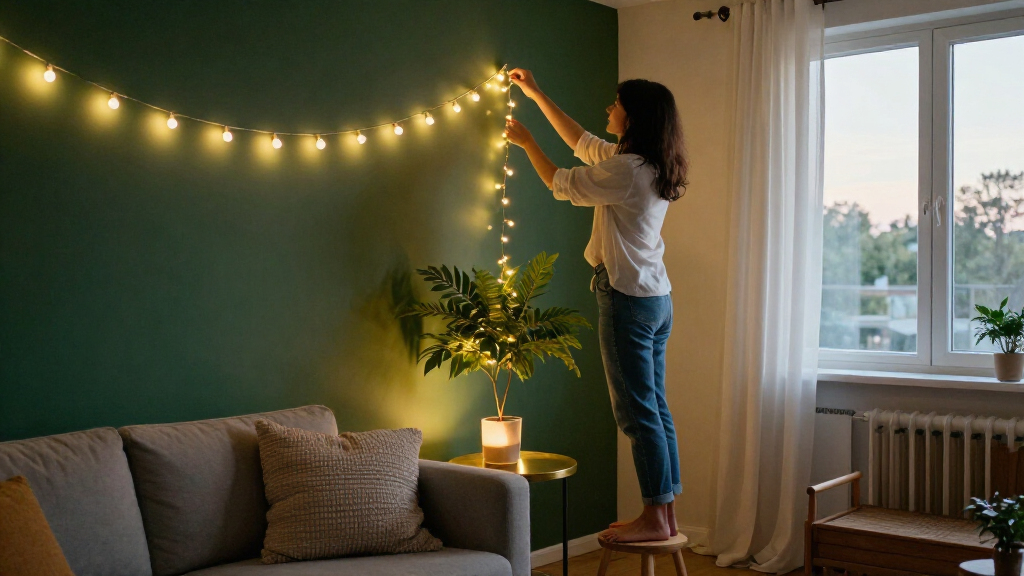
Decorative LED string lights add accent lighting with small light sources connected along a flexible cord. Their shape and spacing affect how a space feels: globe bulbs create a bolder row of light, while fairy lights make a finer shimmer. Choose the style based on whether you want a visible feature or a gentle background glow.
For instance, a strand of globe bulbs above a patio table can give the seating area a clear outline after sunset. A thin copper-wire fairy light may suit a bookshelf or bedroom headboard, where a large bulb could look clumsy. Curtain lights work well across a wide window or blank wall, while net lights can cover shrubs more evenly than a single strand draped by hand.
Think about what the lights need to do. If you want to see food and faces clearly, look for usable brightness and a suitable color, rather than judging by the number of bulbs alone. If the goal is atmosphere, a dimmable warm-white set may be more comfortable in the evening.
Start with the scene. A strand that looks lovely on a product page may feel too bright, sparse, or bulky in your room.
The useful key points for a blog article on this topic begin with the setting: measure the surface, notice nearby outlets, and picture where the cord will run. That small bit of planning can keep a decorative led string from ending short of the shelf or crossing a doorway.
Products Worth Considering

Levoit Eleva 300X Air Purifier with Fully Sealed HEPA Filtration and Smart Control

Sonos Era 100 Wireless Smart Speakers, 2-Pack, Black

Dyson Cyclone V10 Origin Cordless Vacuum
As an affiliate, we earn on qualifying purchases.
Choose plug-in, battery, or solar power for your location
Choose a power source by matching it to your outlet access and how steadily you need the lights to shine. Plug-in sets generally provide consistent output, battery sets are easy to move, and solar sets depend on the panel receiving enough daylight to charge. The tradeoff is convenience versus predictability: a cable can be dependable but constrains placement, while cordless options free up the layout but make light output depend on stored energy.
Imagine decorating a balcony with no convenient outdoor outlet. A solar strand may keep the floor clear of cables, but a panel tucked under a deep overhang may not collect much sun. On a shaded winter patio, its evening brightness may be less reliable than you expect. That can mean the lights fade earlier or fail to turn on after cloudy days. A battery-powered set can solve a short-term problem, such as lighting a centerpiece for a dinner party, though you’ll need to check battery life and replacements. Frequent use can make battery changes an ongoing cost and chore.
Plug-in lights make more sense when you want a reliable glow for several hours each evening and have an appropriate outlet nearby. Check the distance from the plug to the first bulb as well as the advertised strand length. For example, a long cord with a large unlit lead may leave the first bulb several feet away from the spot you planned to decorate. A plug-in set can also require careful cable routing, since an outlet that is technically close may still leave a cord crossing a walkway.
Controls also affect convenience. A built-in timer can turn lights off after a set period, reducing the need to remember to switch them off. App or voice control may require a particular app, network, or smart-home platform, which adds setup and compatibility constraints. Read the product details before buying if you expect those features to work with equipment you already own.
| Power source | Works well when | Watch for |
|---|---|---|
| Plug-in | You have suitable outlet access and want steady light. | Lead-cord distance and outdoor outlet requirements. |
| Battery | You need portable lights without a nearby outlet. | Battery life, replacements, and access to the battery box. |
| Solar | The panel can receive useful daylight. | Shade, short winter days, and changing performance. |
Measure before you buy so every bulb lands in the right place
Measure the route the cord will follow, then compare illuminated length, total length, bulb spacing, and plug lead on the package. Those four details tell you more than a large headline length, because part of a set may be unlit cord and each bulb gap changes how full the finished display looks. A set can reach the far end of a railing but still leave a dark stretch if its illuminated section is shorter than the route; alternatively, a long lead can help reach an outlet but push the first bulb away from the area you want lit.
For example, if your balcony railing is 18 feet long but the cord needs to drop around a post and reach the outlet, the path may be several feet longer than the railing itself. A set advertised as 20 feet might still fall short if only 16 feet contain bulbs. Measure from the outlet along the actual route, including corners and the distance between fixing points. This also helps you avoid buying excessive slack that needs to be bundled or left near a doorway.
Use this quick sequence before you place an order:
- Measure the surface from end to end, then add the route around corners or posts.
- Check bulb spacing against the look you want; wide gaps make a strand feel more open.
- Find the first-bulb distance so the unlit lead can reach your outlet or battery box.
- Check connection limits before planning to link more than one set.
Spacing changes both appearance and coverage. A widely spaced globe strand can make a simple pergola feel like an outdoor café, but it may leave darker gaps on a short railing. Closely spaced fairy lights create a denser sparkle on a tree, though they can look busy if the display is small. If the cord will cross a doorway or walking route, rethink the path before hanging anything. A tidy loop along the edge is easier to live with than a cord brushing someone’s shoulder every time they pass.
Match brightness and color to the mood you want
Brightness and color determine whether string lights feel like a gentle accent or the main light in a room. Warm white often feels soft and cozy, while cooler white tends to look crisper. Dimmable or color-changing sets give you more control, but the product specifications should say what the lights can actually do. More brightness can help people see one another and the table, but it can also draw attention away from the rest of the room or feel glaring when viewed directly.
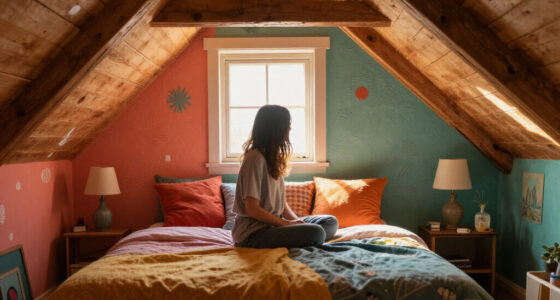
Picture a small bedroom with a warm bedside lamp and a strand of cool-white lights above the bed. The strand may look noticeably blue by comparison, even if each light seems attractive on its own. For a reading corner, a brighter, clearer light may suit you; for a dinner on the patio, a warm and dimmable strand may make food and faces feel more relaxed. The best choice depends on what the light needs to support: a decorative strand may add atmosphere, but it may not replace a focused lamp for reading or food preparation.
When available, check brightness information and color temperature rather than treating bulb count as a brightness measurement. A strand with many tiny LEDs can make a delicate pattern without lighting a whole area. Color temperature indicates whether white light looks warmer or cooler, while brightness describes how much light the set produces; neither alone tells you how comfortable it will feel in your particular space. And if color rendering information is available, it can help you judge how colors near the lights may appear.
There’s a useful oxymoron in decorative lighting: bright enough to notice, soft enough to forget. If you’re unsure, try one strand in the intended spot before buying several. For instance, test it after dark with your usual lamps switched on, then again with only the string lights glowing. You’ll quickly see whether the color blends with the room or clashes with it, and whether the brightness is sufficient without overwhelming the setting.
Check weather ratings and installation details before hanging lights
Use string lights outdoors only when the product is rated for outdoor use, and follow the maker’s instructions for every part of the setup. Water-resistant does not mean submersible, and the lights, controller, adapter, and connections may have different limits. A product’s IP rating describes protection against dust and water under specified test conditions; check the exact rating and the intended-use guidance. This matters because the strand may tolerate rain while a plug or control box exposed at the same spot does not. The rating helps you compare products, but it does not mean every component can safely sit in every weather condition.
For example, a patio strand might be suitable for outdoor use while its adapter still needs a sheltered location. Read the labels for both pieces before choosing where to run the cord. Use outdoor-rated extension cords and outlets outdoors, protect connections as instructed, and stay within the stated maximum number of connected sets. Connection limits matter because linking extra strands can put more load on the cord or power supply than the manufacturer designed for.
Inspect cords and bulbs before installation. Avoid damaged or frayed cords, and don’t cover the lights or power components with fabric, plants, or bedding. LEDs generally produce less heat than comparable incandescent decorative lights, but they still need the clearances and ventilation listed by the manufacturer. Cooler bulbs don’t make a damaged cord harmless. Securing the strand without pinching or puncturing it also helps prevent hidden damage that could worsen with repeated use.
For electrical work, switch off power before working on a circuit and use suitable PPE. If installation requires new wiring, changes to an outlet, or work beyond a plug-in set, hire a licensed electrician and follow local code and permit requirements.
One practical example: if you’re adding lights beneath a covered porch, secure them along a suitable support rather than pinching the cord in a door or stapling through it. A few minutes spent checking the route and attachment method helps prevent damage that may not show until the next time you switch the lights on. It also makes maintenance easier, since an accessible strand is simpler to inspect and remove when needed.
Use a simple checklist to buy a set you’ll keep using
A good purchase starts with the space and ends with the product label. Before you order, match the light set to its intended location, the available power source, and the route the cord must follow. The right details make the difference between lights you enjoy each evening and a box that stays in a closet. Thinking through these choices together helps reveal tradeoffs early: a portable set may be easier to place but need frequent charging, while a brighter set may show details better but change the mood you wanted.
For instance, say you want warm lighting around a small garden table. You measure a 14-foot route, find an outlet nearby, and discover that the product’s illuminated section is only 12 feet. That mismatch matters more than the package’s larger total-length claim. You might choose a longer model, move the outlet plan, or select a set with a suitable lead cord. Each option solves a different problem: a longer illuminated section covers the seating area, while a longer lead reaches the outlet without putting bulbs where they aren’t needed.
- Location: Confirm indoor or outdoor use for the lights and each power component.
- Power: Decide whether plug-in reliability, battery portability, or solar charging suits the spot.
- Fit: Compare illuminated length, total length, bulb spacing, and plug-to-first-bulb distance.
- Look: Choose brightness, white tone, and dimming or color controls for the scene.
- Limits: Check connection maximums, instructions, warranty, and independent reviews for claimed smart features.
LEDs generally use less electricity and produce less heat than comparable incandescent decorative lights, but the actual energy use and service life vary by product and operating conditions. To estimate electricity use, multiply the set’s wattage by the number of hours it runs, then apply your electricity rate. If the label lists 8 watts and you run it for 5 hours, that’s 40 watt-hours per evening, or 0.04 kilowatt-hours. This estimate can help compare the cost of regular use, though it does not account for differences in brightness or how long each product lasts.
Solar products may be appealing, yet they are not automatically the best choice for every garden. A panel that sits in shade can mean dim light or no light, so check its position before committing to that style. The better set is the one that fits your real evening routine, including how much setup, charging, and maintenance you’re willing to handle.
Frequently Asked Questions
Can decorative LED string lights be used outdoors?
Yes, if the product is rated for outdoor use. Check the instructions for the lights, controller, adapter, and connections, since each part may have different limits. Water-resistant products are not necessarily safe to submerge.
Can I leave LED string lights on overnight?
Follow the manufacturer’s instructions for operating time and unattended use. A timer can limit how long the lights run, but inspect cords and connections for damage and keep power components clear of fabric or bedding.
How much electricity do LED string lights use?
Use the set’s wattage and operating hours to estimate consumption: multiply watts by hours, then divide by 1,000 for kilowatt-hours. For example, an 8-watt strand running for 5 hours uses about 0.04 kilowatt-hours. Your actual cost depends on your electricity rate.
Can I connect multiple strings together?
Only if the product is designed for connected sets, and only up to the maker’s stated maximum. Check the instructions before linking strands; incompatible sets or too many connections can overload a cord or power supply.
Why are my solar string lights dim or not turning on?
The panel may not be receiving enough daylight, particularly in a shaded spot or during short winter days. Check the switch, sensor, connections, and battery according to the product instructions, and move the panel where it can collect more sun if possible.
Can I replace a broken bulb or section?
That depends on the design. Some strands have replaceable bulbs; others use sealed or integrated LEDs, which can make a failed section harder to repair. Check the packaging or manufacturer’s instructions before buying if repairability matters to you.
Conclusion
Choose your lights by measuring the space first, then match the power source, color, and weather rating to the way you’ll use them. Read the full product label and follow its connection and installation limits.
A well-placed strand should make the evening feel a little warmer, with every bulb landing where you meant it to.