
Exploring cross-laminated timber reveals a sustainable, high-performance building material that combines eco-friendly manufacturing, responsible wood harvesting, and waste minimization. It offers excellent fire resistance through layered construction and char formation, making it safe for various projects. Its strength and stability enable versatile designs, while prefabrication accelerates construction and reduces waste. Plus, CLT’s natural beauty and sustainability benefits support environmentally responsible choices. Keep going to discover how CLT can transform your building plans with innovative safety and eco-conscious features.
Key Takeaways
- CLT is an eco-friendly, sustainably manufactured material that utilizes responsibly harvested wood, supporting renewable resources and reducing environmental impact.
- Its layered construction provides excellent fire resistance by forming a protective char barrier and insulating the core during fires.
- CLT offers high strength, dimensional stability, and versatile design options suitable for residential and commercial projects.
- Prefabricated panels enable faster construction, reduce waste, and contribute to LEED and other sustainability certifications.
- Combining safety and eco-friendliness, CLT delivers a natural aesthetic with enhanced durability and environmental benefits.
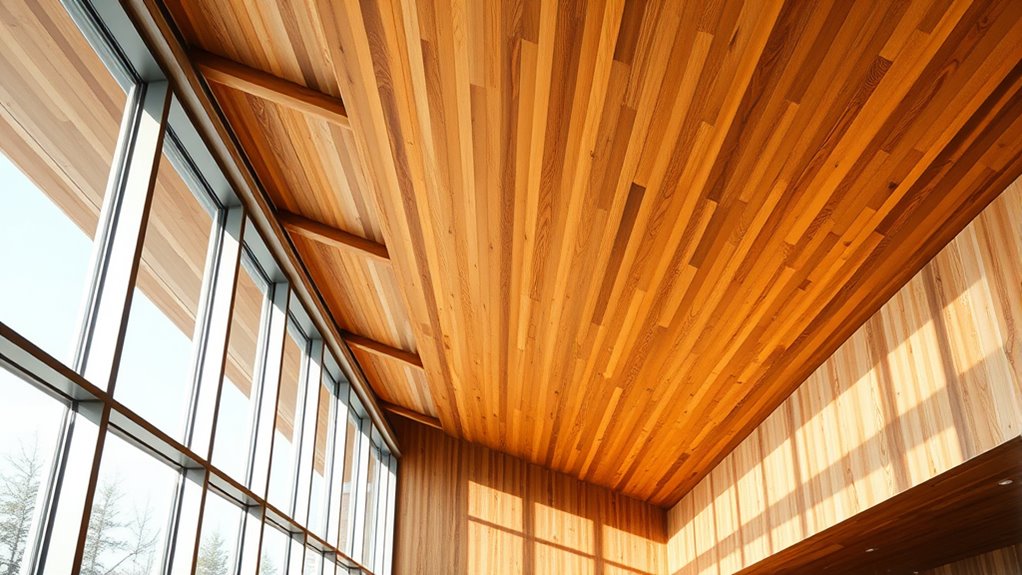
Have you ever wondered why cross-laminated timber (CLT) is gaining popularity in construction? The answer lies in its impressive combination of sustainability and structural performance. CLT is produced through sustainable manufacturing processes that prioritize eco-friendly practices, such as using responsibly harvested wood and minimizing waste. This approach reduces the environmental impact compared to traditional building materials like steel or concrete. By choosing CLT, you’re supporting a renewable resource that naturally sequesters carbon, helping to lower your project’s carbon footprint. Additionally, the manufacturing process emphasizes energy efficiency, further enhancing its appeal as an eco-conscious choice.
One of the most significant advantages of CLT is its fire resistance. Many assume wood isn’t suitable for modern buildings because of its combustible nature, but CLT defies this misconception. Its layered construction and mass give it excellent fire-resistant properties. When exposed to fire, the outer layers char and form a protective barrier that slows combustion, allowing the core to remain intact longer. This char layer insulates the inner wood, preventing rapid fire spread and providing critical escape time for occupants. In fact, CLT has demonstrated fire performance comparable to, or even exceeding, that of traditional fire-resistant materials, especially when combined with modern fire safety systems. This combination of fire resistance and sustainable manufacturing makes CLT a smart choice for architects and builders seeking environmentally responsible yet safe structures.
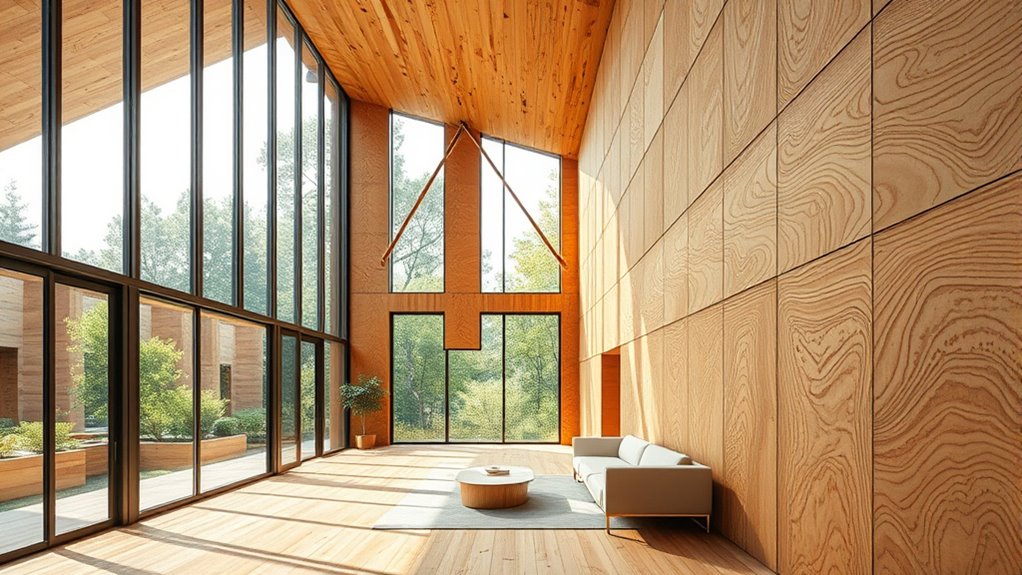
Beyond fire resistance, CLT offers other structural benefits. Its dimensional stability and strength allow for versatile design options, from residential buildings to large commercial projects. The panels are prefabricated, which means quicker assembly times and less construction waste on-site. This efficiency not only shortens project timelines but also reduces the overall environmental impact. The precision manufacturing process ensures consistent quality, giving you confidence in the building’s durability and safety. Moreover, CLT’s natural aesthetic adds warmth and character to interiors, enhancing the overall ambiance of your space. Incorporating innovative building materials like CLT can also contribute to LEED or other sustainability certifications, further emphasizing its environmental benefits.
Frequently Asked Questions
How Does CLT Compare to Traditional Steel in Earthquake Zones?
You’ll find that CLT offers better structural resilience than traditional steel in earthquake zones because it absorbs and distributes seismic forces effectively. It’s also lighter, reducing foundation stress. When comparing costs, CLT can be more affordable due to quicker construction times and lower labor costs. Overall, CLT provides a cost-efficient, resilient alternative to steel, making it a smart choice for earthquake-prone areas.
What Are the Acoustic Properties of Cross-Laminated Timber?
You might think timber’s just for warmth, but it surprisingly excels in sound insulation and vibration damping. Cross-laminated timber absorbs and disperses sound waves, reducing noise transfer between rooms. Its layered structure dampens vibrations, making spaces quieter and more comfortable. While steel may seem more industrial, CLT’s acoustic properties offer a cozy, peaceful environment—ironic, isn’t it? You get durability and serenity, all in one smart material.
Can CLT Be Recycled or Repurposed After Its Lifespan?
You can recycle or repurpose CLT after its lifespan through various recycling options and material reuse. You might disassemble the panels to recover usable wood for other projects or process the material into wood chips or mulch. Some facilities also repurpose old CLT for furniture or decorative elements. Proper disposal and recycling help reduce waste and promote sustainability, making CLT a versatile and eco-friendly building material even after its initial use.
How Does CLT Perform in Extreme Weather Conditions?
Weather resilience defines CLT’s durability in extreme conditions, and you’ll find it performs impressively in harsh weather. Its sturdy structure withstands wind, rain, and snow, offering reliable resilience. Plus, its insulation performance keeps interiors comfortable despite temperature swings. So, when faced with fierce weather, you can trust CLT to stand strong and keep your spaces warm, making it a smart, sustainable choice for challenging climates.
Are There Any Fire Safety Concerns With Using CLT?
You might worry about fire safety with CLT, but it actually performs well when properly treated. Fire-resistant treatments can slow down combustion, giving you more time to evacuate. Plus, CLT develops minimal smoke during a fire, reducing inhalation risks. When combined with good design and safety measures, CLT can be a safe, sustainable choice for your building, meeting fire safety standards effectively.
Conclusion
Imagine a future where your buildings stand tall, strong, and eco-friendly—crafted from cross-laminated timber. By choosing this innovative material, you’re not just building structures; you’re shaping a sustainable world. Its benefits, from durability to environmental impact, are like the threads weaving a brighter, greener tomorrow. So, why not embrace this timber revolution? After all, isn’t it time we let nature support our dreams, one cross-laminated layer at a time?