Choosing the right insulation options can considerably boost your home’s comfort and energy efficiency. Fiberglass batts, spray foam, and rigid foam boards create effective thermal barriers that keep indoor temperatures steady and lower heating and cooling bills. Dense materials like mineral wool also help reduce noise, enhancing comfort. Proper installation is essential to maximize these benefits. To learn about which insulation best suits your climate and needs, explore further for tailored solutions.
Key Takeaways
- Fiberglass batts, spray foam, and rigid foam boards create effective thermal barriers to improve indoor comfort.
- Proper insulation reduces energy costs by maintaining consistent temperatures year-round.
- Dense materials like mineral wool and fiberglass absorb or block sound for enhanced acoustic comfort.
- Selecting insulation based on climate and home design ensures optimal thermal and soundproofing performance.
- Professional installation guarantees maximum efficiency by sealing gaps and preventing drafts.
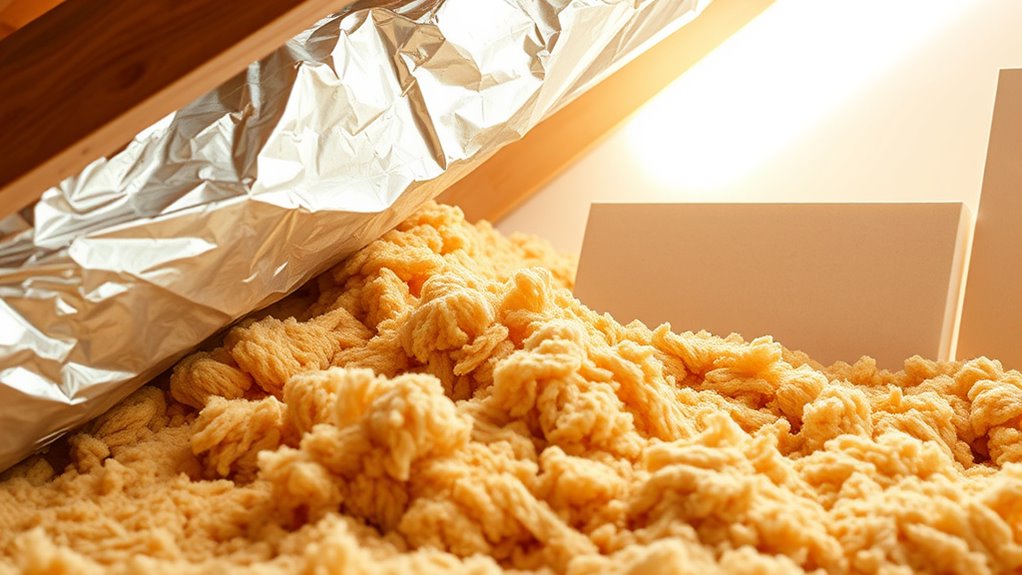
Choosing the right insulation can markedly improve your home’s energy efficiency and comfort. When selecting insulation options, it’s vital to consider how well they serve as thermal barriers, preventing heat from escaping during winter and entering during summer. Effective thermal barriers keep your home consistently comfortable while reducing your heating and cooling costs. Materials like fiberglass batts, spray foam, or rigid foam boards create strong thermal barriers that are easy to install and maintain. These options help you stay warm when it’s cold outside and cool when the heat is on, guaranteeing a cozy environment year-round.
Choosing the right insulation enhances energy efficiency and keeps your home comfortable year-round.
Beyond energy savings, insulation also plays a vital role in soundproofing your home. Soundproofing solutions involve choosing materials that absorb or block noise, making your living space quieter and more peaceful. For example, dense fiberglass or mineral wool insulation can be fitted into walls and ceilings to dampen sound transmission between rooms or from outside sources. When you prioritize soundproofing, you create a serene environment where you can work, relax, or sleep without disturbance. Proper insulation can also reduce noise pollution, making your home a sanctuary from the hustle and bustle of the outside world.
In addition to thermal barriers and soundproofing solutions, you should consider how the insulation material fits into your overall home design and climate. For instance, spray foam insulation offers high R-values and air-sealing capabilities, which improve overall energy efficiency and provide some soundproofing benefits. Meanwhile, traditional batt insulation might be more budget-friendly and easier to install in existing walls or attic spaces. The choice depends on your specific needs, budget, and the parts of your home that require the most attention.
Another important factor is the installation process. Proper installation ensures that your insulation performs as intended, sealing gaps and preventing drafts that can undermine thermal and soundproofing benefits. Hiring professionals or following manufacturer guidelines carefully can make a significant difference. Remember, insulation isn’t just about filling gaps; it’s about creating an integrated barrier that enhances your home’s comfort and efficiency.
Ultimately, investing in insulation that combines effective thermal barriers with soundproofing solutions offers a dual advantage. You’ll enjoy lower energy bills, more consistent indoor temperatures, and a quieter living space. Taking the time to choose the right materials and ensuring proper installation helps you maximize these benefits, transforming your home into a more comfortable, efficient, and peaceful retreat.
Frequently Asked Questions
How Do I Determine the Right Insulation R-Value for My Climate?
To determine the right insulation R-value for your climate, first identify your climate zone using local guidelines or online tools. Then, consider the R value calculation recommended for your zone, which balances energy efficiency and comfort. Generally, colder climates require higher R-values, while warmer areas need lower ones. By matching your home’s needs with your climate zone’s recommendations, you guarantee ideal insulation performance and energy savings.
Are Eco-Friendly Insulation Options as Effective as Traditional Materials?
Eco-friendly insulation options can be just as effective as traditional materials, especially when considering recycling benefits and material sustainability. These eco-friendly choices, like sheep’s wool or cellulose, often offer comparable R-values and thermal performance. By choosing sustainable insulation, you help reduce environmental impact while maintaining energy efficiency in your home. So, you don’t have to sacrifice effectiveness to support eco-conscious practices, making your space both comfortable and environmentally responsible.
What Is the Expected Lifespan of Different Insulation Types?
You can anticipate insulation durability to vary, with fiberglass typically lasting 20-30 years, while spray foam can last up to 80 years with proper maintenance. Cellulose insulation offers a lifespan of around 20-30 years. When considering lifespan comparison, foam insulations generally outperform traditional options, but factors like installation quality and environmental conditions influence durability. Regular inspections help make certain your insulation maintains its effectiveness over time.
How Can I Improve Insulation in Hard-To-Reach Areas?
Did you know that up to 20% of heat loss can occur through hard-to-reach areas? To improve insulation there, consider blower door testing to identify leaks and gaps. Spray foam expansion is particularly effective, as it fills irregular spaces and hard-to-access corners, creating an airtight seal. This combination enhances energy efficiency and comfort, ensuring your home stays warmer in winter and cooler in summer.
Does Insulation Require Regular Maintenance or Inspections?
Insulation doesn’t typically require regular maintenance, but you should schedule inspections every few years to guarantee it remains effective. During inspections, look for signs of moisture, pests, or damage. Maintenance tips include sealing leaks, removing debris, and ensuring proper ventilation. By staying proactive with inspections and minor upkeep, you’ll maintain your insulation’s efficiency and comfort, preventing costly repairs and improving your home’s energy performance over time.
Conclusion
By choosing the right insulation, you’re setting yourself up for a more comfortable and energy-efficient home. Whether you opt for spray foam, fiberglass, or another option, you’ll see the benefits in lower bills and a cozy space. Remember, it’s better to be safe than sorry, so don’t wait to upgrade your insulation. Take action now, and you’ll thank yourself when the seasons change—your comfort and savings will thank you too.