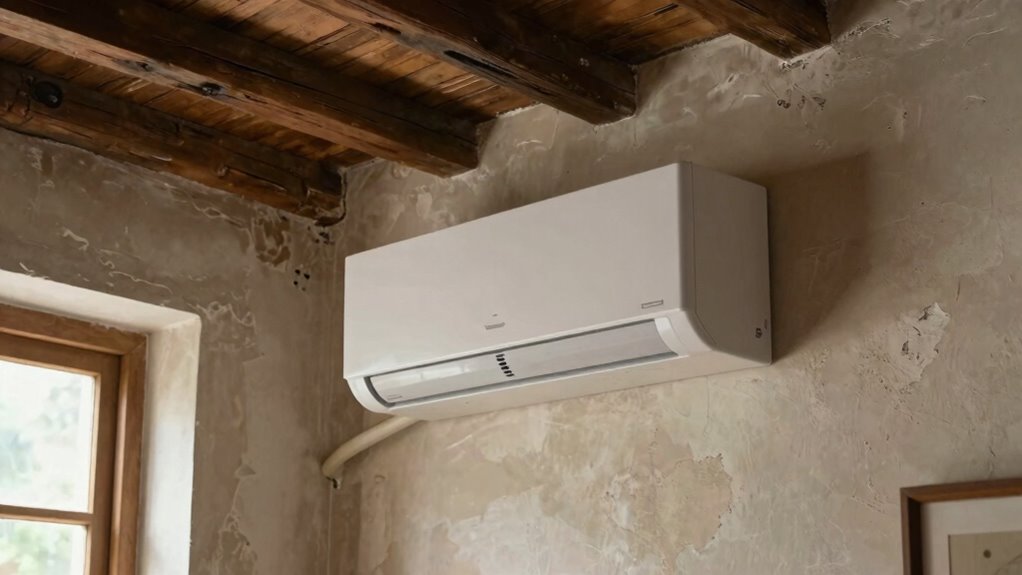

Mini-split heat pumps are best suited for older homes with limited or damaged duct systems, thick walls, or historic features. They’re perfect if you want efficient heating and cooling without major renovations, as they don’t rely on ductwork. Proper placement and installation can overcome structural challenges, ensuring comfort and energy savings. To learn more about how they can fit into your home’s unique layout, keep exploring the options available.

Get decor and gifts delivered free with Prime
- Fast, free delivery on millions of items
- Prime Video, Amazon Music and more included
- Member-only deals all year
Key Takeaways
- Ideal for homes without existing ductwork or with damaged, inefficient ducts.
- Suitable for spaces where traditional HVAC systems are difficult to install due to structural constraints.
- Effective in homes with thick walls or historic features, allowing targeted climate control.
- Best installed with proper planning to ensure optimal placement and electrical compatibility.
- Provides energy-efficient comfort and modernization benefits tailored to older home characteristics.

Older homes often face challenges when upgrading their heating and cooling systems, but mini-split heat pumps offer an effective solution. These systems are known for their energy efficiency, which can help lower your utility bills and reduce your carbon footprint. Unlike traditional HVAC setups, mini-split heat pumps don’t rely on ductwork, making them especially appealing for older homes where ducts might be damaged, inefficient, or nonexistent. This direct connection between the indoor and outdoor units minimizes energy loss, making sure that you get the most out of every watt of power you use. As a result, you enjoy consistent comfort with less energy consumption, which is a big plus when upgrading in a home that wasn’t originally designed for modern climate control systems.
However, it’s important to take into account the installation challenges that come with adding a mini-split system to an older home. While these units are generally easier to install than central systems that require extensive ductwork, they still require careful planning. You’ll need to guarantee that the outdoor unit has proper clearance and that the indoor head units can be mounted in the most effective locations. In some cases, older homes have limited space or structural limitations that make installation more complex. For example, installing the refrigerant lines and electrical connections might require modifications to existing walls or ceilings, which can add to the complexity and cost. Despite these hurdles, the benefits of a mini-split system—such as improved energy efficiency and the ability to target specific zones—often outweigh the installation challenges. It’s also essential to consider existing home features that might influence installation options, like thick walls or historic elements.
Another factor to take into account is that older homes often have unique architectural features, such as thick walls or historic elements, which can affect how and where you install the indoor units. You might need to work with a professional who understands both the technical requirements and the aesthetic considerations of your home. Proper placement is vital to maximize efficiency and comfort, so it’s worth investing in expert advice. Additionally, understanding the home’s insulation can help optimize the system’s performance and ensure comfort throughout the year. Recognizing structural limitations of your home can also help prevent potential installation issues and ensure the system functions effectively. Being aware of the existing electrical systems and their capacity can further streamline the installation process and avoid future complications. It’s also advisable to evaluate the thermal envelope of your home to determine the best placement and capacity for the mini-split units. While the installation might initially seem challenging, the long-term savings on energy bills and the increased comfort make mini-split heat pumps a smart upgrade. They offer a flexible, efficient solution tailored to the needs of older homes, helping you modernize your space without sacrificing the charm and character of your property.
mini split heat pump for older homes
As an affiliate, we earn on qualifying purchases.
As an affiliate, we earn on qualifying purchases.
Frequently Asked Questions
How Noisy Are Mini-Split Systems During Operation?
Mini-split systems are generally quiet during operation, with noise levels typically ranging from 20 to 40 decibels, comparable to a soft whisper. You might hear some sound from the compressor or fan, but sound mitigation features help keep noise minimal. Modern units are designed with noise reduction in mind, so you can enjoy comfort without disturbance. If noise is a concern, choose models with advanced sound mitigation technology for even quieter operation.
Can Mini-Split Heat Pumps Work With Existing Ductwork?
They say, “Don’t fix what isn’t broken,” but mini-split heat pumps can often work with your existing ductwork through retrofit options. Duct compatibility varies, so you might need some modifications, but many systems are designed for easy integration. If your ducts are in good shape, this setup can be a seamless upgrade, offering efficient heating and cooling without the need for extensive ductwork replacement.
Are Mini-Split Units Suitable for Historic Home Preservation?
Yes, mini-split units are suitable for historic preservation because they offer discreet installation options that respect aesthetic integration. You can install them without altering the home’s original structure or façade, helping you preserve its historic charm. Their compact design allows for efficient heating and cooling while maintaining the integrity of the home’s appearance, making them an excellent choice for maintaining both comfort and historic value.
What Maintenance Is Required for Mini-Split Systems?
You need to regularly check refrigerant levels to guarantee your mini-split system runs efficiently, as low refrigerant can reduce cooling and heating performance. Additionally, clean the filters every few months to prevent dust buildup and maintain air quality. These simple maintenance tasks help prolong your system’s lifespan, improve energy efficiency, and keep your home comfortable. Don’t forget to schedule professional inspections annually for peak performance and to address any refrigerant or mechanical issues.
How Long Is the Typical Lifespan of a Mini-Split Heat Pump?
A mini-split heat pump typically lasts 10 to 15 years, depending on usage and maintenance. Its energy efficiency helps you save on utility bills over its lifespan. While installation costs can be higher upfront, the system’s durability and efficiency justify the investment. Proper maintenance, like cleaning filters regularly, can extend its lifespan, ensuring you get the most value from your system over the years.
Conclusion
Think of mini-split heat pumps as the gentle breeze that whispers comfort into your aging home. They’re the quiet guardians, slipping seamlessly into your space, offering warmth in winter and coolness in summer without the fuss of ductwork. With their flexibility and efficiency, they breathe new life into old bones, transforming your house into a cozy sanctuary. Embrace this modern marvel, and let it be the steady heartbeat that keeps your home’s comfort glowing year-round.
Fall Picks
fall essentials
As an affiliate, we earn on qualifying purchases.