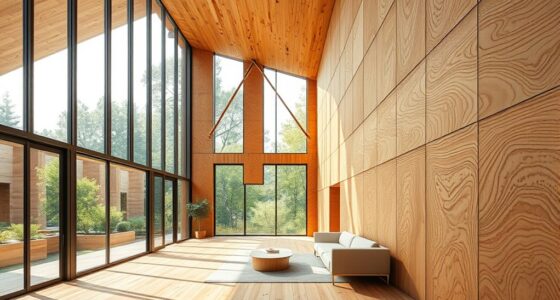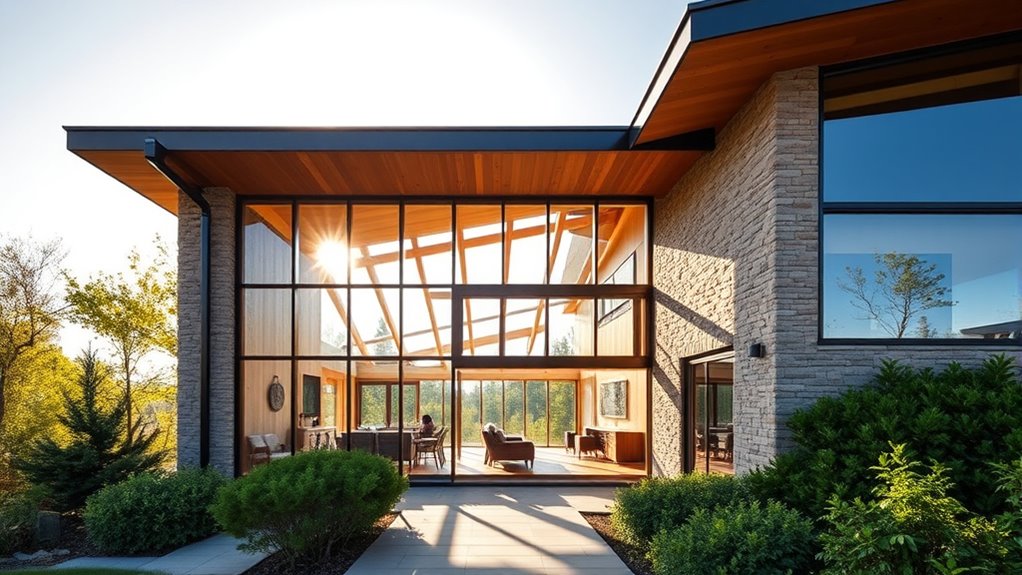

You can save energy with passive solar design by orienting windows toward the south in the northern hemisphere to maximize winter solar gain. Using thermal mass like concrete or brick helps absorb and slowly release heat, maintaining a stable indoor temperature. Overhangs and shading prevent overheating in summer while allowing winter sunlight inside. Combining these strategies creates a comfortable home that reduces heating and cooling needs. Keep exploring to discover more ways to optimize your building for energy efficiency.
Key Takeaways
- Utilize thermal mass on interior south-facing walls to absorb and store solar heat during the day for night release.
- Orient windows south in the northern hemisphere to maximize winter solar gain while minimizing summer heat through shading.
- Incorporate overhangs or shading devices to block high summer sun and allow lower winter sun to enter for seasonal temperature control.
- Design building layouts that balance window size and placement to optimize passive solar heating and cooling.
- Combine thermal mass, strategic window placement, and shading techniques to create energy-efficient, comfortable indoor environments.
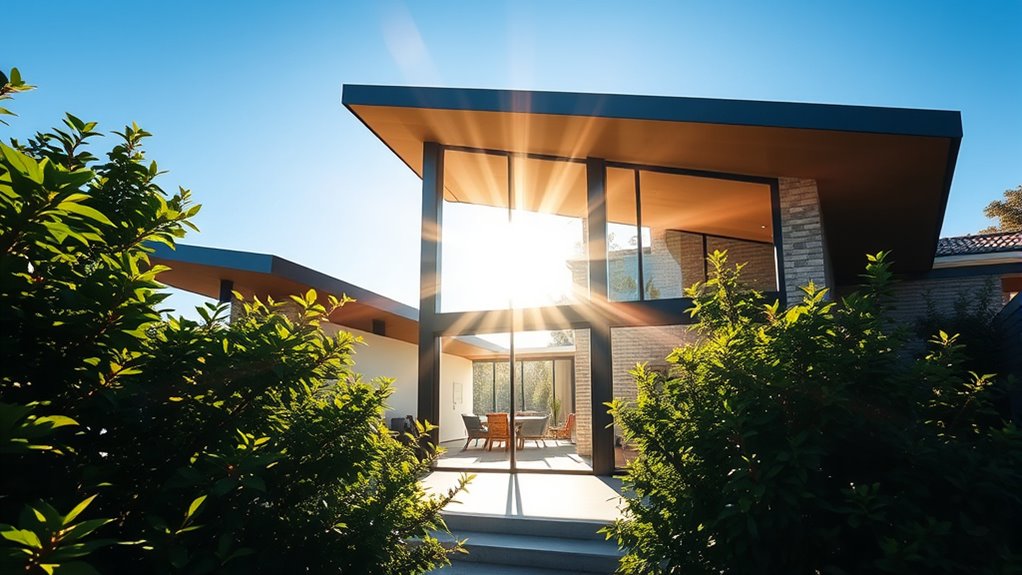
Have you ever wondered how buildings can harness the sun’s energy to stay warm and comfortable without relying on active heating systems? One key to this is understanding how thermal mass and window orientation work together in passive solar design. Thermal mass refers to materials within a building—like concrete, brick, or stone—that can absorb, store, and gradually release heat. When the sun shines through your windows, these materials soak up warmth during the day, then release it slowly at night, helping to maintain a stable indoor temperature. This process reduces your need for conventional heating, saving energy and lowering costs.
To maximize the benefits of thermal mass, you need to consider how and where it’s placed. Typically, thermal mass is positioned on the interior of your building’s south-facing walls (in the northern hemisphere). When properly located, it acts as a heat reservoir, absorbing solar energy during the day and releasing it when outdoor temperatures drop. This creates a natural, consistent indoor climate. But thermal mass alone isn’t enough; you also need to think about window orientation. By strategically positioning windows to face the sun—usually south in the northern hemisphere—you allow maximum sunlight to enter during winter months when the sun sits lower in the sky. This ensures that your thermal mass can effectively absorb solar heat throughout the day.
Window orientation plays a vital role in passive solar heating because it determines how much sunlight your home receives. Properly oriented windows let in the low-angle winter sun, while minimizing heat gain during the hotter summer months with shading or overhangs. For example, a well-designed overhang can block high summer sun but allow lower winter rays to penetrate, providing warmth when you need it most. Additionally, the size and placement of windows influence how much solar energy enters your space and how effectively it’s captured by your thermal mass. Large south-facing windows are ideal for passive solar gain, but you need to balance this with insulation and shading to prevent excessive heat loss or gain.
In essence, passive solar design hinges on the interplay between thermal mass and window orientation. When these elements are carefully planned, your building can naturally stay warm in winter and cool in summer without active heating or cooling systems. By understanding and applying these principles, you create a more energy-efficient, comfortable space that reduces your environmental impact and lowers utility bills. Incorporating passive solar principles into your design process can significantly enhance your building’s energy performance and comfort. It’s a smart, sustainable way to maximize your home’s potential for energy savings while enjoying a cozy, well-balanced indoor climate.
Frequently Asked Questions
How Does Passive Solar Design Impact Indoor Air Quality?
Passive solar design can improve indoor air quality by promoting natural ventilation strategies that increase airflow and reduce indoor pollutants. You’ll want to incorporate operable windows and vents that work with the sun’s position, allowing fresh air to circulate naturally. This helps remove indoor air contaminants, maintain comfortable humidity levels, and guarantee a healthier living environment. Proper ventilation strategies are key to maximizing both energy efficiency and indoor air quality.
Can Passive Solar Principles Be Integrated Into Existing Buildings?
You can absolutely integrate passive solar principles into your existing building, but be prepared for retrofit challenges that seem almost insurmountable! You’ll need to carefully consider design compatibility to avoid chaos. It’s like fitting a giant puzzle piece into a tiny box. With expert planning and the right modifications, your building can harness solar energy efficiently, transforming it into an eco-friendly, energy-saving powerhouse without starting from scratch.
What Are the Initial Costs Versus Long-Term Savings?
Your initial investment in passive solar design can be higher due to costs for redesign, insulation, and window upgrades. However, you’ll enjoy long-term benefits like reduced energy bills and lower environmental impact. Over time, these savings offset the upfront costs, making passive solar features a smart choice for energy efficiency. Investing now pays off through decreased utility expenses and increased comfort in your building.
How Do Climate Variations Affect Passive Solar Effectiveness?
While climate variations can pose some challenges, they also offer opportunities for climate adaptation through seasonal adjustments. You’ll find that passive solar design works best when you tailor it to your local climate, maximizing sun during colder months and providing shade in warmer seasons. With thoughtful seasonal adjustments, you can enjoy consistent comfort and energy savings year-round, regardless of changing weather patterns, making your home more resilient and efficient.
Are There Specific Materials Best Suited for Passive Solar Construction?
You should choose materials with high durability and good insulation properties for passive solar construction. For example, concrete and brick are excellent for their durability and thermal mass, helping to store heat. Insulation types like foam or mineral wool prevent heat loss. Using these materials guarantees your building effectively captures and retains solar energy, maximizing energy savings and making your home more comfortable year-round.
Conclusion
By embracing these passive solar principles, you harness harmony and heat, transforming your space into a sustainable sanctuary. Think of sunlight as your secret source, soaking through windows and shaping your sanctuary’s comfort. With mindful design, you master the art of minimizing costs while maximizing comfort. So, step into the sunlight’s embrace, and let your space sparkle with savings, sustainability, and sunshine, all working together in perfect, peaceful synergy.