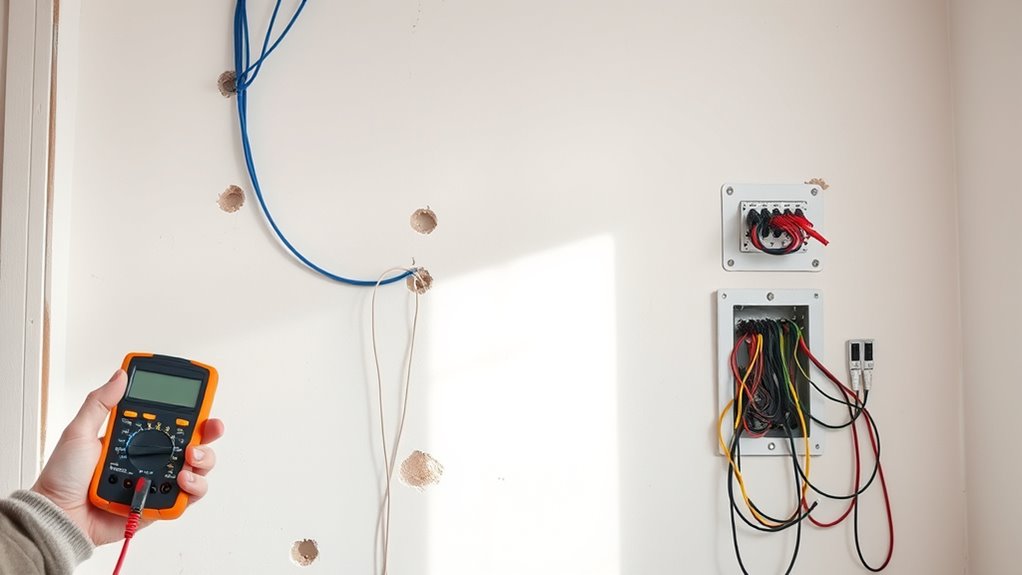

Pre-wiring your home for smart technology sets a strong foundation for reliable connectivity and easy future upgrades. Installing Ethernet cables, conduit, and strategic outlets guarantees seamless integration of devices like security cameras, smart thermostats, and voice assistants. Good planning also helps manage electrical loads safely and creates pathways for expanding your system later. By considering these steps now, you’ll avoid costly modifications later and maximize your smart home’s performance—keep going to discover how to get started.
Key Takeaways
- Plan dedicated conduits and cable pathways to facilitate easy future upgrades and device additions.
- Install robust Wi-Fi infrastructure with access points or mesh nodes for seamless connectivity.
- Allocate sufficient electrical circuits and outlets for high-powered smart devices and hubs.
- Incorporate centralized wiring hubs or junction boxes for simplified system management and troubleshooting.
- Use high-quality cables and structured wiring systems to support higher data loads and future technology integration.

Preparing your home for smart technology installations begins with thoughtful pre-wiring during construction or renovation. At this stage, you have a unique opportunity to guarantee your home is fully equipped for seamless connectivity and future upgrades. One of the key considerations is wireless compatibility. By pre-wiring strategically, you can create a robust infrastructure that supports various wireless devices, like smart thermostats, security cameras, and voice assistants. Installing access points or mesh network nodes during construction ensures strong, consistent Wi-Fi coverage throughout your home, eliminating dead zones and buffering issues later on.
Strategic pre-wiring ensures seamless connectivity and supports future smart home upgrades.
Additionally, focusing on electrical load management during pre-wiring is essential. As you add more smart devices, the electrical demands can increase markedly. Proper planning allows you to allocate dedicated circuits for high-powered equipment or smart hubs, preventing overloads that could cause outages or damage. Incorporate multiple outlets in key areas, especially in rooms where you plan to install lighting controls or media centers, and consider installing smart switches and outlets that can be integrated into your home automation system. This approach minimizes the need for extension cords or power strips, reducing clutter and safety hazards.
Pre-wiring also involves running sufficient conduit or cable pathways to accommodate future device additions. Even if you don’t immediately install every smart device, having the wiring in place makes upgrades more straightforward and less invasive. For instance, running Ethernet cables alongside power lines grants you the option of wired internet connections for devices that benefit from higher bandwidth, like smart TVs or security systems. This proactive approach ensures that your home remains adaptable as technology evolves.
Furthermore, planning for centralized control points simplifies the management of your smart home. Installing a dedicated wiring hub or junction box allows you to connect various sensors, cameras, and controllers efficiently. This infrastructure facilitates easier troubleshooting and system expansion down the line. When pre-wiring thoughtfully, you also consider future-proofing by selecting high-quality cables and connectors that support faster data transfer rates and higher electrical loads. Incorporating structured wiring systems during construction can greatly enhance the scalability and reliability of your smart home setup.
Frequently Asked Questions
When Is the Best Time to Pre-Wire During Construction?
You should pre-wire during the framing stage of construction to incorporate design considerations and allow for future expansion. This timing ensures your home’s infrastructure can support smart technology seamlessly. By planning ahead, you prevent costly retrofits later. Focus on strategic placement of wires for devices like lighting, security, and entertainment systems. Pre-wiring early guarantees your smart home setup is efficient, scalable, and tailored to your evolving needs.
How Much Does Pre-Wiring Typically Cost?
Pre-wiring costs are like planting seeds—you’ll see benefits later. Typically, you can expect to spend between $1,000 and $3,000, depending on the home’s size and complexity. Cost considerations include wiring materials, labor, and the number of devices you plan to install. To save, choose quality wiring materials and work with experienced electricians, ensuring your smart home is future-proof without breaking the bank.
Can Existing Homes Be Retrofitted With Smart Wiring?
Yes, you can definitely retrofit your existing home with smart wiring. While it may involve some disruption, professionals can install new wiring or suggest wireless alternatives to minimize changes. Consider future-proofing your setup by choosing flexible wiring options and integrating smart hubs that support various devices. This way, you’ll enjoy seamless upgrades later, and your home stays adaptable to evolving smart technology trends without costly rewiring.
What Types of Smart Devices Benefit Most From Pre-Wiring?
Smart devices like security cameras, thermostats, and lighting systems benefit most from pre-wiring. Pre-wiring guarantees reliable connections, reducing wireless alternatives’ limitations like interference or signal loss. It also enhances device compatibility, making installation smoother and more efficient. By pre-wiring these devices, you set the stage for seamless smart home integration, future-proofing your space and avoiding the hassle of retrofitting later.
How Long Does a Pre-Wiring Installation Usually Take?
A pre-wiring installation typically takes anywhere from a few hours to a full day, depending on the wiring complexity and the size of your home. If your plan involves extensive smart technology integration, it may take longer. You should expect a length estimate of around 4 to 8 hours for most projects. Keep in mind, more complex wiring setups could extend the timeline, but your installer will give you an accurate estimate.
Conclusion
Pre-wiring your home for smart technology is like laying a strong foundation for a future-ready house. It guarantees seamless integration, effortless upgrades, and a home that adapts to your needs. Think of it as planting seeds today for a lush, connected landscape tomorrow. By investing in pre-wiring now, you’re not just preparing for the future—you’re creating a digital sanctuary that grows and evolves with you. Your smart home’s potential is limitless with the right groundwork in place.