
TL;DR

Get decor and gifts delivered free with Prime
- Fast, free delivery on millions of items
- Prime Video, Amazon Music and more included
- Member-only deals all year
Ideal Home’s radiator-maintenance guidance says to switch off the heating and wait for radiators to cool before opening a bleed valve, reducing the risk of burns and spills. After bleeding, check the boiler pressure before restarting the system; the source gives no universal pressure figure or fixed waiting time.
Turn the heating off and wait for radiators to become cold before bleeding them, according to guidance published by Ideal Home. Opening a valve while hot water is circulating can release hot water and increase the risk of burns, while a cold radiator allows air and water to settle before the valve is opened.
The guidance distinguishes between identifying a radiator problem and carrying out the fix. Running the heating can help reveal a radiator that is warm at the bottom but cold at the top, a pattern associated with air trapped inside. But Ideal Home says to switch the system off for the actual bleeding process and wait until the radiator has cooled completely.
Nick Duggan, director of The Radiator Centre, says opening the bleed valve with hot water circulating could cause hot water to escape. He also says water may come out faster when the heating is on, making the job messier and potentially less effective. The report does not provide a specific cooling time; the practical instruction is to wait until the radiator is cold.
After bleeding, Duggan says there is no need to leave the heating off for an extended period. Wait a few minutes, check the boiler pressure against the system’s recommended range, and then turn the heating back on. Bleeding several radiators may lower pressure slightly, so the check matters before restarting.
Safer Radiator Maintenance
Bleeding radiators is a routine household task, but opening a valve while the system is hot can expose someone to scalding water. Waiting for the radiator to cool also helps limit splashes and makes the procedure more controlled. The advice is particularly relevant when households first switch on central heating after a period of little or no use.
Air in the system can affect how evenly radiators heat. Worcester Bosch training head Darren Danks says trapped air can create cold spots and reduce heating performance; he also says air may be present even when radiators feel warm. The report says bleeding a home’s radiators may take around 15 minutes, though covers or awkward access can add time. These are general estimates, not guarantees for every heating system.
As an affiliate, we earn on qualifying purchases.
Spotting Air Before Bleeding
Ideal Home’s guidance was framed around the seasonal return of colder weather and the decision to restart central heating. It recommends checking for uneven heating before carrying out maintenance. A cold area at the top of a radiator is a common clue that air may be trapped, although the report cautions that the absence of cold spots does not prove the system is air-free.
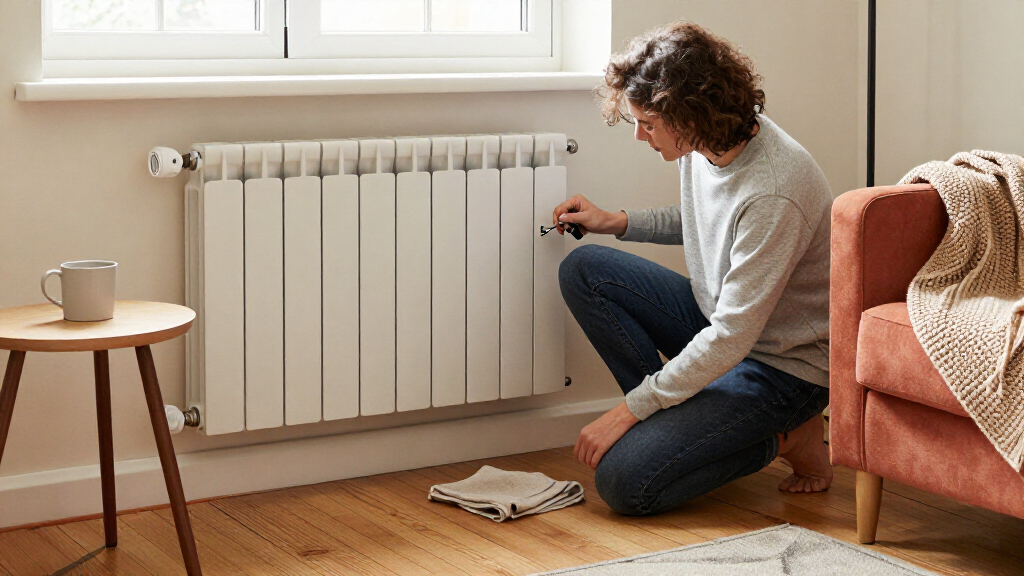
The report says an individual radiator can take about 30 seconds to bleed and suggests that bleeding all radiators in a home may take roughly 15 minutes. It refers to using a radiator key and catching escaping water. It does not set out a full step-by-step procedure or advise readers to make adjustments beyond checking pressure against the boiler or system guidance.
“Make sure the heating is switched off and, ideally, wait until your radiators have gone completely cold.”
— Nick Duggan, director of The Radiator Centre
Pressure Depends on the System
The source does not specify a single boiler-pressure reading that applies to all homes, a precise number of minutes for radiators to cool, or a fixed interval before heating can be restarted. Duggan advises checking the pressure against the recommended range for the system. The report also does not establish that every home needs every radiator bled each season; Danks’s comments describe the possibility of hidden air, not a universal requirement.
It is also unclear from the source what action homeowners should take if pressure is outside the recommended range or if cold spots persist after bleeding. The guidance does not cover faults such as leaks or wider boiler problems.
Check, Then Restart Heating
For homeowners following the report’s advice, the next steps are to switch off the heating, allow radiators to cool, bleed them, and wait a few minutes before checking boiler pressure. Restart the system only after confirming that pressure is within the range stated for that installation. If the pressure is outside that range or a radiator remains unevenly heated, the source offers no diagnosis; the boiler or heating-system instructions are the appropriate reference for what to do next.
Key Questions
Should the heating be on or off when bleeding a radiator?
Turn it off and wait until the radiator is cold before opening the bleed valve, according to the Ideal Home report. This reduces the chance of hot water escaping.
Can I use the heating to find which radiators need bleeding?
The report says running the heating can help identify uneven warmth, including a radiator that is warm at the bottom and cold at the top. Switch the system off and let it cool before bleeding.
How soon can I turn the heating back on?
Nick Duggan says to wait a few minutes after bleeding, check the boiler pressure, and then restart the heating if the pressure is within the system’s recommended range. The source gives no fixed waiting time beyond that advice.
Does every radiator need bleeding?
The report says visible cold spots can help identify trapped air, but Darren Danks notes that small pockets may not create noticeable cold areas. It does not establish that every home must bleed every radiator.
How long does bleeding radiators take?
Ideal Home estimates about 30 seconds per radiator and roughly 15 minutes for all radiators in a home. Covers or difficult access may add time, and the figures are estimates.
Source: rss
Columbus Day / Indigenous Peoples' Day Picks
long weekend sales
As an affiliate, we earn on qualifying purchases.