
TL;DR

Get decor and gifts delivered free with Prime
- Fast, free delivery on millions of items
- Prime Video, Amazon Music and more included
- Member-only deals all year
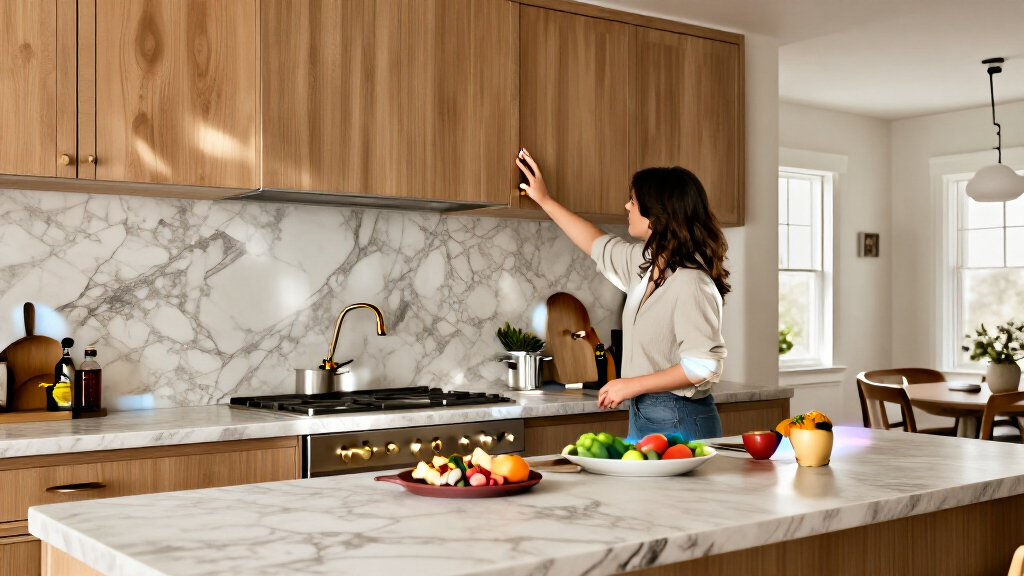
A Hunker report says large-format tiles are poised to become a more prominent kitchen backsplash option in 2027, continuing the interest in slab-like surfaces. The article cites lower potential material costs and fewer grout lines, but the trend forecast is not backed by sales data or a broader industry survey in the supplied source.
Large-format tile is forecast to gain ground as a kitchen backsplash choice in 2027, according to a Hunker report, offering a tile-based alternative to stone slabs with fewer grout lines and potentially lower material costs. The forecast is a design prediction, not a confirmed market-wide shift; the report does not cite sales figures or an industry survey showing how widely homeowners are adopting the style.
Hunker describes large-format tile as tile with at least one edge measuring more than 12 inches. One size used for backsplashes is 18 by 36 inches, which can suit an 18-inch space between a counter and cabinets, depending on the kitchen’s dimensions and layout. Porcelain options can be made to resemble marble, quartz or granite, while other products use mirror finishes, metal-like looks or patterns that imitate smaller tiles.
The report presents the format as a practical alternative to natural stone slabs. It says large tiles can reduce the number of grout lines and may cost substantially less: slabs can reach $150 per square foot, while some large-format tiles are available for as little as $10 per square foot. Those figures are examples reported by Hunker, not a full price comparison; actual costs depend on the product, location, preparation and installation.
Designer Ruchi A. Mohan, quoted by Homes & Gardens, described improvements in the range of large-scale porcelain products and pointed to their limited grout lines and maintenance. Hunker also notes a possible design drawback: stone-like veining may appear stretched across a larger tile, reducing some of the depth and detail found in natural stone.
A Slab-Like Look at Tile Prices
For homeowners planning a kitchen renovation, the forecast points to a possible way to get a broad, relatively uninterrupted backsplash appearance without buying a full natural-stone slab. Fewer grout joints can also mean less visible visual division across the wall and fewer grout lines to clean, although the source does not quantify maintenance savings or establish that every product performs the same way.
Price is a major part of the report’s case for the trend. The cited difference between some tile and slab prices may make the look accessible to more budgets, but tile is not automatically a low-cost project: installation, cutting, substrate work and product selection affect the total. Readers comparing options should check installed estimates rather than treating the material prices as a finished-project cost.
large format porcelain backsplash tiles
As an affiliate, we earn on qualifying purchases.
As an affiliate, we earn on qualifying purchases.
From Stone Slabs to Larger Tiles
Hunker places the prediction within a broader kitchen-design interest in stone slabs, mixed materials and textured tiles, which it says have been popular in 2026. Large-format tile carries forward the slab-like visual direction while using multiple tile pieces rather than a single slab. Its appeal also reflects uses elsewhere in the home: the report notes that oversized tiles have become an option for flooring and bathrooms.
The format is not limited to stone-look porcelain. Some tiles feature metallic or mirrored finishes, and some print patterns that resemble smaller tiles. Those designs can suggest a more detailed surface without requiring the wall to be assembled from hundreds of small pieces. Hunker’s forecast is that these options will become more visible in kitchens by 2027, but it gives no launch schedule, retailer data or market forecast to measure the expected growth.
How Broad the Trend Will Be
It is not yet clear whether large-format tile will become a leading backsplash choice in 2027. The source offers a design forecast but no adoption figures, survey results or manufacturer and retailer data. The cited prices are examples, and the report does not specify product models, markets or whether they include installation.
Performance and appearance will also vary by product and kitchen. The report flags stretched-looking veining as one possible drawback, but does not compare durability, repair needs or cleaning requirements across tile types and natural stone. Homeowners would need product specifications and project-specific quotes to weigh those trade-offs.
What Renovators Should Compare
The next test of Hunker’s forecast will be whether designers, manufacturers and retailers feature more large-format backsplash products and whether buyers choose them during 2027 renovations. No specific industry announcement or adoption milestone is identified in the report. For now, people considering the style can compare tile dimensions and finish samples in their own lighting, review how the printed veining aligns across pieces, and request itemized installation estimates.
Those comparisons can show whether a particular tile achieves the desired slab-like look and whether its full project cost is lower than alternatives. The report’s prediction remains a forecast; further market evidence would be needed to establish whether the design becomes a widespread trend.
Key Questions
What backsplash trend does the report forecast for 2027?
Hunker forecasts greater use of large-format tile, including porcelain made to resemble natural stone. It does not provide data confirming that adoption is already rising across the market.
What counts as large-format tile?
In Hunker’s description, a tile is generally large-format if at least one edge measures more than 12 inches. The report gives 18-by-36-inch tile as one possible backsplash size.
Is large-format tile cheaper than a stone slab?
Hunker says some large-format tiles can cost as little as $10 per square foot, while slabs can reach $150 per square foot. These are reported material-price examples, not guaranteed prices or installed project totals.
What is a possible drawback of large-format backsplash tile?
The report says stone-like veining may look stretched across a larger tile, potentially losing some visual depth and detail. Appearance depends on the specific product and how the pieces are arranged.
Source: rss
Fall Picks
fall essentials
As an affiliate, we earn on qualifying purchases.