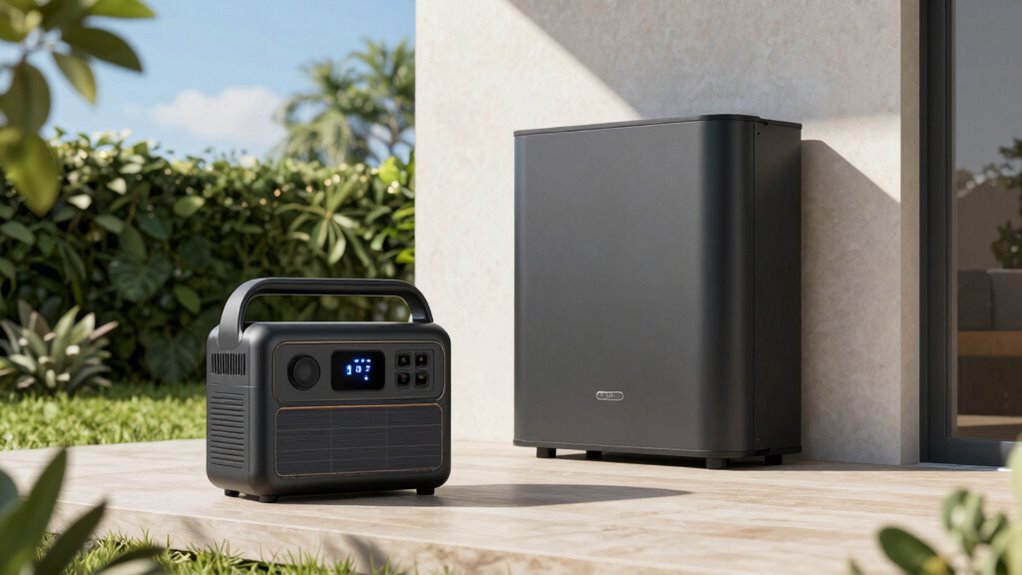

If you need portable power for outdoor activities or emergency use away from the house, a solar generator makes more sense because it’s lightweight, easy to move, and harnesses sunlight. However, if you want a permanent solution that keeps your essential appliances running during outages, a home battery backup is better since it’s integrated into your home and scalable. To understand which option truly fits your lifestyle and backup needs, explore the details further.

Get decor and gifts delivered free with Prime
- Fast, free delivery on millions of items
- Prime Video, Amazon Music and more included
- Member-only deals all year
Key Takeaways
- Choose a solar generator for portability, outdoor use, and temporary power needs; opt for a home battery backup for permanent, whole-house support.
- Solar generators rely on sunlight and are ideal for occasional use, while home batteries provide continuous power during outages.
- Home battery backups offer larger capacity and scalability but require higher upfront investment and professional installation.
- Solar generators are cost-effective and easy to deploy, making them suitable for outdoor activities and emergency use away from mains power.
- Your decision depends on mobility needs, budget, and whether you require ongoing home backup or portable energy solutions.

When choosing a reliable power solution for your home, understanding the differences between solar generators and home battery backups is essential. Both options aim to provide backup power, but they serve different needs and situations. If you’re seeking portable power, solar generators are often the better choice. They’re designed to be mobile, lightweight, and easy to transport, making them perfect for outdoor activities, camping trips, or emergency use away from the house. Solar generators harness sunlight through panels, storing energy in built-in batteries, which means you can generate power without relying on the grid. This setup offers a level of energy independence that’s appealing if you want to reduce your reliance on traditional electrical sources or prepare for power outages.
On the other hand, home battery backups are generally larger and installed permanently in your house. They’re designed to integrate seamlessly with your existing electrical system, providing a steady, reliable supply of power during outages. Unlike solar generators, which are portable, home battery backups are meant to stay put. They often connect to your solar panels or the grid, storing excess energy for later use. This makes them ideal for maintaining essential appliances and systems in your home during emergencies, ensuring your daily routines aren’t disrupted. Additionally, many home battery systems offer smart management features that optimize energy use and storage, further enhancing their efficiency during outages. While they do contribute to energy independence, their primary function is to keep your home running smoothly when the power lines go down.
Home battery backups are permanent, integrated systems designed to keep your home powered during outages and support essential appliances.
Cost and scalability also differ between the two. Solar generators tend to be less expensive upfront, especially if you only need a small unit for occasional use. They’re easy to set up and don’t require professional installation. However, their capacity is limited, so they might not support large appliances or extended outages. Home battery backups involve a higher initial investment, but they offer larger capacities and longer backup durations. Plus, they can be scaled up with additional units if needed, making them suitable for whole-home backup solutions.
Ultimately, your choice depends on your specific needs. If portability, outdoor use, or reducing reliance on the grid matter most, a solar generator makes sense. But if you want a permanent, integrated solution that ensures your home stays powered during outages, a home battery backup is the smarter option. Both systems enhance your energy independence in different ways, so consider your lifestyle, budget, and backup needs carefully before making a decision.
portable solar generator for camping
As an affiliate, we earn on qualifying purchases.
As an affiliate, we earn on qualifying purchases.
Frequently Asked Questions
What Are the Environmental Impacts of Each System?
You’ll find that both systems offer renewable benefits and help reduce emissions. Solar generators produce clean energy directly from sunlight, minimizing environmental impact and lowering your carbon footprint. Home battery backups store energy, often from renewable sources, supporting emission reduction during outages. While solar generators are more eco-friendly overall, home batteries contribute to a sustainable grid by storing excess renewable power. Both options promote greener living and cleaner energy use.
How Do Installation Costs Compare Over Time?
You’ll find that solar generators generally have lower upfront costs, but their installation complexity can add up over time, especially if you need multiple units. Home battery backups, while more expensive initially, often prove more cost-efficient long-term because they integrate more seamlessly into your home’s energy system. Statistically, the total installation costs for home batteries tend to be 20-30% higher initially but save you money on maintenance and upgrades later.
Can Both Systems Be Used Simultaneously?
Yes, you can use both systems simultaneously through hybrid integration, which combines solar generators and home battery backups for enhanced energy resilience. System compatibility is key; verify your existing setup supports hybrid solutions. By integrating both, you get the flexibility to draw power from either source, optimize energy use, and increase backup capacity during outages. Always check with manufacturers or professionals to confirm compatibility and proper setup for seamless operation.
What Maintenance Is Required for Each?
You need to perform regular maintenance to keep both systems running smoothly. For solar generators, check and clean the solar panels every few months to maximize efficiency, and monitor the battery health. Home battery backups require system checks roughly once a year, including software updates and inspecting connections. Both systems have a long system lifespan if you stay consistent with maintenance, helping you avoid costly repairs and ensuring reliable power during outages.
Are There Any Safety Concerns With Either Option?
You should be aware that safety concerns with either option aren’t exaggerated; they’re real. With proper safety protocols, both systems are safe, but battery durability matters—improper handling can cause overheating or fires, like a volcano bursting! Guarantee your setup includes proper ventilation, regular inspections, and secure connections. Following these safety protocols minimizes risks, making your backup system a reliable, safe source during emergencies.
Conclusion
Imagine a summer storm brewing, lightning flashing across the sky. A solar generator quietly hums, ready to power your essentials, while a home battery backup stands firm like a fortress, silently storing energy for the long haul. Both have their place—one portable, perfect for adventures; the other built-in, offering steady resilience. Knowing your needs helps you choose the right shield against power outages, ensuring you’re prepared no matter what nature throws your way.
Fall Picks
fall essentials
As an affiliate, we earn on qualifying purchases.