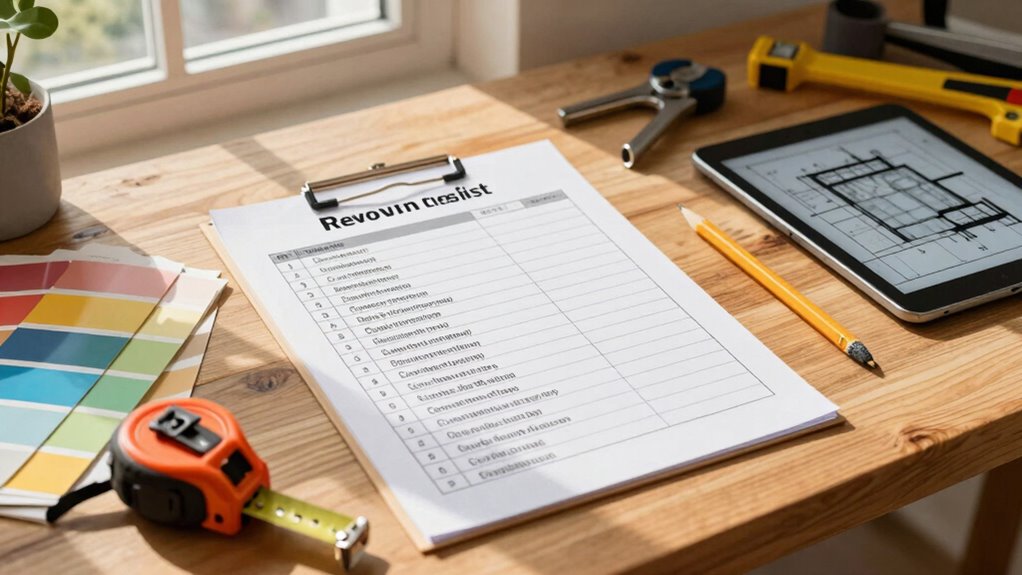

To save time, money, and avoid regret, create a detailed renovation checklist that covers your design ideas, budget, and timeline. Clarify your style and organize inspiration to stay focused. Set a realistic budget with a contingency buffer and break down costs. Develop a clear project plan, secure necessary permits, and finalize choices early. Keep records and monitor progress regularly. If you keep these tips in mind, you’ll be well on your way to a smooth project—learn more to guarantee success.

Get decor and gifts delivered free with Prime
- Fast, free delivery on millions of items
- Prime Video, Amazon Music and more included
- Member-only deals all year
Key Takeaways
- Define a clear design vision and organize ideas with mood boards to prevent costly last-minute changes.
- Establish a detailed budget with contingency funds and track expenses to avoid overspending.
- Create a comprehensive timeline with milestones and secure permits early to prevent delays.
- Finalize all selections and review contracts thoroughly before starting work to ensure clarity and avoid misunderstandings.
- Maintain detailed records and regularly monitor progress to stay organized, flexible, and on track.

Starting a renovation project can feel overwhelming, but having a clear checklist keeps everything on track. When you begin, take the time to gather design inspiration from magazines, online platforms, or even friends’ homes. Knowing your style helps you make decisions faster and guarantees your project reflects your personality. As you collect ideas, keep a mood board or digital folder so you can refer back to it, making it easier to communicate your vision to contractors or designers. This step prevents last-minute changes that can inflate costs and delay your project.
Gather design inspiration early to clarify your style and communicate your vision effectively.
Next, prioritize budget planning early in the process. Set a realistic budget that includes a buffer for unexpected expenses—aim for about 10-15% extra. Break down costs into categories like materials, labor, permits, and contingency funds. Being precise here helps you avoid overspending and gives you a clear picture of what’s feasible. It’s tempting to get carried away with fancy finishes or high-end fixtures, but sticking to your budget ensures you won’t be forced to cut corners later or face financial stress.
Once your design inspiration and budget are in place, create a detailed project timeline. Decide on key milestones, such as demolition, framing, electrical, and finishing. This timeline acts as a roadmap, helping you coordinate with contractors and keep the project moving smoothly. Regular check-ins with your team ensure that work stays on schedule, and adjustments can be made promptly if delays happen. Additionally, understanding the importance of permits can help you avoid costly delays and legal issues. Incorporating a comprehensive project plan can further streamline your process and prevent overlooked tasks. Being aware of permitting requirements early helps prevent costly fines or work stoppages.
Before breaking ground, finalize your selections for key elements—fixtures, flooring, paint colors, and cabinetry. Having these choices made in advance prevents delays caused by indecision or last-minute ordering. Also, secure all necessary permits early on to avoid fines or work stoppages. Double-check your contracts with vendors and contractors, ensuring everything is clear about scope, costs, and deadlines. Clear communication at this stage prevents misunderstandings that could lead to costly mistakes.
Throughout the renovation, keep detailed records of receipts, warranties, and correspondence. Staying organized saves you time and stress when questions or issues arise later. Regularly revisit your checklist to ensure all tasks are completed as planned. Remember, sticking to your initial plan, while allowing some flexibility for unforeseen problems, will help you stay on track, on budget, and satisfied with your finished space. Additionally, effective organization is crucial for managing the many moving parts of a renovation project. With a well-structured checklist, your renovation becomes more manageable, saving you time, money, and regret.
As an affiliate, we earn on qualifying purchases.
Frequently Asked Questions
How Do I Choose Reliable Contractors for My Renovation?
To choose reliable contractors, start by checking their credentials, including licenses and insurance, to verify they’re legit. Talk to previous clients or read reviews to gauge their reputation. Use clear communication strategies—ask detailed questions and listen carefully to their responses. Trust your instincts and choose someone who’s transparent, responsive, and professional. A reliable contractor will provide proper credentials and maintain open, honest communication throughout your renovation project.
What Permits Are Required for Home Renovations?
They say “it’s better to be safe than sorry,” and that’s true for permits. You’ll need to check local zoning regulations and building codes to determine which permits are required for your renovation. Typically, major projects like additions or structural changes need approvals. Visit your city or county’s building department online or in person, and obtain all necessary permits before starting. This way, you avoid fines or project delays.
How Can I Stay Within My Renovation Budget?
To stay within your renovation budget, start with thorough budget planning and detailed cost estimation. Set clear priorities, and allocate funds accordingly, leaving a buffer for unexpected expenses. Research prices for materials and labor beforehand, and get multiple quotes. Track your spending consistently, adjusting the plan if costs exceed estimates. Staying disciplined and organized helps prevent overspending, ensuring your renovation stays on budget and meets your expectations.
What Are Common Renovation Mistakes to Avoid?
Avoid renovation pitfalls, design blunders, and poor planning to keep your project on track. Don’t rush decisions, ignore expert advice, or overlook budget details. Failing to get permits, skimping on quality, or neglecting to communicate with contractors can lead to costly mistakes. Stay proactive, research thoroughly, and plan meticulously to prevent common renovation mistakes. By doing so, you guarantee a smoother process and a satisfying final result.
How Long Does a Typical Home Renovation Take?
A typical home renovation takes about 3 to 6 months, depending on the scope and complexity. You should consider timelines estimation for each renovation phase, from planning to completion, to stay on track. Smaller projects may wrap up in a few weeks, while major overhauls could stretch beyond six months. Staying organized and communicating regularly with your contractor helps guarantee each phase progresses smoothly and on schedule.
Conclusion
By boldly building your blueprint and diligently detailing every deadline, you’ll dodge delays and diminish discontent. Staying savvy, sticking to your schedule, and surveying every step guarantees your renovation runs smoothly, sparing you stress and sums spent. Remember, a well-woven plan wards off worry, while wise, watchful work wins wonderful results. So, stay sharp, stick to your script, and savor the success of your savvy, stress-free space!
Halloween Picks
halloween
As an affiliate, we earn on qualifying purchases.