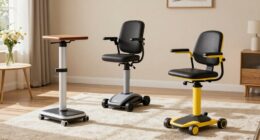
To choose ergonomic furniture for comfort, focus on adjustable features like lumbar support, seat height, and armrests that fit your body properly. Guarantee the chair supports your natural spine curve, with feet flat on the floor and knees at 90 degrees. Good ergonomic furniture promotes proper posture and reduces fatigue, keeping you comfortable all day. If you keep exploring, you’ll find tips to select the best options for your needs and maximize your comfort.
Key Takeaways
- Prioritize adjustable features like lumbar support, seat height, and armrests to customize comfort and support your body’s natural posture.
- Test furniture before purchasing to ensure proper fit, with feet flat on the floor and hips slightly higher than knees.
- Choose chairs with a backrest that follows the spine’s natural curve for comprehensive lower back and shoulder support.
- Ensure armrests are adjustable to reduce shoulder tension and maintain relaxed arms during work.
- Invest in ergonomic furniture to promote long-term health, reduce fatigue, and enhance focus and productivity.

When selecting furniture, prioritizing ergonomics can make a significant difference in your comfort and overall well-being. The right pieces can help you maintain a healthy office posture, reducing strain and preventing discomfort during long work hours. Ergonomic furniture is designed to support your body’s natural alignment, which is vital for staying focused and productive without risking injury or fatigue. One of the most important aspects to consider is lumbar support, which directly influences your lower back health and overall comfort.
Your office posture plays a vital role in how you feel at the end of the day. If your chair doesn’t support your lower back properly, you’re likely to slouch or lean forward, putting unnecessary pressure on your spine and muscles. A good ergonomic chair should have adjustable lumbar support that fits snugly into the curve of your lower back. This support encourages you to sit upright, keeps your spine aligned, and reduces the risk of developing chronic back pain. When you choose a chair with adjustable lumbar support, you can customize the fit to your body, ensuring that your back is supported at the right height and depth.
Beyond lumbar support, pay attention to other features that promote proper office posture. Look for chairs with adjustable seat height, so your feet rest flat on the floor and your knees are at a 90-degree angle. The seat depth should also be adjustable to prevent pressure behind your knees, which can restrict circulation. The backrest should follow the natural curve of your spine, offering support from your lower back up to your shoulder blades. An adjustable armrest can help reduce shoulder tension by keeping your arms at a comfortable height, preventing hunching or reaching forward. Additionally, choosing furniture with adjustable features allows you to customize your workspace for optimal comfort.
When you’re shopping for ergonomic furniture, test the furniture out first. Sit in the chair and make sure you can adjust it to fit your body comfortably. Your feet should rest flat on the floor, and your hips should be slightly higher than your knees. Keep your shoulders relaxed, and ensure your lower back is supported without forcing you into an unnatural position. Remember, the goal is to create a workspace that encourages good posture habits, so your body doesn’t have to compensate for poorly designed furniture.
Investing in ergonomic furniture that emphasizes proper office posture and lumbar support isn’t just about comfort; it’s about protecting your health in the long run. When you choose wisely, you’ll find that working becomes less tiring and more enjoyable, allowing you to focus on your tasks without unnecessary pain or distraction.
Frequently Asked Questions
How Do I Know if Furniture Is Truly Ergonomic?
You can tell if furniture is truly ergonomic by checking for ergonomic certifications, which guarantee it meets specific health standards. Look for adjustable features like seat height, lumbar support, and armrests, so you can customize the fit to your body. Test the furniture yourself—if it supports your posture comfortably and reduces strain, it’s likely ergonomic. Always prioritize quality and adjustability to find the best setup for your needs.
Can Ergonomic Furniture Improve Productivity?
Think of ergonomic furniture as a steady captain guiding your ship through choppy seas. It can boost your productivity by reducing muscle strain and promoting proper posture correction, so you stay focused and energized longer. When your body feels supported, your mind can concentrate better, leading to improved work output. Investing in the right ergonomic pieces creates a healthier, more efficient workspace where you perform at your best every day.
What Is the Cost Difference Between Ergonomic and Standard Furniture?
The price comparison shows ergonomic furniture generally costs more than standard options, often by 20-50%. You should consider your budget considerations carefully, as investing in ergonomic pieces can lead to long-term health benefits and increased comfort. While the initial cost is higher, the investment may save you money on health issues and productivity gains over time. Assess your needs and budget to find the best balance between cost and comfort.
How Often Should I Replace My Ergonomic Furniture?
You should replace your ergonomic furniture every 5 to 10 years, depending on its furniture lifespan and how often you use it. Regularly check for signs of wear, such as diminished support or damaged parts, which indicate a need for replacement. Maintaining proper care can extend its lifespan. Keep in mind that replacement frequency varies based on usage, quality, and maintenance, so stay attentive to comfort and functionality.
Are There Ergonomic Options Suitable for Small Spaces?
Did you know that over 60% of people with small spaces struggle to find ergonomic furniture? Luckily, there are compact solutions that fit your area without sacrificing comfort. Look for multi-purpose designs like foldable desks or ergonomic chairs that tuck away easily. These options maximize your space while providing the support you need. You don’t have to compromise on ergonomics—smart, space-saving furniture makes it possible.
Conclusion
Remember, choosing ergonomic furniture isn’t just about comfort—it’s about prioritizing your well-being. While a stylish chair might catch your eye, an ergonomic one offers lasting support, preventing pain and fatigue. Sometimes, sacrificing aesthetics for health feels counterintuitive, but in the long run, your body will thank you. By making mindful choices today, you create a workspace that nurtures you, proving that true comfort balances form and function for a healthier, happier you.