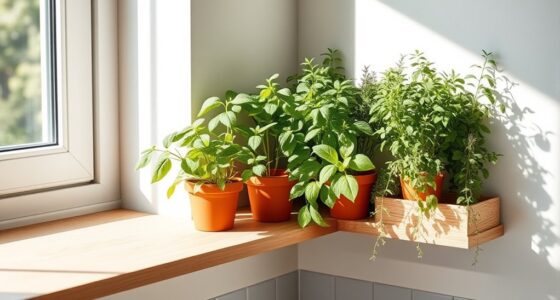
To create a wellness garden on your balcony, choose suitable plants like herbs and small vegetables that thrive in containers and fit your sunlight. Incorporate sustainable composting by using small bins to turn kitchen scraps into natural fertilizer, reducing waste. Maintain your garden with regular watering, natural fertilizing, and mulching to keep plants healthy and vibrant. By combining mindful plant choices and eco-friendly practices, you’ll transform your balcony into a calming oasis that supports both your well-being and the environment.
Key Takeaways
- Select suitable, resilient plants like herbs, vegetables, and flowers tailored to your balcony’s sunlight and space.
- Use eco-friendly composting methods, such as small bins or tumblers, to recycle kitchen waste into natural fertilizer.
- Maintain proper watering, mulching, and natural fertilizing practices to keep plants healthy and promote growth.
- Incorporate diverse plant varieties to attract beneficial insects, enhance aesthetics, and support pest control.
- Design a relaxing, balanced space that encourages mindfulness, physical activity, and a sustainable, rejuvenating environment.
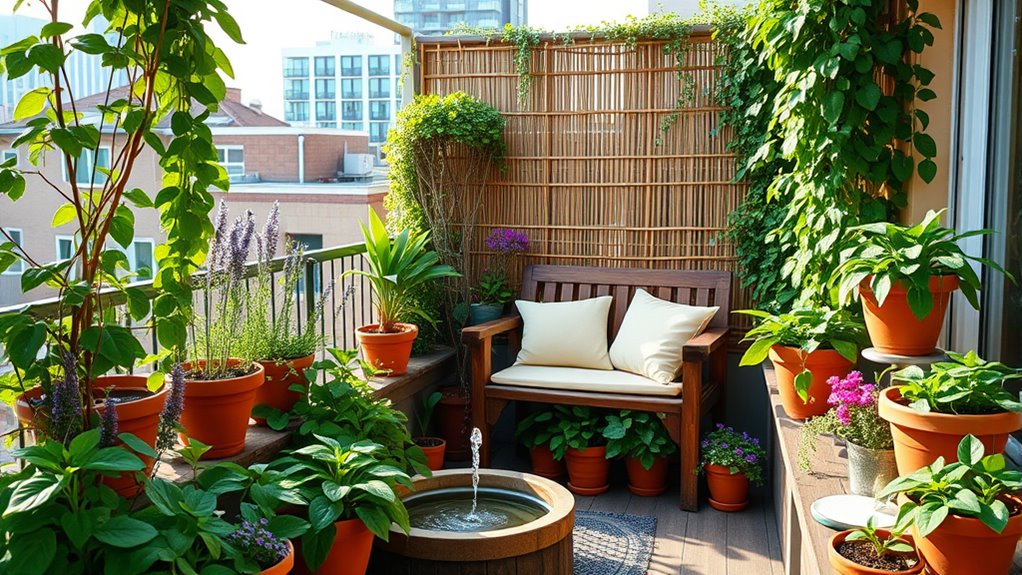
Transforming your balcony into a wellness garden is a simple way to boost your physical and mental health. With just a few thoughtful steps, you can create a lush, inviting space that nurtures both your body and mind. One of the first things to consider is how to manage waste sustainably. Composting techniques are a fantastic way to do this, turning your kitchen scraps and garden waste into nutrient-rich soil. You don’t need a large outdoor space; a small compost bin or tumbler fits perfectly on a balcony and helps reduce trash while providing valuable compost for your plants. When you start composting, make sure to balance green materials like fruit and vegetable peels with browns such as dried leaves or paper. Keep the compost moist but not soggy, and turn it regularly to aerate. This process not only minimizes waste but also allows you to produce natural fertilizer, which keeps your plants healthy and thriving. Additionally, understanding proper composting methods is essential for maintaining an effective and odor-free compost system.
Choosing the right plants is vital for a successful wellness garden. Plant selection tips emphasize picking species suited for balcony conditions—these often include herbs, small vegetables, and resilient flowers. Herbs like basil, mint, and rosemary are excellent because they grow quickly and add fresh flavor to your meals. Select plants that flourish in containers and can tolerate limited root space. Consider your climate and sunlight exposure; for example, if your balcony faces south and receives direct sunlight most of the day, sun-loving plants like tomatoes or peppers will thrive. Conversely, if your space is shaded, opt for shade-tolerant plants such as lettuce or certain ferns. Additionally, choose compact varieties that won’t outgrow their containers and are easy to maintain. Using high-quality potting mix ensures good drainage and nutrient availability, supporting healthy growth.
To keep your wellness garden thriving, incorporate a routine of regular watering and fertilizing using natural methods, like compost tea or organic liquid feeds. Mulching your containers helps retain moisture and suppress weeds, making maintenance easier. When selecting plants, think about diversity—mixing herbs, flowers, and vegetables not only creates visual interest but also encourages beneficial insects, which can help control pests naturally. Remember, your balcony isn’t just a space for plants; it’s a sanctuary for relaxation and rejuvenation. Properly chosen plants, coupled with eco-friendly composting techniques, make your balcony a sustainable oasis. This thoughtful approach ensures your wellness garden remains vibrant, healthy, and beneficial for your well-being. By paying attention to plant selection tips and composting wisely, you turn your balcony into a nurturing retreat that promotes mindfulness, physical activity, and a stronger connection to nature.
Frequently Asked Questions
What Are the Best Plants for a Shaded Balcony Wellness Garden?
You should choose shade-tolerant plants and low light greenery for your balcony wellness garden. Consider ferns, hostas, and peace lilies, as they thrive in limited sunlight. Snake plants and pothos are also great options because they adapt well to low light conditions. These plants not only enhance your space with lush greenery but also promote a calming atmosphere, making your balcony a perfect spot for relaxation and wellness.
How Do I Maintain Soil Health in Limited Balcony Space?
Think of your balcony soil as a living sponge that needs nourishment. To keep it healthy, use composting techniques like bin or worm composting to add organic matter regularly. Test the soil using simple soil testing methods to check pH and nutrients, then amend accordingly. This ongoing care guarantees your plants thrive, turning your limited space into a lush, vibrant oasis that feeds their roots and your soul.
Can I Include Edible Herbs and Vegetables in My Wellness Garden?
Yes, you can include edible herbs and vegetables in your wellness garden. Use companion planting to optimize space and improve growth; for example, plant basil with tomatoes or mint with cucumbers. Seasonal planning helps you choose the right herbs and vegetables for each time of year, ensuring a continuous harvest. This approach maximizes your limited balcony space while creating a thriving, healthy garden that offers fresh, organic produce.
What Are the Ideal Watering Practices for Balcony Plants?
You should establish a consistent watering schedule, typically watering when the top inch of soil feels dry. Use watering techniques like gentle, deep watering to guarantee moisture reaches roots without overwatering. Avoid frequent shallow watering, which can lead to weak roots. Always check your balcony plants daily, especially in hot weather, and adjust your watering practices based on plant needs and weather conditions for healthy growth.
How Do I Prevent Pests Without Using Chemicals?
To prevent pests naturally, you should promote natural pest control by encouraging beneficial insects like ladybugs and lacewings, which prey on pests. Additionally, practice companion planting by pairing plants that repel pests with your garden plants, such as marigolds with tomatoes. Keep your balcony clean, remove diseased or infested plants promptly, and avoid overwatering, which can attract pests. This integrated approach helps keep pests at bay without chemicals.
Conclusion
A wellness garden on your balcony is like planting a tiny oasis in your busy life, offering a breath of fresh air and a space to recharge. With each flower and herb, you nourish not just your space but also your soul. Remember, this garden is your personal sanctuary—where growth blooms and stress withers away. So, tend to it with love, and watch your well-being flourish like a vibrant, living tapestry beneath your fingertips.