To design a multi-use yoga and exercise space, focus on acoustic treatment with sound-absorbing panels to reduce noise and echo. Incorporate smart storage solutions like wall shelves and baskets to stay organized. Use flexible, movable furniture and fold-away mirrors for easy adaptation between activities. Choose durable, non-slip flooring such as rubber or cork for comfort and safety. Adding eco-friendly features enhances sustainability. Keep exploring for more tips to create your perfect versatile workout environment.
Key Takeaways
- Incorporate acoustic treatments like sound-absorbing panels to minimize noise and echo, creating a calming environment.
- Use versatile, movable furniture and collapsible equipment for easy space reconfiguration between yoga and workout routines.
- Implement efficient storage solutions such as wall-mounted shelves and labeled containers to keep equipment organized and accessible.
- Choose durable, non-slip flooring like rubber or cork for safety, comfort, and noise reduction during various activities.
- Integrate adjustable lighting and eco-friendly features to enhance ambiance and sustainability for a multi-purpose space.
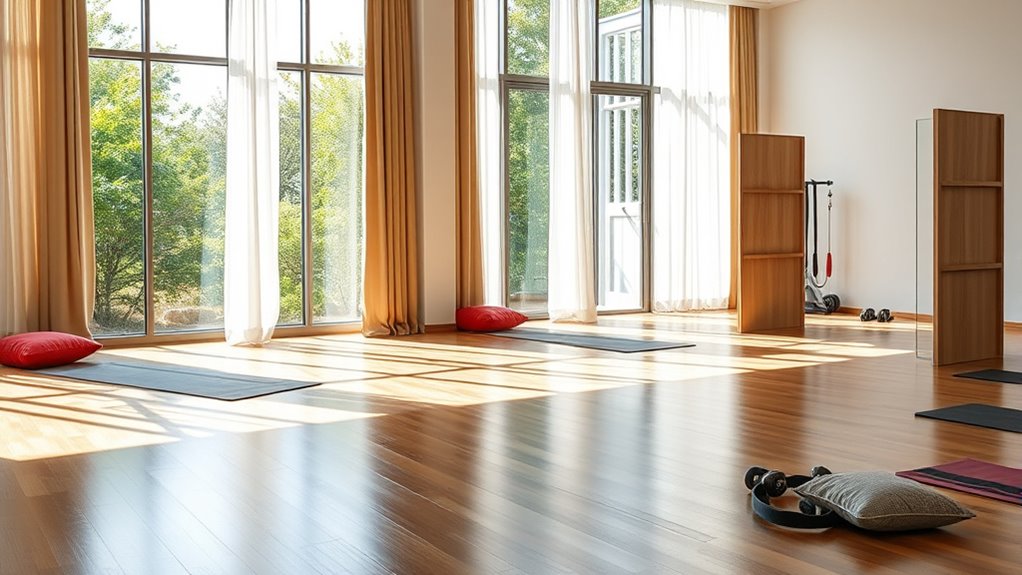
Creating a versatile yoga and exercise space begins with thoughtful planning to maximize functionality and comfort. When designing your area, focus on elements that enhance both the atmosphere and practicality. Acoustic treatment plays an indispensable role here, helping to minimize noise distractions and create a peaceful environment. Installing sound-absorbing panels or foam tiles on walls and ceilings can considerably reduce echo and external noise, allowing you to concentrate better during your routines. This not only improves your focus but also guarantees that your space remains calming and inviting, whether you’re practicing yoga, stretching, or engaging in high-intensity workouts.
Acoustic treatment creates a peaceful, focused yoga and exercise environment by reducing noise and echo.
Equally important are effective storage solutions that keep your space organized and clutter-free. Incorporate versatile storage options such as wall-mounted shelves, under-bench compartments, or multi-purpose storage ottomans. These help you keep your mats, blocks, weights, and other accessories neatly stored yet easily accessible. When your gear is organized, you spend less time searching for equipment and more time focusing on your workout. Plus, tidy storage prevents equipment from cluttering your workout area, maintaining its open and inviting feel. Consider using labeled containers or baskets to categorize different items, making it easier to find what you need quickly.
Designing for flexibility is also key. Use movable or collapsible furniture that can be tucked away when not in use, freeing up space for different activities. For example, fold-away wall mirrors or collapsible yoga mats can be stored easily when not needed. Incorporate adjustable lighting to set the mood for different types of workouts or relaxation sessions. Soft, warm lights work well for yoga and meditation, while brighter, more focused lighting suits strength training or cardio routines.
Lastly, pay attention to the flooring. Choose resilient, non-slip surfaces that can withstand various activities while providing comfort underfoot. Rubber or cork flooring are popular options—they’re durable, quiet, and easy to maintain. When combined with good acoustic treatment and efficient storage solutions, your space becomes a harmonious environment that adapts seamlessly to your evolving needs. Being aware of toilet flushing efficiencies and water-saving options can also contribute to a sustainable lifestyle, even in your dedicated workout space.
Frequently Asked Questions
What Are the Best Lighting Options for a Versatile Exercise Space?
You should opt for natural light combined with adjustable fixtures to create a versatile exercise space. Natural light boosts mood and energy, so maximize windows or skylights. Use adjustable fixtures like dimmable overhead lights or task lamps to customize brightness for different activities. This setup guarantees the space adapts to yoga, strength training, or relaxation, providing ideal lighting conditions for every workout while maintaining a welcoming atmosphere.
How Can Soundproofing Be Effectively Integrated Into the Design?
Your soundproofing can be as effective as a fortress wall. Use high-quality soundproofing materials like mass-loaded vinyl and dense insulation in walls and ceilings. Strategically place acoustic panels on shared walls and near noisy equipment to absorb sound. Don’t forget to seal gaps around doors and windows. Proper acoustic panel placement and quality materials will guarantee noise stays contained, creating a peaceful, undisturbed exercise environment.
What Storage Solutions Optimize Space for Multiple Workout Types?
You should use modular storage units and wall-mounted shelves to optimize space for multiple workout types. Modular storage permits you to customize and reconfigure based on your changing needs, while wall-mounted shelves keep equipment accessible without cluttering the floor. This combination maximizes your available space, keeps your area organized, and ensures you have enough room for different workouts, from yoga mats to weights and accessories.
How Should Flooring Be Selected to Accommodate Different Activities?
You’ll want flooring that’s surprisingly versatile and durable, perfect for all your activities. Think about materials like rubber or bamboo—these options handle the wear and tear of yoga poses and high-impact workouts alike. Ironically, choosing the right flooring means you don’t have to switch surfaces when switching activities. Focus on durability and material versatility, so your space remains functional, safe, and stylish through every squat, stretch, and downward dog.
What Ventilation Systems Ensure Fresh Air During Intense Workouts?
You should install a ventilation system that combines efficient mechanical systems with natural ventilation strategies. Use air quality monitoring to track pollutants and ensure fresh air during intense workouts. Make certain to incorporate operable windows or vents that can be opened to boost natural airflow when weather permits. A balanced approach with proper airflow, filtration, and real-time monitoring keeps the air clean, safe, and comfortable for everyone exercising in your space.
Conclusion
Imagine stepping into your versatile yoga and exercise space, where every detail invites movement and calm. By thoughtfully combining open areas, adaptable equipment, and soothing lighting, you create a sanctuary that fuels your wellness journey. This isn’t just a room—it’s a haven that responds to your needs, transforming effortlessly from a peaceful yoga retreat to an energetic workout zone. When design aligns with purpose, your space becomes a powerful tool for lifelong health and balance.