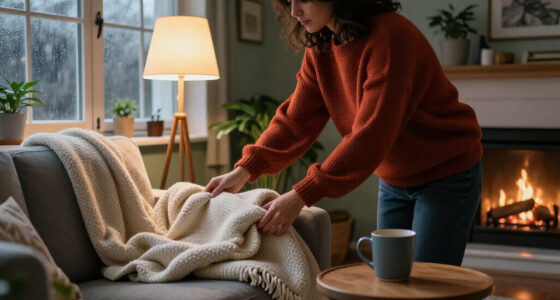
To make your space restful without feeling dull, choose calming colors like soft blues, gentle greens, and warm neutrals, and add subtle accent tones for interest. Incorporate natural textures such as wicker or jute, and use warm lighting that can be adjusted for different moods. Balancing serene decor with vibrant details creates a lively yet peaceful environment. Keep exploring ways to blend tranquility with visual appeal to craft your perfect relaxing retreat.

Get decor and gifts delivered free with Prime
- Fast, free delivery on millions of items
- Prime Video, Amazon Music and more included
- Member-only deals all year
Key Takeaways
- Use a calming color palette with subtle accent colors to create visual interest without overwhelming tranquility.
- Incorporate adjustable lighting options like dimmable lamps and candles for versatile, soothing ambiance.
- Add natural textures and materials, such as wicker or jute, to deepen sensory richness and prevent dullness.
- Include biodiversity-inspired decor elements that connect the space to nature, enhancing serenity and visual appeal.
- Balance restful design with vibrant accents and varied textures to maintain energy and prevent boredom.
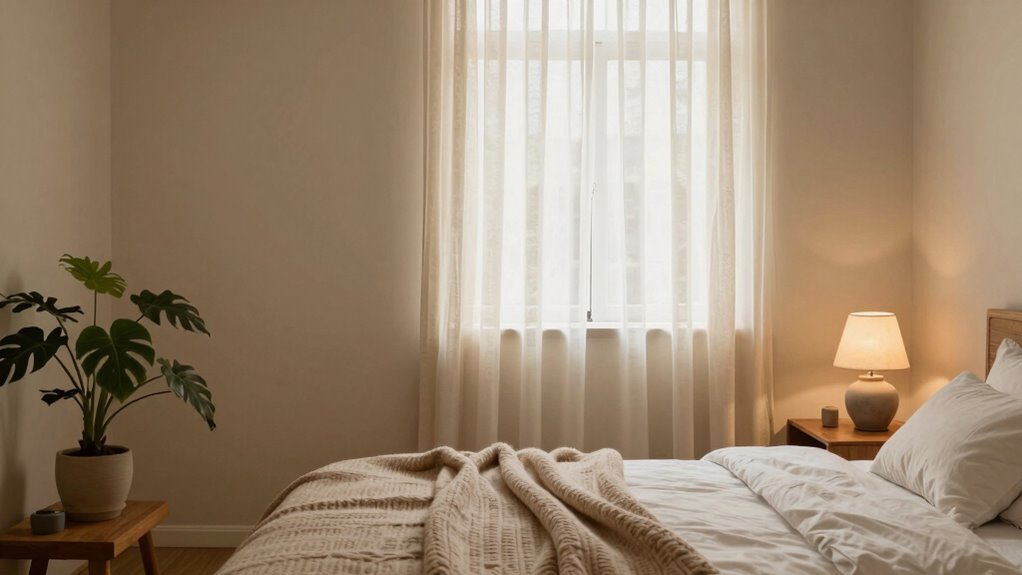
Creating a restful room begins with understanding how to foster a calming environment. The foundation of this lies in choosing the right color palettes and lighting options that promote relaxation without making the space feel dull or uninspired. When selecting colors, aim for shades that evoke serenity, such as soft blues, gentle greens, or warm neutrals. These hues help lower your stress levels and create a soothing backdrop. However, you don’t have to stick to monotonous tones—adding subtle variations or incorporating accent colors can keep the room visually interesting. Think about incorporating muted pastels or earthy tones that add depth while maintaining a peaceful vibe. The goal is to create a balanced palette that feels inviting and restful, yet vibrant enough to prevent the space from becoming boring.
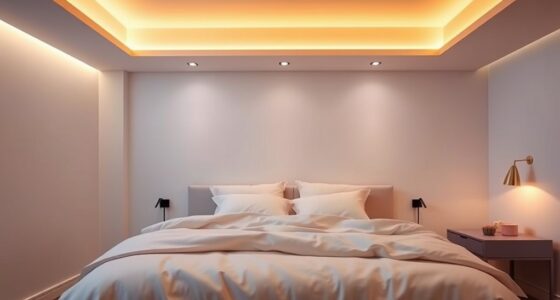
Lighting options play an essential role in shaping the mood of your room. Overly bright or harsh lighting can disrupt relaxation, so opt for softer, layered lighting solutions. Use dimmable lamps, candles, or warm-toned bulbs that cast a gentle glow. Incorporate multiple sources of light at different levels, such as bedside lamps, fairy lights, or sconces, to create a cozy atmosphere. You want your lighting to be adjustable, so you can easily shift from bright enough for reading to dim enough for winding down. Natural light is also indispensable—let it in during the day through sheer curtains that diffuse sunlight, adding warmth without glare. During evenings, switch to warm, low-intensity lighting to help your mind shift into relaxation mode. Additionally, selecting calming color schemes for your decor can enhance the overall peaceful vibe of the space, and incorporating biodiversity-inspired elements can further deepen the connection to nature and promote tranquility. Including natural textures and materials, such as wicker or jute, can also enhance the calming effect and bring a tactile dimension to your restful environment.
As an affiliate, we earn on qualifying purchases.
Frequently Asked Questions
Can Color Choices Influence the Room’s Restful Vibe?
Yes, your color choices markedly influence the room’s restful vibe through color psychology and hue selection. Soft, muted hues like blues, greens, and neutrals promote relaxation and calmness, making your space feel more peaceful. Avoid overly bright or harsh colors that can create energy rather than tranquility. By carefully choosing hues that evoke serenity, you can craft a restful environment without it feeling dull or boring, ensuring comfort and style go hand in hand.
What Lighting Options Create a Calming Atmosphere?
You should opt for warm, dimmable lighting to create a calming atmosphere. Use fixtures that emit an ambient glow, like table lamps or string lights, to soften the space. Incorporate light sources that cast soft shadows, adding depth without harshness. Avoid bright, direct lighting, and instead focus on layered lighting that fosters relaxation and comfort, making the room feel serene and inviting.
How Does Furniture Placement Affect Relaxation?
You’ll find that furniture placement greatly influences relaxation by promoting space efficiency and furniture symmetry. Arrange your furniture to create open, uncluttered pathways, making the room feel more spacious and calming. Symmetrical layouts, like matching chairs or side tables on either side of a sofa, foster balance and tranquility. Avoid overcrowding, and position pieces to encourage easy movement, helping you feel more at ease and relaxed in your space.
Are There Specific Textures That Promote Restfulness?
You might worry that textures could make a room feel cluttered, but soft textiles and natural materials actually promote calm and comfort. Incorporate plush throws, linen cushions, or wool rugs to add warmth without overwhelming the space. These textures engage your senses gently, creating a restful atmosphere. By balancing these elements with simple design, you’ll feel more relaxed and at ease in your room, without sacrificing style or tranquility.
How Can I Add Personality Without Cluttering?
You can add personality with artistic accessories and statement wall art to showcase your style without cluttering the space. Choose a few meaningful pieces that stand out but don’t overwhelm the room. Arrange them thoughtfully, perhaps on a simple shelf or as a focal point on one wall. This approach keeps your space feeling inviting and expressive, while maintaining a restful, uncluttered atmosphere.
Conclusion
Creating a restful room doesn’t mean sacrificing style or personality. Think of it like a peaceful lake—calm, inviting, and balanced. By choosing soft colors, simple decor, and cozy textures, you invite tranquility without dullness. Visualize a serene space as a gentle wave—smooth, consistent, and soothing. When you blend comfort with subtle elegance, your room becomes a retreat that refreshes your mind and spirit, proving that restful doesn’t have to be boring—it’s all about harmony.
Fall Picks
fall essentials
As an affiliate, we earn on qualifying purchases.