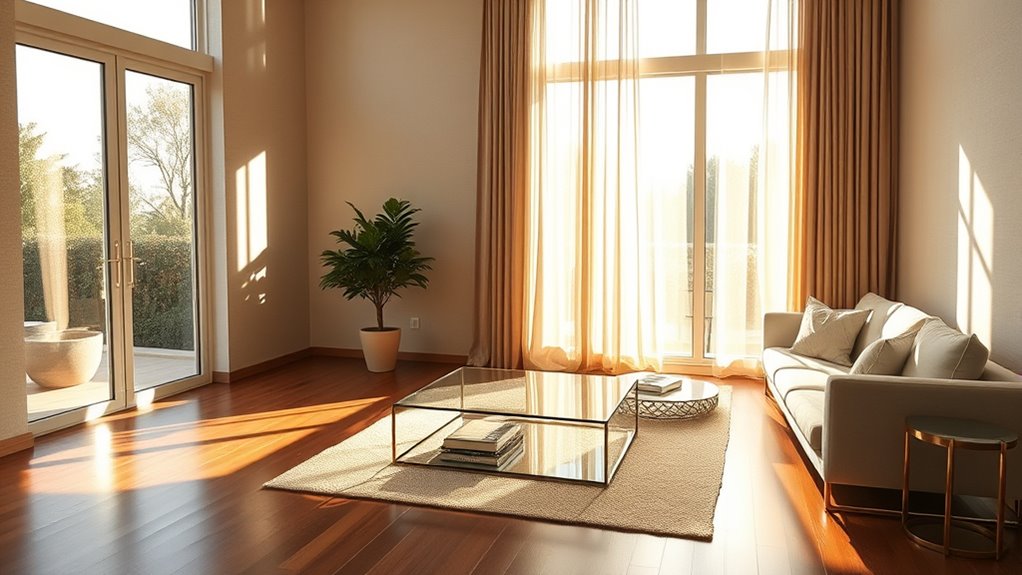

To maximize natural light with window placement, focus on positioning windows where they can catch the sun’s path—south-facing for all-day brightness, east for morning sun, and west for late afternoon glow. Use window treatments like blinds or curtains to control glare and heat, and consider layering options for flexibility. Combining thoughtful placement with smart treatments boosts comfort and energy efficiency. Keep going, and you’ll discover more ways to optimize your home’s natural lighting.
Key Takeaways
- Position windows facing south for maximum year-round sunlight exposure.
- Incorporate larger or strategically placed windows on key walls to enhance daylight entry.
- Use east-facing windows to capture morning sun and energize the space early in the day.
- Avoid obstructions outside windows, like trees or buildings, that block sunlight.
- Combine window placement with light-diffusing treatments to optimize natural illumination.
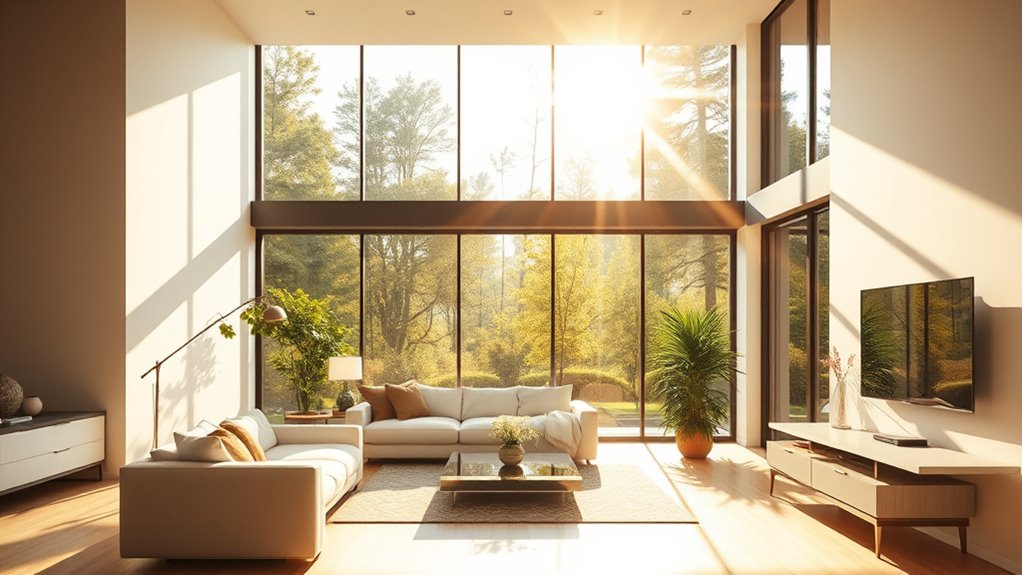
Have you ever wondered how the placement of your windows can transform the natural light in your home? The way you position your windows isn’t just about aesthetics; it directly impacts how sunlight filters through your space, affecting mood, energy efficiency, and overall comfort. Proper window placement allows you to maximize sunlight during the day while minimizing glare and heat loss. To truly harness this natural resource, you need to consider not only where your windows go but also how you control the light once it enters. This is where curtain selection and window treatments come into play, giving you the flexibility to fine-tune your environment.
Strategic window placement and treatments enhance natural light, comfort, and energy efficiency in your home.
When planning your window placement, think about the sun’s path across your home. South-facing windows tend to get the most sunlight year-round, flooding rooms with warmth and brightness. East-facing windows capture the morning sun, energizing your mornings, while west-facing windows bring in the late afternoon glow, perfect for cozy evenings. North-facing windows provide a softer, more diffuse light, ideal for spaces where you want to avoid harsh shadows or glare. By strategically placing windows based on these directions, you can control the amount and quality of natural light entering each room, reducing reliance on artificial lighting and lowering energy costs.
Once you’ve positioned your windows thoughtfully, selecting the right window treatments becomes vital. Curtains and blinds aren’t just decorative—they’re functional tools to manage light, heat, and privacy. For instance, light-blocking curtains or heavy drapes work well in bedrooms or media rooms where you want to minimize outside light. Sheer curtains, on the other hand, allow diffused sunlight to brighten a space without sacrificing privacy, making them ideal for living rooms or kitchens. If you prefer a more modern look, sleek roller shades or cellular blinds can be adjusted to control the amount of light streaming in, while also providing insulation during colder months. Choosing the right curtain selection depends on your daily routines and the specific needs of each room.
Incorporating window treatments that complement your window placement helps you optimize natural light while maintaining privacy and energy efficiency. For example, installing adjustable blinds on east-facing windows allows you to open them fully in the morning and close them during peak sunlight hours to prevent glare. For south-facing windows, layered window treatments—like combining sheer curtains with heavier drapes—give you versatile control over sunlight intensity throughout the day. Remember, the goal is to balance brightness with comfort, creating a space that feels lively yet cozy. Proper window placement combined with thoughtful window treatments empowers you to make the most of natural light, enhancing your home’s ambiance and reducing energy consumption.
Frequently Asked Questions
How Does Window Placement Affect Energy Efficiency?
Your window placement directly impacts energy efficiency by optimizing natural light and heat. Proper window orientation guarantees sunlight enters during winter for warmth while avoiding overheating in summer. Incorporate shading techniques like overhangs or blinds to control glare and prevent heat loss. By strategically positioning windows and using shading, you reduce reliance on artificial lighting and climate control, lowering your energy bills and making your home more eco-friendly.
Can Strategic Window Placement Improve Indoor Air Quality?
Yes, strategic window placement can improve indoor air quality by enhancing ventilation benefits and promoting airflow. Properly positioned windows allow fresh air to enter and stale air to exit, reducing indoor pollutants. Additionally, they support daylight harvesting, which maximizes natural light and decreases reliance on artificial lighting. This combination creates a healthier, more comfortable environment, boosting overall air quality and energy efficiency naturally.
What Are the Best Window Styles for Maximizing Light?
You should choose large, floor-to-ceiling windows or expansive picture windows for ideal light maximization. Casement and sliding windows also work well, as they open wide to bring in more sunlight. Opt for minimal framing and clear glass to maximize daylight. Skylights are excellent for top-lighting spaces, while bay or bow windows add both light and visual interest. These window styles help you flood your space with natural light effectively.
How Does Window Placement Influence Privacy Concerns?
Your window placement is like a delicate dance, balancing natural light and privacy. It directly influences window privacy by controlling sightlines, so you prevent unwanted views while enjoying sunlight. Strategic placement, such as higher windows or ones with frosted glass, helps maintain privacy without sacrificing brightness. Thoughtful positioning ensures you protect your privacy, manage sightline control, and still bask in natural light—creating a space that’s both open and secure.
Are There Seasonal Considerations for Optimal Window Placement?
Yes, seasonal sunlight impacts window placement. In summer, position windows to minimize excessive heat gain using shading strategies like overhangs or blinds. During winter, maximize sunlight with larger or south-facing windows to warm your space naturally. Adjust shading strategies throughout the year to balance natural light and comfort. By considering these seasonal variations, you can optimize window placement for energy efficiency and a bright, inviting home year-round.
Conclusion
By thoughtfully placing your windows, you open the door to a sunlit haven where natural light flows like a gentle river through your space. When you consider angles, size, and placement, you’re painting a picture of warmth and brightness that transforms your home into a welcoming sanctuary. Embrace the power of window placement, and watch as your space bursts with sunlight, making every corner feel alive and inviting—like sunlight itself spilling in to greet you each day.