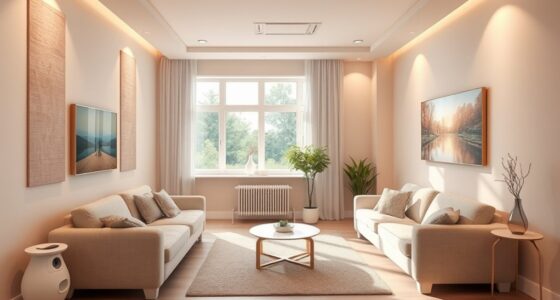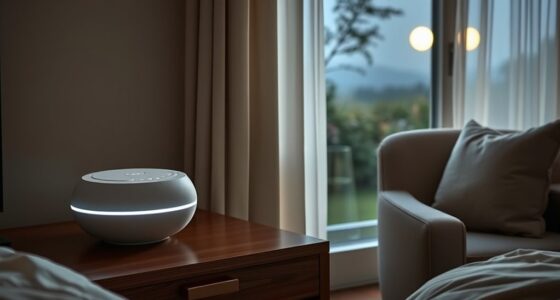
LEDs substantially influence your mood by allowing you to customize lighting colors and brightness levels. Cool blue tones can help you feel calmer, while warm amber or yellow create a cozy atmosphere. Adjusting LED lighting can boost your energy, promote relaxation, or enhance focus, depending on your needs. This ability to tailor your environment impacts your emotions and behavior subtly but powerfully. Keep exploring to discover how mastering lighting choices can transform your space and mood.
Key Takeaways
- LEDs can be customized in color and brightness to create specific moods, such as calming or energizing environments.
- Cool blue LEDs promote relaxation and serenity, while warm amber tones foster comfort and coziness.
- Dimming or brightening LED lights adjusts the emotional tone, supporting relaxation or stimulation as needed.
- The psychological impact of LED lighting influences feelings, behaviors, and overall emotional well-being.
- Versatile LED options enable tailored lighting setups that enhance mood and emotional response in any space.
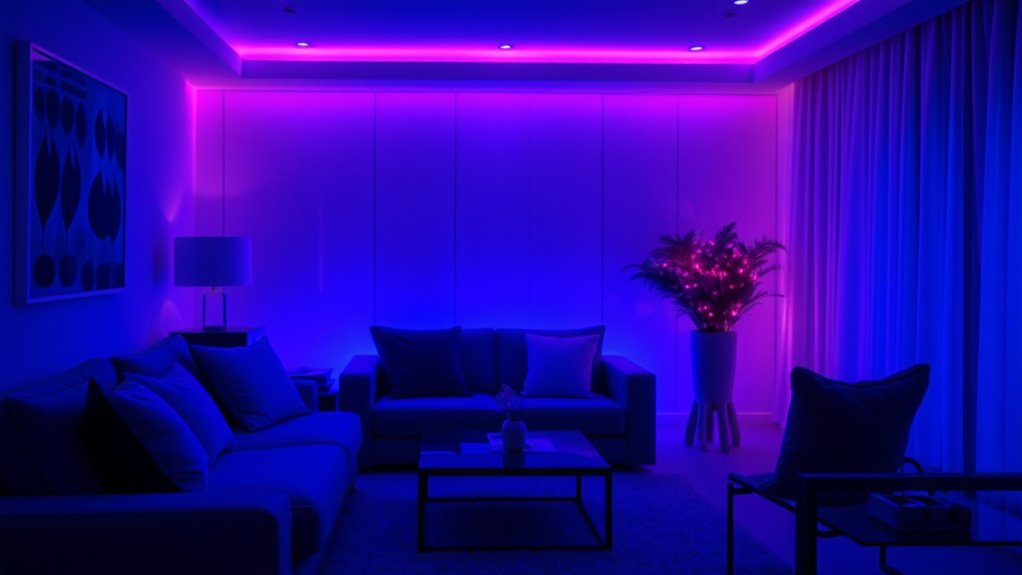
Have you ever wondered how lighting can transform the atmosphere of a room? The way a space feels isn’t just about furniture or decor—lighting plays an essential role in shaping your mood and emotional response. When you choose the right lighting, especially LEDs, you can influence the ambiance in a way that feels natural and inviting. One of the key factors at play is color psychology, which explains how different hues can evoke specific emotions. For instance, cool blue tones tend to create a calming, serene environment, perfect for winding down after a long day. Warmer shades like amber or soft yellow generate feelings of comfort and coziness, making a space feel more intimate. You might not realize it, but your brain reacts instinctively to these colors, and your mood shifts accordingly.
LEDs are incredibly versatile for setting the ambient atmosphere you desire. Unlike traditional lighting, LEDs can be easily dimmed or brightened, and they come in a broad spectrum of colors. This flexibility allows you to tailor your environment to your needs—whether you want a lively, energetic space or a tranquil retreat. For example, during a dinner party, soft amber LEDs can foster intimacy and warmth, encouraging conversation. Conversely, bright white LEDs might energize a workspace, helping you stay alert and focused. Adjusting the color and intensity of your LED lights isn’t just about aesthetics; it’s about crafting a mood that aligns with your activities and emotions. Additionally, understanding how ambient atmosphere influences behavior can help you create environments that promote relaxation or productivity more effectively.
The impact of ambient atmosphere is subtle but powerful. When you change the lighting, you’re not just altering visibility—you’re influencing how you feel and behave within that space. Soft, warm lighting creates a welcoming environment that promotes relaxation and comfort, making it easier to unwind. On the other hand, cooler or more vibrant hues can invigorate you, making tasks feel less mundane and encouraging engagement. By experimenting with different LED settings, you can discover what makes you feel most at ease or most energized. This control over your environment ensures that your space supports your emotional well-being, whether you need peace, motivation, or simply a pleasant backdrop for daily life.
In the end, understanding how lighting influences mood through color psychology and ambient atmosphere empowers you to design spaces that truly resonate with your feelings. LEDs give you the tools to craft an environment that adapts to your mood, enhancing your overall sense of comfort and happiness. So next time you adjust your lights, think about the emotional impact—because the right lighting can do more than illuminate a room; it can shape how you experience it.
Frequently Asked Questions
Can LED Colors Impact Mental Health Long-Term?
Yes, LED colors can impact your mental health long-term. Through color therapy, specific hues influence your emotional response, potentially improving mood or reducing stress. Over time, consistent exposure to calming colors like blue or green may promote relaxation and mental well-being. However, excessive or inappropriate color use might negatively affect your emotions. So, choosing the right LED colors thoughtfully can support your mental health positively over the long run.
Do LED Lights Affect Sleep Patterns More Than Traditional Lighting?
Think of LED lights as tiny nocturnal puppeteers, possibly disrupting your sleep more than traditional lighting. Their blue wavelengths can interfere with your circadian rhythm, leading to sleep disruption. Unlike incandescent bulbs, LEDs emit light that tricks your brain into thinking it’s daytime, making it harder to wind down. So, if you want peaceful slumber, limit LED exposure before bed to protect your natural sleep cycle.
How Do LED Flicker Rates Influence Mood?
Flicker frequency considerably impacts your emotional responses when using LEDs. If the flicker rate is too high or inconsistent, it can cause discomfort, anxiety, or irritability, making you feel uneasy. Conversely, a steady flicker rate tends to promote calmness and focus. You should choose LED lights with low flicker rates to create a soothing environment, as stable flicker frequency helps positively influence your mood and emotional well-being.
Are There Specific LED Settings Recommended for Anxiety Relief?
Think of LED settings as a gentle balm for your mind. For anxiety relief, opt for warm, soft white or amber tones, which promote calming effects. Color therapy suggests using muted blues and greens, known for their soothing qualities. Keep brightness low and avoid flickering to create a peaceful environment. These adjustments can help ease your nerves, transforming your space into a sanctuary that nurtures tranquility and relaxation.
Can LED Lighting Reduce Stress in Work Environments?
Yes, LED lighting can help reduce stress in work environments. By using color therapy, you can select calming colors like soft blue or green to promote relaxation. Adjust the brightness control to avoid harsh glare and create a comfortable atmosphere. These options help lower anxiety levels, improve focus, and enhance overall well-being, making your workspace more soothing and conducive to productivity.
Conclusion
So, next time you flip on that LED light, remember—you’re not just illuminating a room; you’re igniting your entire mood, transforming your emotions faster than a rollercoaster ride. These tiny bulbs hold the power to turn tears into smiles, chaos into calm, and dull moments into electrifying experiences. With LED mood lighting, you’re not just setting the scene—you’re releasing an unstoppable wave of feelings that can change your entire day in an instant.