
You’re seeing a shift in home styling toward natural, sustainable materials like reclaimed wood, bamboo, cork, and textured fibers. This trend emphasizes authenticity, eco-friendliness, and creating warm, calming spaces. By choosing these materials, you support responsible sourcing and durability while enhancing your home’s aesthetic appeal. Natural textures and imperfections are now celebrated, making your space both stylish and mindful. If you want to discover how this movement shapes modern design even further, keep exploring.
Key Takeaways
- Growing preference for eco-friendly, natural textures like reclaimed wood, bamboo, and stone in interior design.
- Emphasis on sustainability and ethical sourcing to create healthier, responsible living spaces.
- Natural materials enhance aesthetic appeal through authenticity, raw imperfections, and sensory richness.
- Integration of organic textures supports minimalist and rustic styles, promoting warmth and tranquility.
- The trend reflects a broader shift toward conscious living and environmental stewardship in home styling.
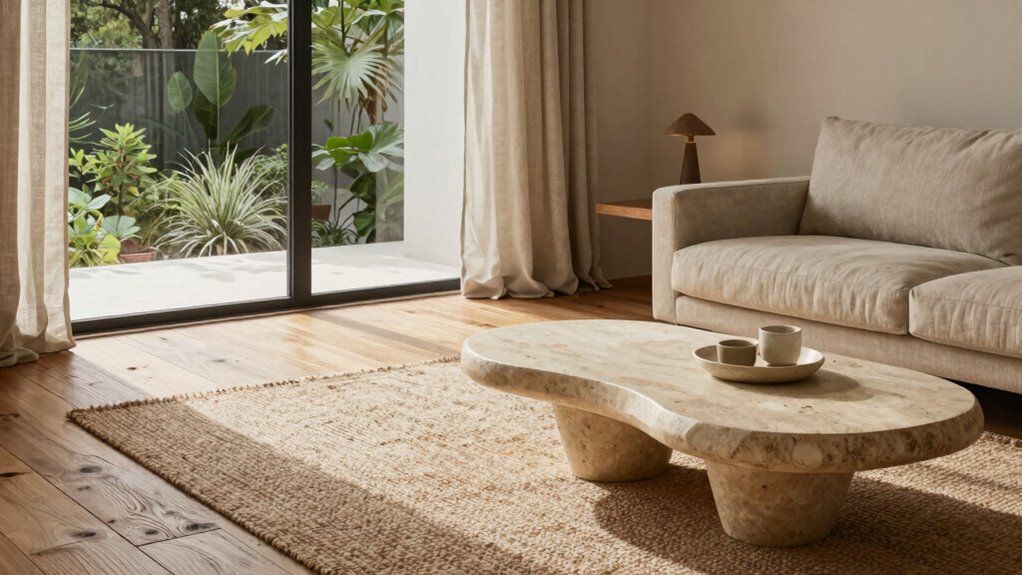
Have you noticed how the materials used in home styling are changing? It’s no coincidence—more homeowners are leaning toward natural, eco-friendly textures that reflect a shift in values and priorities. This movement isn’t just about aesthetics anymore; it’s about creating spaces that are sustainable, healthy, and in harmony with the environment. As a result, sustainable design trends are gaining momentum, pushing traditional materials aside in favor of organic options that exude warmth and authenticity. You’re likely seeing more reclaimed wood, bamboo, cork, and stone integrated into interiors, each offering a textured appeal that’s both stylish and eco-conscious.
Embracing natural, eco-friendly textures like reclaimed wood, bamboo, cork, and stone for stylish, sustainable home interiors
This trend is driven by a desire to reduce environmental impact while achieving a cozy, inviting atmosphere. Eco friendly textures bring a tactile richness to your home, blending seamlessly with minimalist and rustic styles. Natural fibers like jute, sisal, and hemp aren’t just practical—they add visual interest and a sense of groundedness that synthetic materials simply can’t match. You might choose woven rugs or textured wall hangings made from these fibers, or opt for furniture with finishes that highlight the natural grain of wood or stone. These choices aren’t just decorative; they’re a statement of your commitment to sustainability. Incorporating sustainable sourcing practices can further ensure your materials are ethically obtained and environmentally friendly.
In terms of design trends, embracing natural materials often goes hand-in-hand with a minimalist approach. Less is more when you incorporate sustainable elements—focusing on quality over quantity, and letting the natural imperfections of these materials shine. It’s about celebrating the raw beauty of organic textures, rather than covering them up with paint or veneers. The textured surfaces you create with these materials also improve the sensory experience of your home, making it more inviting and calming. You feel the roughness of braided jute or the smooth coolness of polished stone, grounding you in the moment. Additionally, understanding the sourcing of these materials can help ensure they are ethically and sustainably obtained. Being aware of the environmental impact of your choices allows you to make more informed decisions that support your values.
This shift isn’t just a fleeting trend; it’s a reflection of a broader movement toward conscious living. You’re choosing materials that are ethically sourced, renewable, and biodegradable. It’s also important to consider the durability of these natural materials, as they often last longer and age gracefully, adding character over time. It’s about making smarter choices that benefit not only your home but also the planet. Incorporating sustainable materials into your décor supports a more resilient and eco-friendly environment, aligning your home with global conservation efforts. As you incorporate these eco friendly textures into your décor, you’re participating in a larger conversation—one that values durability, authenticity, and environmental responsibility. In the end, this natural material shift transforms your space into a sanctuary that’s both stylish and sustainable, proving that home styling can be both beautiful and mindful of the world around us.
As an affiliate, we earn on qualifying purchases.
Frequently Asked Questions
How Do Natural Materials Affect Indoor Air Quality?
Natural materials improve indoor air quality by reducing indoor air pollutants and allergens. When you choose wood, bamboo, or natural fibers, you limit the release of harmful chemicals often found in synthetic materials. This helps prevent respiratory issues and creates a healthier environment. Natural materials also naturally resist dust and allergens, making your space more comfortable and safer for everyone, especially those with allergies or sensitivities.
Are Natural Materials More Durable Than Synthetic Options?
Yes, natural materials are often more durable than synthetic options, especially when treated with eco-friendly finishes. They withstand daily wear better and tend to age gracefully, adding character to your home. Plus, natural materials boast aesthetic versatility, fitting various design styles effortlessly. When you choose natural options, you’re investing in sustainable, long-lasting elements that enhance your space’s beauty and functionality over time.
What Maintenance Is Required for Natural Home Materials?
You should regularly clean natural home materials with gentle, organic cleaning solutions to maintain their beauty. Use eco-friendly finishes to protect surfaces from damage and wear. For upkeep, avoid harsh chemicals or abrasive scrubbers that can harm delicate textures. Regular dusting, spot cleaning, and occasional resealing will keep your natural materials looking fresh and vibrant, ensuring they stay durable and eco-friendly for years to come.
Can Natural Materials Be Sustainably Sourced?
Is natural materials a gift from the earth or a burden? Yes, they can be sustainably sourced. You just need to look for eco-friendly harvesting practices and guarantee ethical sourcing. When you choose suppliers committed to environmental responsibility, you’re supporting methods that preserve resources and protect ecosystems. By prioritizing certified products and transparent supply chains, you make your home eco-conscious without sacrificing style, turning sustainability into a beautiful everyday choice.
How Do Natural Materials Influence Home Energy Efficiency?
Natural materials boost your home’s energy efficiency by enhancing biophilic design, which connects you with nature and promotes well-being. They often have superior thermal insulation properties, helping you maintain a comfortable temperature year-round while reducing energy costs. By choosing materials like wood, hemp, or wool, you create a more sustainable, cozy environment that minimizes reliance on artificial heating and cooling systems, making your home both eco-friendly and energy-efficient.
Conclusion
As you embrace natural materials in your home, you’re not just following a trend—you’re reconnecting with authenticity and sustainability. Many experts believe this shift reflects a deeper desire for genuine, eco-friendly living spaces that stand the test of time. So, when choosing wood, stone, or organic fabrics, remember you’re part of a movement that values both beauty and environmental impact. Trust that this natural material shift isn’t just stylistic—it’s a meaningful step toward a more mindful lifestyle.