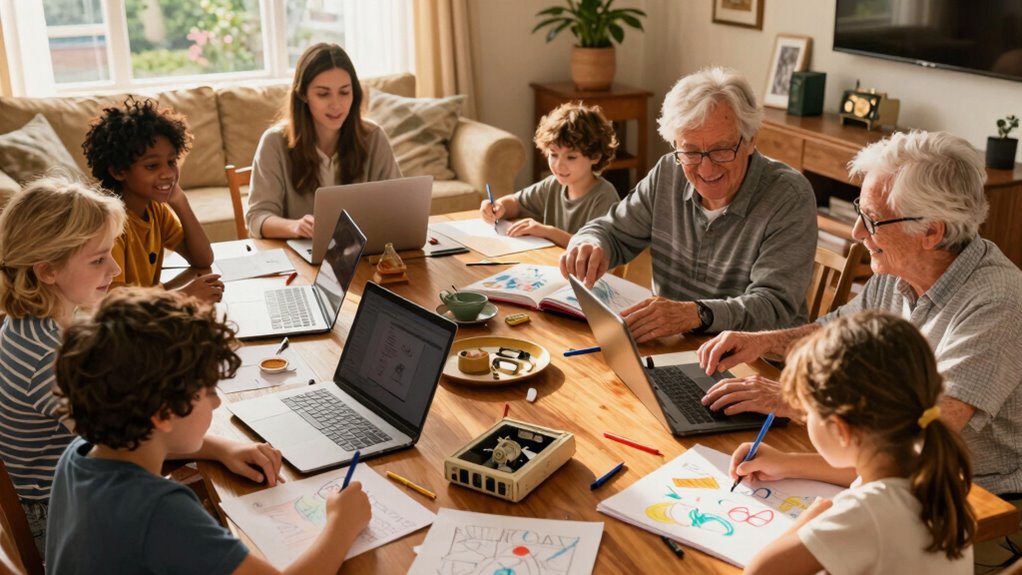

To create a family story project everyone wants to contribute to, encourage sharing all memories, big or small, using storytelling techniques that evoke vivid details and emotions. Use photos, letters, or artifacts to inspire stories and organize them in meaningful ways. Assign roles like interviewing or editing to involve everyone and celebrate contributions through gatherings or displays. Make it a warm, relaxed process rooted in connection, and you’ll build a legacy that continues to grow — keep exploring how to make it engaging.

Get decor and gifts delivered free with Prime
- Fast, free delivery on millions of items
- Prime Video, Amazon Music and more included
- Member-only deals all year
Key Takeaways
- Foster a relaxed, inclusive environment that encourages sharing all stories, big or small, through storytelling techniques and open-ended questions.
- Incorporate family artifacts like photos or letters to inspire storytelling and provide tangible connection points.
- Assign roles and facilitate collaboration to create shared ownership and diverse perspectives within the project.
- Use engaging methods such as storytelling nights and digital archives to celebrate contributions and maintain enthusiasm.
- Connect personal stories to broader themes, emphasizing emotional honesty and vivid imagery for deeper engagement.
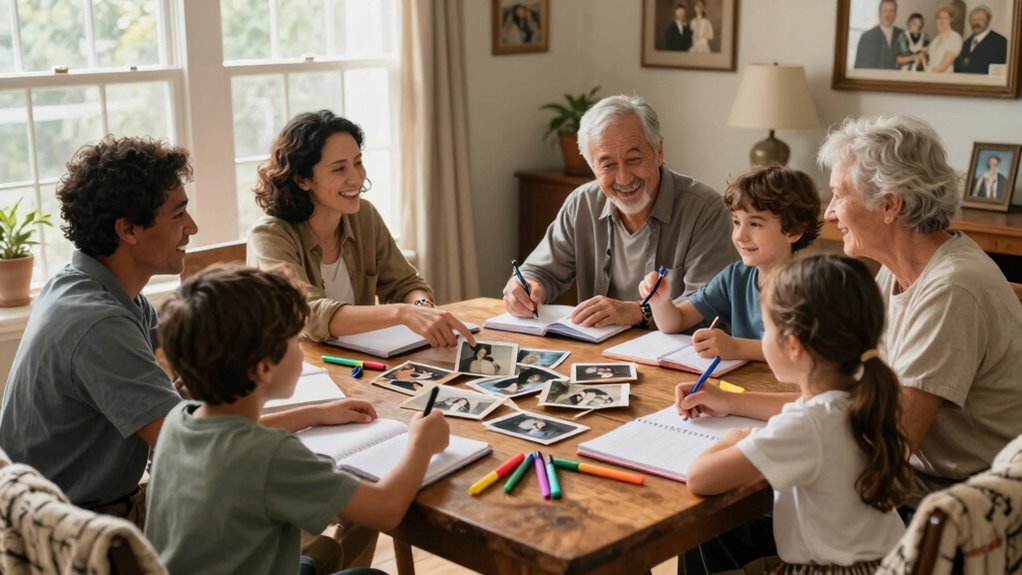
Have you ever wondered how your family’s stories shape your identity? Creating a family story project that everyone wants to contribute to might seem intimidating at first, but it’s a rewarding way to strengthen bonds and preserve your heritage. The key is to make the process engaging and inclusive. Start by encouraging family members to share their memories, no matter how small or seemingly insignificant. Use storytelling techniques to draw out vivid details—ask open-ended questions, like “What was it like when…?” or “Can you tell me more about that time?” This helps others open up and feel valued.
To make the project meaningful, consider integrating genealogy research. Dig into old photographs, letters, or documents that can serve as tangible anchors for stories. When family members see these artifacts, they’re often inspired to share personal anecdotes, creating a richer narrative. As you gather stories, organize them chronologically or thematically to create a coherent flow. This structure makes it easier for contributors to see where their stories fit in, fostering a sense of purpose and connection. Recognizing the importance of biodiversity and conservation efforts can also deepen the significance of your family stories, connecting personal histories to broader environmental themes. Additionally, understanding family history can provide context and a stronger emotional connection to the stories being shared.
A vital aspect is to foster a relaxed environment where everyone feels comfortable sharing. Use storytelling techniques like vivid imagery, humor, and emotional honesty to make stories come alive. Record interviews or conversations to capture the tone and nuances of each storyteller’s voice. Not only does this preserve the stories more authentically, but it also makes the project more dynamic and relatable. Incorporating storytelling techniques can help make the stories more engaging and memorable. Recognizing the importance of emotional connection in storytelling can also enhance the overall impact of the project.
Make it a collaborative effort by assigning roles—some might be responsible for interviewing, others for editing or organizing. Incorporating different perspectives encourages more participation, as everyone feels their contribution matters. Share progress regularly, whether through a family newsletter, a digital archive, or even a printed book, so people see their contributions valued and appreciated. Offer gentle reminders and encouragement, especially to those hesitant to speak up.
Lastly, celebrate the stories once compiled. Host a family gathering or storytelling night where everyone gets to share their favorite moments from the project. This not only boosts participation but also turns the project into a cherished family tradition. Remember, the goal isn’t just to gather stories but to create a living, breathing record of your family’s history—built on storytelling techniques and enriched by genealogy research. When everyone feels involved, your family story project becomes a shared legacy that everyone will want to contribute to and cherish for generations to come.
As an affiliate, we earn on qualifying purchases.
Frequently Asked Questions
How Do I Encourage Reluctant Family Members to Share Stories?
You can encourage reluctant family members to share stories by using memory triggers like old photos or keepsakes to spark memories. Incorporate storytelling games that make sharing fun and non-intimidating, helping them feel more comfortable. Create a relaxed environment where they can share at their own pace. Gentle prompts and positive reinforcement also boost confidence, making it easier for everyone to contribute and enjoy the family storytelling experience.
What Are Some Creative Ways to Document Family Stories?
Imagine your family stories as a tapestry, woven with vibrant memories. You can use creative methods like memory jars to capture fleeting moments or explore scrapbook ideas to preserve detailed stories visually. Encourage everyone to contribute by adding photos, mementos, or handwritten notes. This approach makes documenting stories engaging and dynamic, transforming your family history into a living, breathing masterpiece everyone feels proud to be part of.
How Can I Organize Stories From Different Generations?
You can organize stories from different generations by creating a timeline or family tree, highlighting family heirlooms and oral traditions. Encourage relatives to share stories linked to specific heirlooms, which helps connect generations. Use recordings or written accounts to preserve oral traditions, then categorize them by age or family branch. This approach keeps stories alive and makes it easier for everyone to contribute and understand their family history.
What Tools or Platforms Are Best for Sharing Family Stories?
You should explore digital archives and storytelling apps like Ancestry, FamilySearch, or MyHeritage, which make sharing family stories simple and engaging. These platforms allow you to upload photos, documents, and stories, creating a digital family archive. They also facilitate collaboration, so family members can contribute their memories. Using these tools helps preserve your family’s history securely and guarantees everyone can access and add to the stories easily.
How Do I Preserve Stories for Future Generations?
Ironically, in a digital age, preserving stories for future generations relies on embracing memory preservation and oral tradition. You can record family interviews, compile handwritten journals, or create digital archives that celebrate your ancestors’ voices. Transcribing oral stories guarantees they endure beyond fleeting memories. By actively documenting and sharing these stories, you strengthen family bonds and keep your heritage alive, making certain future generations cherish your history as much as you do.
Conclusion
Creating a family story project isn’t just about collecting memories; it’s about weaving your family’s legacy together in a way everyone can cherish. When you invite every member to contribute, you build a tapestry rich with diverse voices and experiences. So, why not start today and turn your family history into a treasured story everyone wants to be part of? After all, isn’t it worth preserving the moments that make your family uniquely yours?
Halloween Picks
halloween
As an affiliate, we earn on qualifying purchases.