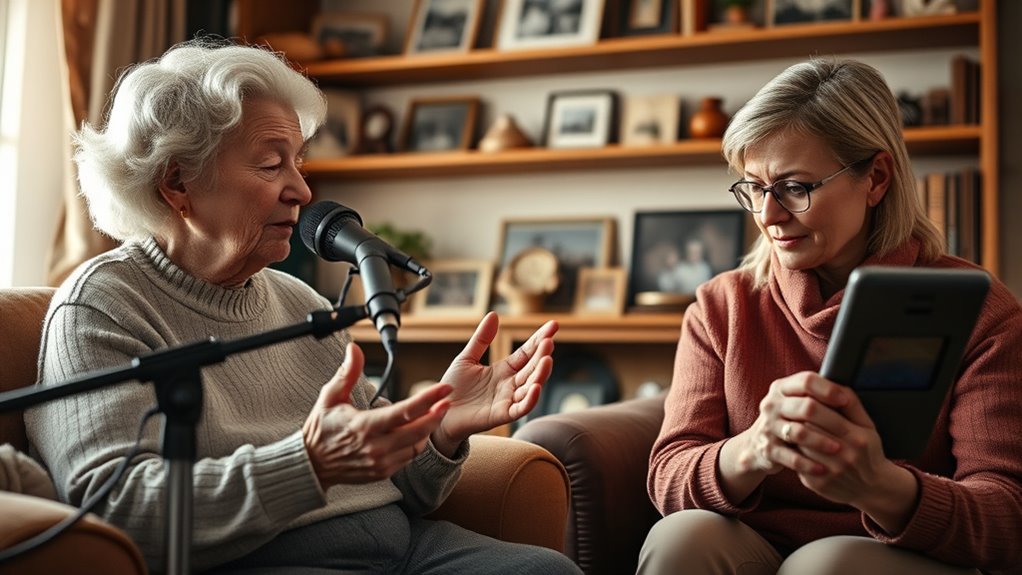

To preserve your family stories, start by preparing thoughtful, open-ended questions and creating a comfortable environment where your relatives feel safe sharing. Use good-quality recording equipment and guarantee clear audio by minimizing background noise. Organize and back up your files with detailed metadata for easy access. Active listening and building rapport encourage richer stories. As you continue this process, you’ll discover effective tips and methods to capture and safeguard your family’s cherished memories for generations to come.

Get decor and gifts delivered free with Prime
- Fast, free delivery on millions of items
- Prime Video, Amazon Music and more included
- Member-only deals all year
Key Takeaways
- Prepare open-ended questions and prompts to encourage detailed storytelling during interviews.
- Create a comfortable, noise-free environment to build trust and promote honest sharing.
- Use quality recording equipment and ensure clear audio, labeling files with relevant metadata.
- Back up recordings regularly and organize files with descriptive titles for easy access.
- Practice active listening and let interviewees guide conversations to capture authentic family stories.
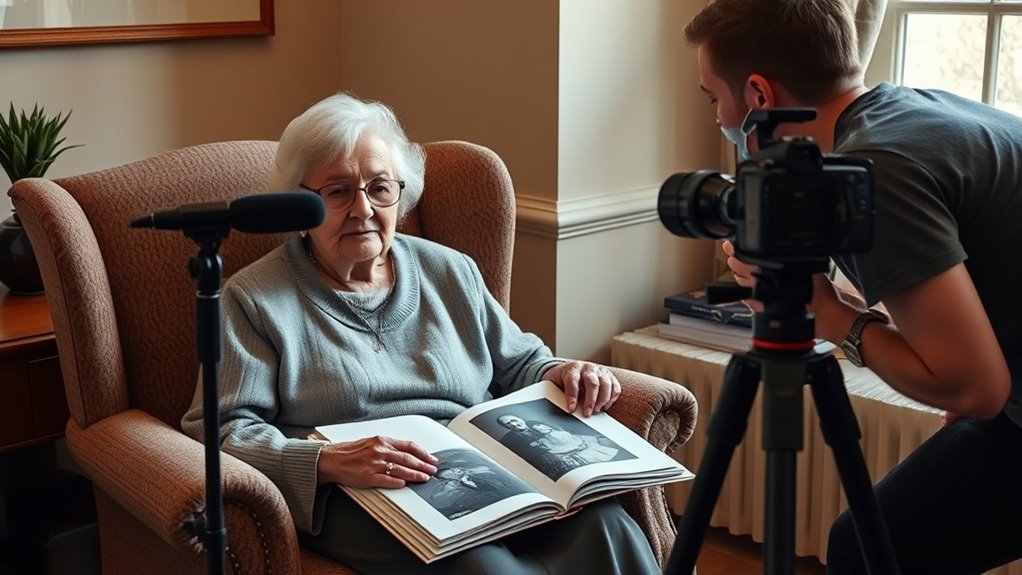
Recording oral histories is a vital way to preserve personal stories and cultural traditions that might otherwise be lost over time. When you sit down to capture a family member’s memories, your approach can make a significant difference in the quality and authenticity of the recording. Effective interview techniques help you create a comfortable environment, encouraging your interviewee to share openly and honestly. Start by preparing thoughtful questions that guide the conversation without restricting it. Open-ended prompts like “Can you tell me about your childhood?” or “What was it like growing up in your hometown?” invite detailed responses and rich stories. Remember to listen actively, showing genuine interest and allowing the interviewee to steer the dialogue naturally. This process not only yields more authentic content but also builds trust, making it easier for your relative to share personal insights.
In addition to interview techniques, paying attention to technical details is essential for digital preservation. Using good-quality recording equipment—whether a dedicated microphone or a smartphone—ensures clear audio, which is fundamental for future listening and transcription. Keep your device steady, minimize background noise, and choose a quiet, well-lit space. Once recorded, digital preservation becomes your next priority. Save your files in widely accepted formats like WAV or MP3, and back them up on multiple devices or cloud services to prevent data loss. Label your recordings with clear, descriptive titles and include relevant metadata such as dates, names, and locations. This meticulous organization will make it easier to locate and share these memories later. Additionally, understanding the shelf life of digital files helps you plan for ongoing preservation and migration to new storage solutions over time.
Preserving these oral histories digitally also allows you to safeguard them against physical deterioration that can affect tape recordings or written documents. Digital files are easier to edit, transcribe, and share with family members or future generations. As technology advances, you can migrate your files to new storage solutions, ensuring your family stories remain accessible over the years. In the end, recording oral histories isn’t just about capturing words; it’s about safeguarding a piece of your family’s legacy. By applying effective interview techniques and prioritizing digital preservation, you help guarantee these stories continue to inspire, educate, and connect generations to come.
high quality digital voice recorder
As an affiliate, we earn on qualifying purchases.
As an affiliate, we earn on qualifying purchases.
Frequently Asked Questions
How Can I Ensure the Accuracy of Family Stories?
To guarantee the accuracy of family stories, you should use fact-checking methods like cross-referencing details with multiple sources. Verify stories by consulting documents, photographs, or other family members’ accounts. Keep notes of your sources and compare them carefully. This approach helps you spot discrepancies and confirms the authenticity of the stories. Being diligent with verifying sources ensures your family history remains accurate and trustworthy for future generations.
What Equipment Is Best for High-Quality Recordings?
Did you know that 85% of listeners find audio quality essential for engaging stories? To guarantee high-quality recordings, use reliable recording devices like a good-quality microphone or digital recorder. Opt for devices with clear audio capture, noise reduction features, and easy handling. This way, you’ll preserve family stories accurately, making your recordings crisp, vibrant, and true to life for future generations.
How Do I Approach Sensitive or Private Topics?
When approaching sensitive or private topics, you should establish trust first, showing genuine respect for their feelings. Use respectful questioning, and listen actively without pressing too hard. Let them share at their own pace, and reassure them that their stories are valued and confidential if needed. This approach helps create a safe space, encouraging honest, meaningful responses while honoring their comfort and boundaries.
What’s the Ideal Length for an Oral History Interview?
Think of an oral history interview as a river flowing—ideally, it should last around 1 to 2 hours. This allows enough time to capture rich details without overwhelming your storyteller. Keep in mind, interview duration affects story editing; longer sessions may need more trimming. Stay flexible, gauge your interviewee’s energy, and focus on quality over quantity to preserve the essence of their story.
How Should I Preserve and Store Recorded Interviews Long-Term?
To safeguard your recorded interviews long-term, you should store them in multiple archival formats like WAV or FLAC for quality, and regularly update to newer formats as technology advances. Make digital backups on secure external drives and cloud storage to prevent loss. Keep copies in different physical locations, and periodically check file integrity. This approach ensures your family stories remain accessible and safe for future generations.
Conclusion
Think of recording oral histories as planting seeds in a family garden. Each story you gather is a seed that grows into a mighty tree, offering shade and wisdom for generations to come. By capturing these voices, you’re nurturing a living forest of memories that will stand strong through time. So, pick up your recorder and start planting—because your family’s stories are the roots that hold your future together.
Halloween Picks
halloween
As an affiliate, we earn on qualifying purchases.