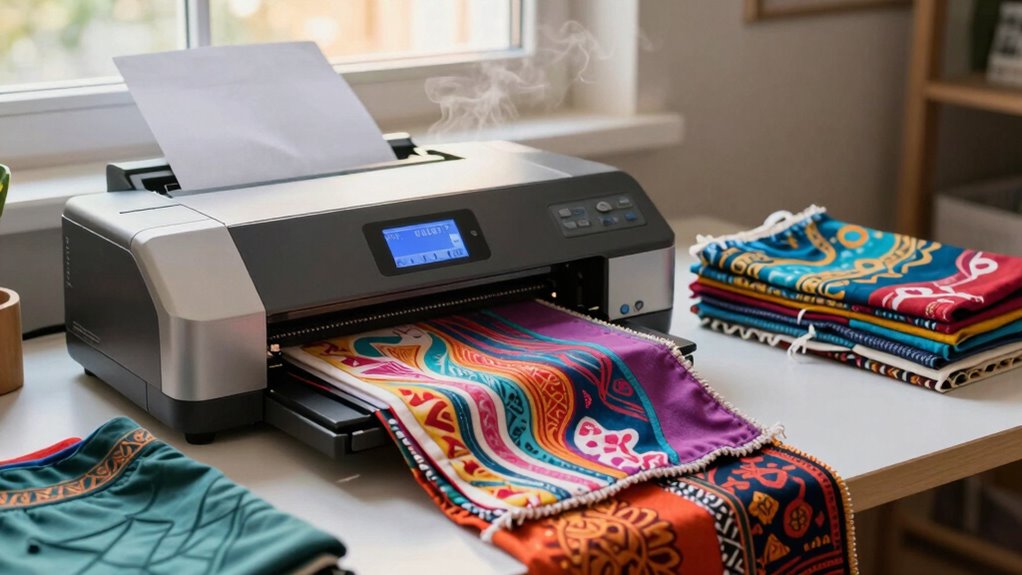

To prevent faded gifts with sublimation printing, you’ve got to nail the heat settings. For polyester fabrics, stick around 385°F (196°C); ceramics need about 400°F (204°C), and metals perform best at 375°F (190°C). Make sure your heat press evenly distributes heat and maintains the right pressure; otherwise, you might end up with dull prints. If you test your settings and materials carefully, you’ll create vibrant results. There’s even more to explore about achieving perfect prints.

Get decor and gifts delivered free with Prime
- Fast, free delivery on millions of items
- Prime Video, Amazon Music and more included
- Member-only deals all year
Key Takeaways
- Use precise heat settings of 385°F for polyester, 400°F for ceramics, and 375°F for metals to ensure vibrant prints.
- Maintain even heat distribution to prevent color discrepancies and ensure consistent ink bonding.
- Ensure your heat press reaches the necessary temperature to avoid dull or faded prints.
- Apply consistent pressure across the substrate to prevent washed-out areas in your designs.
- Allow the substrate to cool before removal to avoid ghosting and ensure high-quality results.
Sublimation Printing 101: Essential Techniques for Beginners
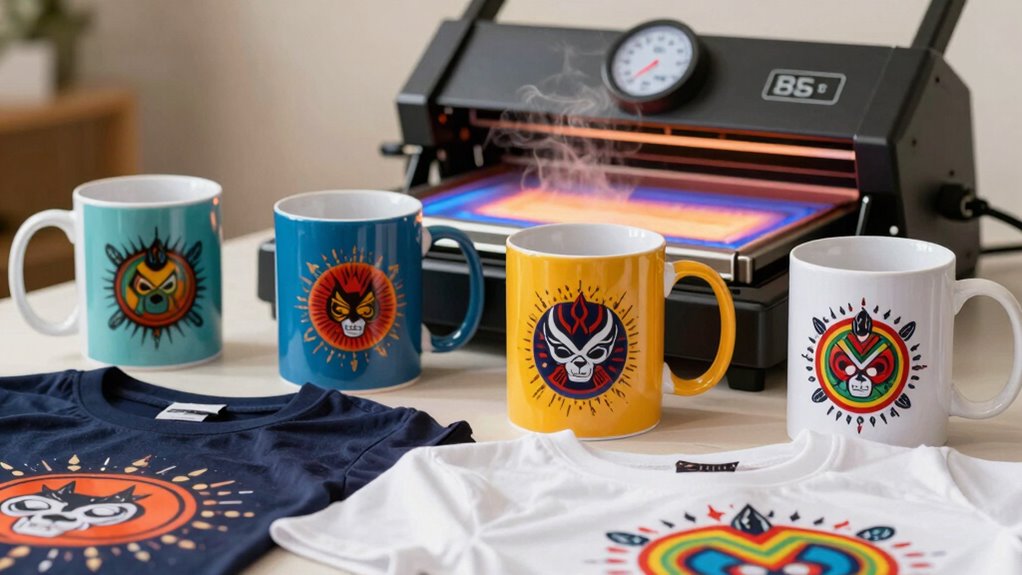
When you immerse yourself in sublimation printing, understanding the essential techniques is crucial for achieving vibrant results. Start by selecting high-quality sublimation ink, as this directly impacts the final print quality. You’ll also need to choose the right transfer paper; not all papers are created equal. Look for ones specifically designed for sublimation, as they help with ink absorption and transfer efficiency. Make sure to print your design in reverse, so it aligns correctly during the transfer process. Additionally, be cautious about the materials you’re using—only polyester or specially coated items will yield the best results. Master these foundational techniques, and you’ll be well on your way to creating stunning, long-lasting prints.
Why Heat Settings Are Crucial for Quality Prints
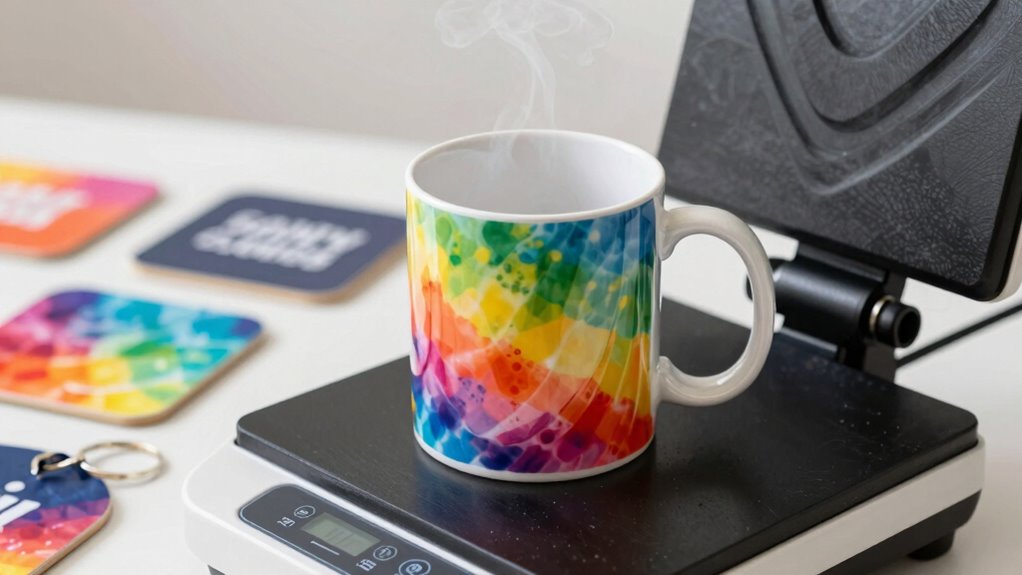
Getting the most out of your sublimation prints hinges on the right heat settings. If you don’t nail these, you risk poor ink transfer and reduced print quality. Here’s why heat settings matter:
Maximizing your sublimation prints relies on precise heat settings to ensure optimal ink transfer and print quality.
- Temperature Accuracy: Too high or too low can lead to incomplete ink transfer, ruining your design.
- Press Time: The duration influences how well the ink bonds with the substrate; too short means faded prints.
- Even Heat Distribution: Inconsistent heat can cause uneven printing, leading to patches and color discrepancies.
- Consistent Maintenance: Regularly checking and maintaining your heat press ensures optimal heat distribution and prolongs equipment lifespan.
Optimal Temperature Ranges for Various Materials
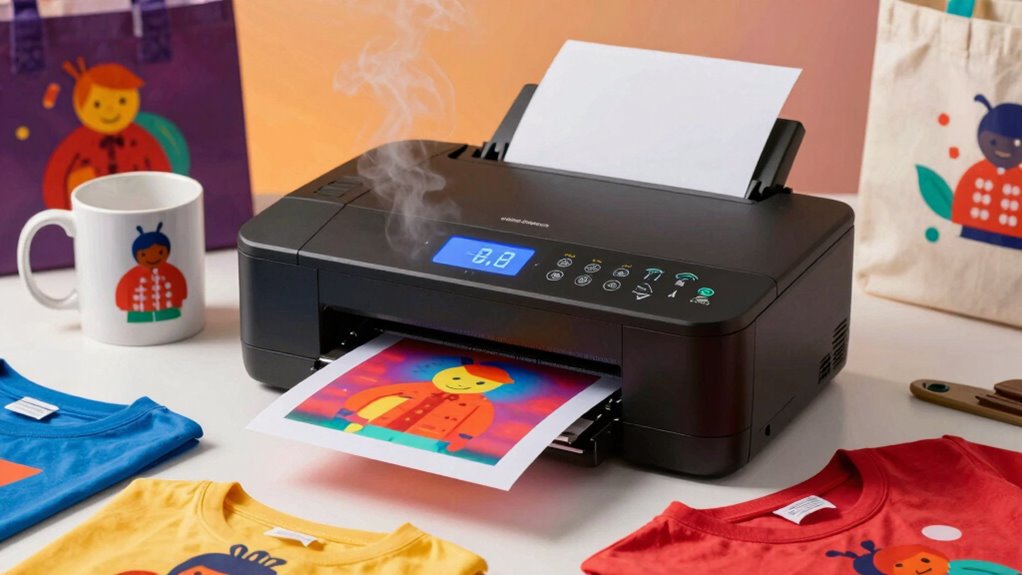
To achieve the best results in sublimation printing, understanding the ideal temperature ranges for various materials is vital. Each material has its own requirements, so temperature calibration is important to guarantee vibrant, lasting prints. For polyester fabrics, aim for around 385°F (196°C), while ceramic surfaces typically need about 400°F (204°C). If you’re working with metals, 375°F (190°C) often works well. Remember, material compatibility also plays a key role; not all substrates react the same way under heat. Test small samples to find the sweet spot for each type. By fine-tuning your temperature settings according to the material, you’ll minimize fading and enhance the overall quality of your sublimated gifts.
What Materials Work Best for Sublimation Printing?
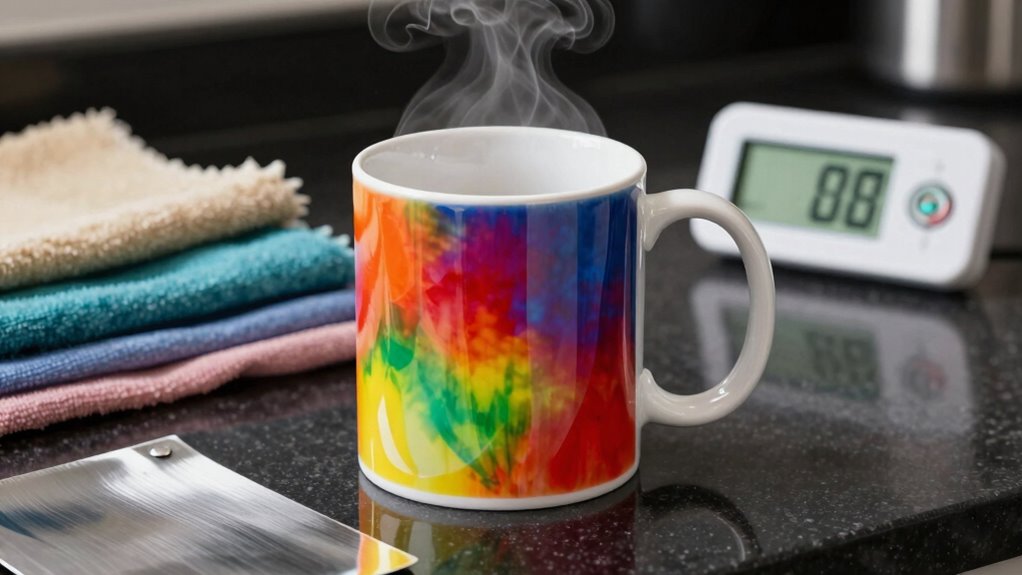
Sublimation printing thrives on specific materials that can absorb and release dye effectively. To achieve vibrant results, you’ll want to focus on the following:
- Polyester Fabrics: These are the go-to choice for sublimation. Their synthetic fibers hold the sublimation inks well, resulting in bright, long-lasting prints. Since sublimation printing is similar to some electric bike components in that it requires specific material compatibility, choosing the right fabric is essential for success. Additionally, understanding color accuracy can help in selecting fabrics that produce true-to-life hues in your final prints. Ensuring the fabric’s durability also affects the longevity of your printed items.
- Poly-coated Items: Products like mugs and phone cases, coated with a special polymer, are perfect for sublimation. The coating allows the inks to bond, guaranteeing durability.
- Sublimation Blankets or Accessories: Look for items made from polyester blends. They provide a soft feel while still enabling the inks to transfer beautifully.
Choosing the right materials guarantees your sublimation projects turn out vibrant and fade-resistant! Additionally, considering fabric technology improvements can enhance the overall quality and sustainability of your sublimation products.
Common Heat Setting Problems and How to Fix Them
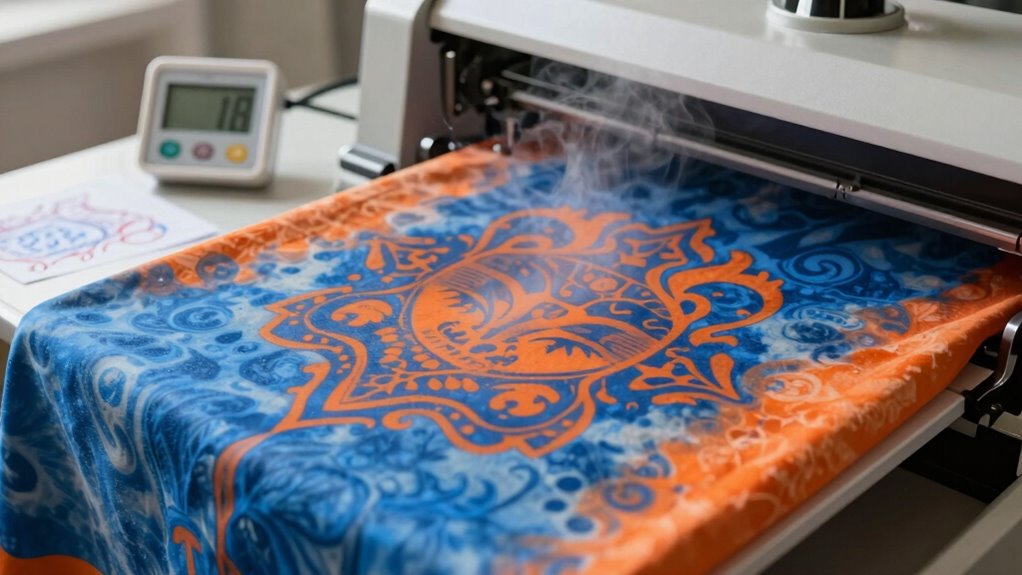
Have you ever faced issues with your heat settings during sublimation printing? Common problems can lead to poor ink transfer and faded designs. If your prints come out dull, it might be due to insufficient temperature. Make sure your heat press reaches the right setting, typically around 400°F (204°C).
Another issue could be uneven pressure application. If certain areas of your design look washed out, check that the pressure is consistent across the entire surface. Adjust the pressure knob if necessary. Proper heat press setup is crucial for achieving vibrant, long-lasting results. Ensuring your equipment is well-maintained and calibrated can help maintain consistent heat and pressure during printing.
Lastly, if you notice ghosting, it could be from moving the substrate too soon. Allow it to cool before removing the transfer. Ensuring proper appliance maintenance can also help maintain consistent heat and pressure during printing. By addressing these common heat setting problems, you can achieve vibrant, long-lasting results.
Frequently Asked Questions
Can Sublimation Printing Be Done on Cotton Fabrics?
No, sublimation printing doesn’t work well on cotton fabrics. It relies on polyester or polymer-coated materials for best results. When you use sublimation techniques, the ink bonds with the fabric fibers, which isn’t possible with cotton. If you want vibrant, durable prints, stick to polyester blends or specially coated fabrics. Understanding fabric compatibility is essential to achieving the quality you’re aiming for, so choose wisely to avoid disappointing results.
How Long Does Sublimation Print Durability Last?
When it comes to sublimation print durability, you’re in for a treat! The sublimation process creates vibrant images that can last for years, often up to 20 years when cared for properly. Print longevity depends on factors like fabric type and exposure to sunlight. So, if you’re looking to keep those colors bright, make sure to avoid harsh conditions. With the right care, your prints will stand the test of time!
What Types of Inks Are Used in Sublimation Printing?
In sublimation printing, you typically use dye-sublimation inks, which offer excellent color vibrancy. These inks turn into gas when heated, allowing them to bond with polyester materials. You’ll find different ink types, like water-based and solvent-based, but dye-sublimation is the most popular for its vivid colors and durability. When you choose the right ink, you guarantee your prints look stunning and last longer, making your designs truly stand out.
Are There Environmentally Friendly Sublimation Options Available?
Yes, there are environmentally friendly sublimation options available. Think of it as planting a tree instead of cutting one down. You can choose sustainable materials and eco-friendly inks that minimize your carbon footprint. These choices not only protect the planet but also guarantee your prints come out vibrant and lasting. By opting for these alternatives, you create beautiful designs while nurturing the environment, making your art both impactful and responsible.
Can Sublimation Printing Be Done at Home?
Yes, you can definitely do sublimation printing at home! With the right sublimation equipment, like a printer and heat press, you can create vibrant designs on various materials. Explore DIY techniques to get started, such as using sublimation paper and inks. Just make sure you’ve got the proper heat settings to achieve the best results. Once you’ve got everything, you’ll be amazed at what you can create right in your own space!
Conclusion
To summarize, mastering heat settings in sublimation printing can make all the difference in the durability of your gifts. Did you know that prints done at the right temperature can last up to 200 washes without fading? By understanding the ideal heat for various materials, you’ll guarantee your creations not only look great but also stand the test of time. So, keep those settings in check, and your gifts will shine brightly for years to come!
Halloween Picks
halloween
As an affiliate, we earn on qualifying purchases.