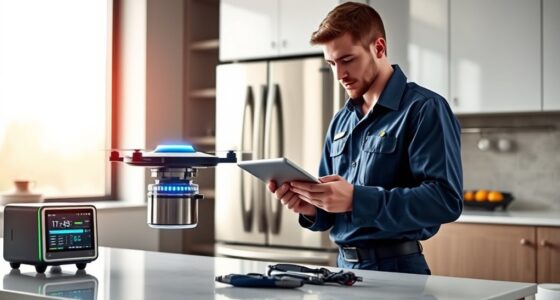

Fall detection systems work by using sensors like accelerometers, gyroscopes, and GPS to monitor your movements continuously. They detect sudden impacts or rapid position changes that indicate a fall. When a fall is identified, the device automatically sends alerts to loved ones or emergency services, often with GPS location info. These systems help you stay independent while providing quick help during emergencies. To learn more about how these life-saving devices operate, keep exploring their features and benefits.
Key Takeaways
- Fall detection systems use sensors like accelerometers and gyroscopes to identify sudden movements indicating a fall.
- They automatically send alerts to caregivers or emergency services, ensuring rapid assistance.
- GPS tracking helps locate individuals outdoors or away from home after a fall.
- These systems promote independence while providing safety reassurance for at-risk individuals.
- Technological advancements improve accuracy, reliability, and user-friendliness of fall detection devices.

Falls are a leading cause of injury among older adults, and detecting them quickly can be be life-saving. Fortunately, advancements in technology, especially wearable devices, have made it easier to identify falls as soon as they happen. These devices are designed to be worn comfortably, often as watches, pendants, or bracelets, and they continuously monitor your movements to detect unusual activity that indicates a fall. When a fall occurs, many wearable devices automatically send emergency alerts to caregivers, family members, or emergency services, ensuring help arrives promptly. This immediate response can markedly reduce the risk of serious injury or complications from delayed assistance.
Wearable devices detect falls instantly and send emergency alerts, ensuring swift help and reducing injury risks.
Wearable devices use a combination of accelerometers, gyroscopes, and sometimes barometers to track your motion in real time. They analyze patterns that differ from normal activity, such as sudden impacts or rapid changes in position. If the device detects a fall, it can trigger an alert, prompting you to confirm your safety or automatically notifying someone else if you’re unable to respond. This technology provides peace of mind, especially for those living alone or with mobility issues, knowing that help can be just a push of a button or an automatic alert away.
Many wearable fall detection systems also include features like GPS tracking, which can help locate you quickly if you’re unable to move after a fall. This is particularly useful in outdoor settings or if you tend to wander. The emergency alerts sent by these devices are often customizable, allowing you to specify contacts who should be notified immediately. Some systems also have two-way communication, enabling you to speak directly with responders, which can be reassuring in high-stress situations.
The importance of these systems extends beyond just detecting falls. They promote independence by providing a safety net that encourages older adults to stay active and engaged without constant worry. For caregivers and loved ones, wearable devices with emergency alerts serve as an extra layer of protection, giving them peace of mind that they’ll be notified right away if something goes wrong. As technology advances, these systems are becoming more reliable, discreet, and easy to use, making fall detection accessible to a broader audience.
In essence, wearable devices with emergency alerts are transforming fall safety. They offer immediate detection, quick response, and peace of mind, ensuring that help reaches you when you need it most. Unconditional love That’s why investing in such a system isn’t just about technology; it’s about safeguarding your independence and well-being.
Frequently Asked Questions
Can Fall Detection Systems Distinguish Between Real Falls and False Alarms?
Yes, fall detection systems can distinguish between real falls and false alarms by using advanced sensor accuracy and smart algorithms. These systems analyze movement patterns, acceleration, and orientation to identify genuine falls, reducing false alarms. You benefit from improved false alarm reduction, ensuring that alerts are accurate and timely. Modern technology continuously refines these processes, helping you stay safe without unnecessary disruptions caused by false alarms.
What Are the Privacy Concerns Associated With Fall Detection Technologies?
You might worry about privacy concerns with fall detection tech, but you can stay protected by ensuring your data is encrypted and that you give clear user consent. These systems collect sensitive information, so it’s vital that your privacy is prioritized through secure data handling and transparent practices. By staying informed and choosing reputable devices, you help safeguard your personal info while benefiting from life-saving technology.
How Do Different Environments Affect the Accuracy of Fall Detection?
Environmental interference can impact your fall detection system’s accuracy, especially in cluttered or uneven spaces where sensors may misinterpret movements. Changes in lighting, furniture placement, or background activity also pose challenges. Regular sensor calibration helps maintain reliability by adjusting for these environmental factors. To guarantee peak performance, you should periodically review sensor settings, clear obstructions, and adapt system parameters to your specific environment, reducing false alarms and missed detections.
Are Fall Detection Systems Compatible With Other Health Monitoring Devices?
Did you know over 80% of fall detection systems can integrate with other health devices? Yes, they’re highly compatible thanks to advanced technology integration and device compatibility. This means you can connect fall detection systems seamlessly with heart rate monitors, blood pressure cuffs, and more, giving you a thorough health overview. Such compatibility ensures better monitoring and quicker emergency response, helping you stay safe and connected at all times.
What Is the Average Lifespan of a Typical Fall Detection Device?
A typical fall detection device lasts about 1 to 2 years, depending on its device durability and battery longevity. You should expect the battery to require replacement or recharging every few months, especially if it uses frequent alerts or features. Proper maintenance, like regular charging and updates, helps prolong its lifespan. Always check manufacturer guidelines to maximize the device’s durability and ensure reliable performance when you need it most.
Conclusion
Fall detection systems can be lifesavers, offering quick assistance and peace of mind. By constantly monitoring your movements, they alert loved ones or emergency services instantly when a fall happens. Did you know that falls are the leading cause of injury among seniors, with one in four experiencing a fall each year? Using these systems can markedly reduce injury severity and improve safety. Investing in fall detection technology truly makes a difference in safeguarding your independence and well-being.