
To prepare your smart irrigation system for fall, shut it down properly and drain any residual water to prevent freezing damage. Check and clean sprinkler heads, replace damaged parts, and inspect for leaks or cracks. Update the software and calibrate sensors. Protect and store the controller and electrical components in a dry, sheltered area. Inspect the water lines and insulate exposed pipes. Following these steps helps safeguard your system during winter, ensuring it’s ready for spring’s start. Keep going for more helpful tips.
Key Takeaways
- Turn off the system and drain residual water to prevent freeze damage during winter.
- Inspect and clean sprinkler heads, nozzles, and check for leaks or damage.
- Protect electrical components by covering controllers and sealing electrical boxes.
- Insulate and drain water supply lines to avoid freezing and cracking.
- Schedule professional inspections to identify and repair hidden issues before winter.
Turn Off and Drain the System

As fall approaches and temperatures start to drop, it is vital to turn off and drain your smart irrigation system to prevent damage from freezing. Follow proper winterization procedures to protect your equipment. Begin by shutting down the system using the recommended system shutdown methods, which typically involve turning off the controller and main water supply. Next, drain residual water from pipes, valves, and sprinkler heads to eliminate any trapped moisture that could freeze and cause cracks. If your system has a drain valve, open it to release remaining water; if not, use compressed air to blow out the lines. Completing these steps ensures your system stays safe during winter, reducing the risk of freeze damage and costly repairs come spring.
Inspect and Clean Sprinkler Heads and Nozzles

You should inspect your sprinkler heads and nozzles for clogs or damage. Clear out any debris and replace nozzles if they’re cracked or broken. This guarantees your system works efficiently when you turn it back on. Regular maintenance also helps prevent clogged nozzles, ensuring consistent water distribution throughout your landscape.
Check for Clogs
Have you ever noticed uneven watering or dry patches in your lawn? Clogs in sprinkler heads and nozzles can cause this issue. To fix it, inspect each head for blockages and debris. Remove any dirt or mineral buildup, ensuring water flows freely. Check your drain system for clogs, as it can affect overall system performance. Also, inspect filters regularly to prevent debris from entering the system and causing further blockages. Use the following table as a guide:
| Step | Action |
|---|---|
| Inspect sprinkler heads | Look for dirt, debris, or mineral buildup |
| Clear obstructions | Remove any clogs manually |
| Check filters | Clean or replace if dirty |
Keeping your system clear of clogs promotes even watering and prolongs equipment life. Regular maintenance can help identify system inefficiencies early and prevent costly repairs.
Replace Damaged Nozzles
Damaged nozzles can disrupt your irrigation system’s efficiency, leading to uneven watering or dry spots. To prevent this, inspect your sprinkler heads and look for cracked or clogged nozzles. If you notice damage or significant buildup, it’s time for nozzle replacement. Proper nozzle calibration ensures each sprinkler delivers the correct water flow, so replace any nozzles that spray unevenly or at inconsistent distances. Cleaning nozzles thoroughly can extend their lifespan, but damaged ones must be swapped out to maintain system performance. Regularly checking and replacing faulty nozzles helps conserve water and guarantees even coverage. Utilitarian principles emphasize the importance of efficiency and maximizing overall well-being, making regular maintenance vital for optimal system performance. Don’t forget to test your system after replacing nozzles to confirm proper operation and adjust as needed for maximum watering efficiency.
Check and Replace Damaged or Worn Components

You should carefully inspect your system for cracks or leaks that could cause water waste. Test the valves to guarantee they open and close properly, preventing uneven watering. If you notice worn nozzles, replace them to maintain consistent coverage and efficiency. Additionally, consider inspecting Mazda Tuning enhancements that could improve your system’s overall performance and longevity.
Inspect for Cracks or Leaks
Regularly inspecting your irrigation system for cracks and leaks is essential to guarantee it functions efficiently throughout the season. Early crack detection helps prevent water waste and further damage. Look for visible signs of damage, such as wet spots or softened soil around pipes. When you find leaks, prompt leak repair minimizes water loss and keeps your system running smoothly. Additionally, understanding the importance of proper maintenance can help extend the lifespan of your system and prevent costly repairs. To do this effectively, you should:
- Check all pipes, fittings, and joints for cracks or visible damage.
- Listen for hissing or dripping sounds indicating leaks.
- Mark problem areas for immediate repair or replacement.
Test Valve Functionality
Testing your valve functionality is a vital step in fall maintenance, as faulty valves can lead to uneven watering or system failures. Start with valve testing by manually opening each valve to ensure it activates properly. Listen for unusual sounds that may indicate internal issues. During this process, perform leak detection by inspecting around the valve for signs of water escaping when the system is off. Look for persistent drips, pooling, or damp soil near the valve connections. If you notice leaks or the valve doesn’t operate smoothly, it’s time to check for damaged or worn components. Replacing faulty parts promptly prevents water waste and system breakdowns, ensuring your smart irrigation system continues to function efficiently through the fall and beyond. Additionally, understanding contrast ratio can help you better evaluate your system’s visibility and performance in different lighting conditions.
Replace Worn Nozzles
Have you checked your irrigation nozzles for signs of wear or damage? Worn or damaged nozzles can reduce watering efficiency and waste water. Inspect the nozzle material—plastic, brass, or rubber—for cracks or corrosion. Also, verify the nozzle size matches your system’s specifications to guarantee proper coverage. If you notice any issues, replace the nozzles promptly. Regular maintenance of components like nozzles can also extend the lifespan of your system and ensure optimal performance.
Here are three key steps:
- Remove the old nozzle carefully, noting the nozzle material and size.
- Clean the nozzle fitting to remove debris or mineral buildup.
- Install a new nozzle that matches the original nozzle size and material for peak performance.
Doing this ensures your smart irrigation system works efficiently through fall and beyond.
Update and Test Software Settings
Before the colder months set in, it’s essential to update and test your smart irrigation system’s software settings. Start by checking for software updates to ensure you have the latest features and security patches. Perform system calibration to optimize watering schedules and sensor accuracy. Regular testing helps identify issues early and prevents over- or under-watering. Use the table below to visualize key tasks:
| Task | Description |
|---|---|
| Check for updates | Download and install the latest software versions |
| Adjust watering schedule | Modify based on seasonal needs |
| Calibrate sensors | Ensure accurate soil moisture readings |
| Test system responses | Verify system activates correctly |
| Save settings | Confirm and store the updated configuration |
Keeping software current and calibrated ensures your system runs efficiently all season, especially when considering potential vulnerabilities associated with outdated systems.
Protect and Store the Controller and Electrical Components
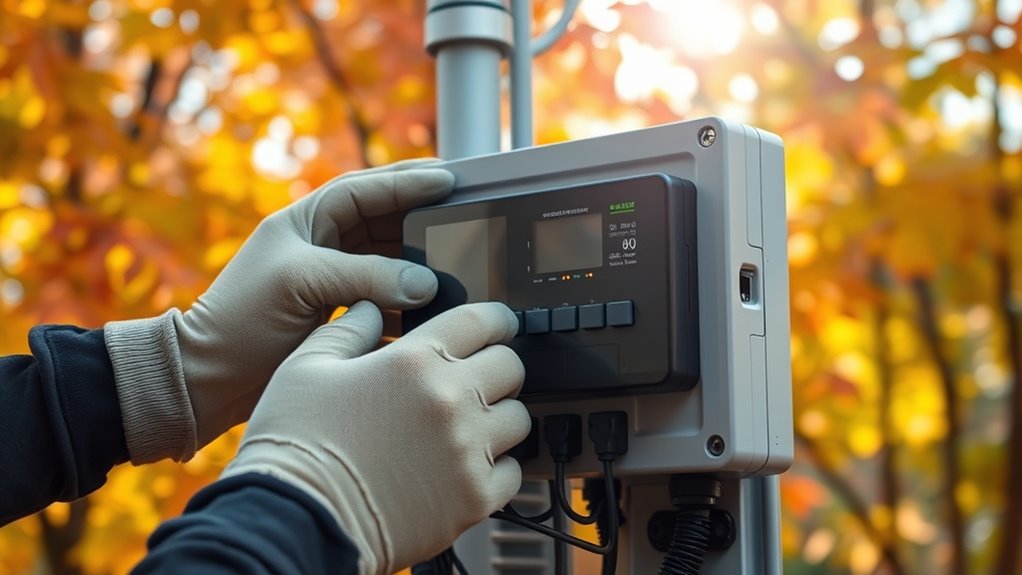
As winter approaches, it’s essential to protect your irrigation controller and electrical components from harsh weather conditions. To do this effectively, consider these steps:
- Cover the controller with a weatherproof controller cover to shield it from snow, rain, and freezing temperatures.
- Remove the controller from its outdoor location and store it in a dry, sheltered area, like a garage or shed.
- Check the electrical box; ensure it’s sealed tightly and free of moisture. If needed, add weatherproofing materials to prevent water intrusion.
- Remember that proper storage and protection not only prevent damage but also help maintain the longevity of your smart irrigation system, ensuring it functions efficiently for years to come.
Examine and Maintain Water Supply Lines
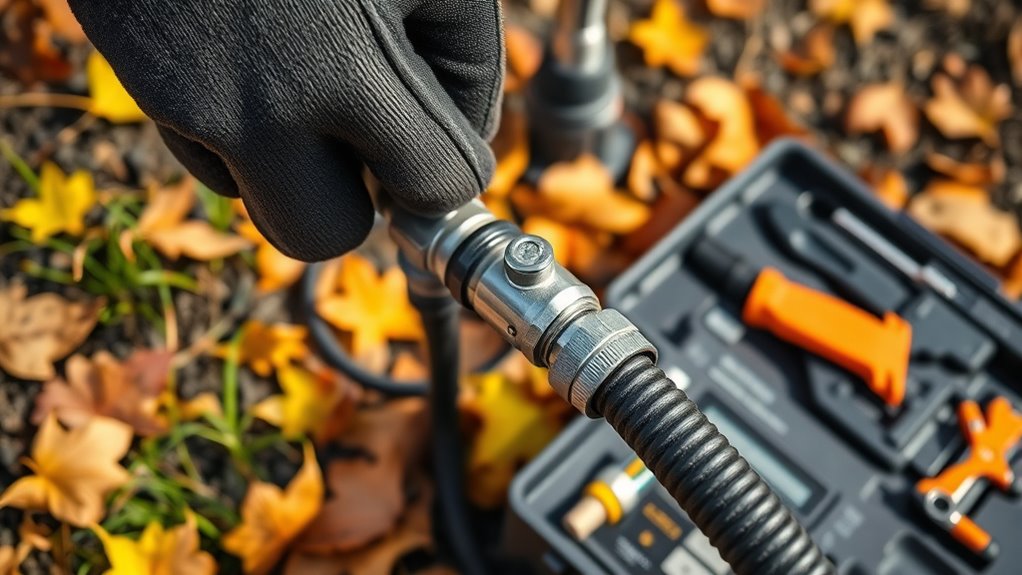
Inspecting and maintaining your water supply lines is a key step in preparing your irrigation system for winter. Start by checking water pressure to ensure it’s within the recommended range; high pressure can stress pipes, while low pressure may hinder proper operation. Look for leaks, cracks, or damaged sections along your supply lines, and repair or replace them as needed. To prevent freezing, insulate exposed pipes with pipe insulation, especially those in unheated areas. Proper insulation helps maintain consistent water pressure and protects your system from freeze damage. Drain any residual water from supply lines if possible, reducing the risk of ice expansion causing cracks. Taking these steps now will help secure your water supply lines against winter’s harsh conditions and ensure a smooth start in spring.
Schedule a Professional Inspection if Needed
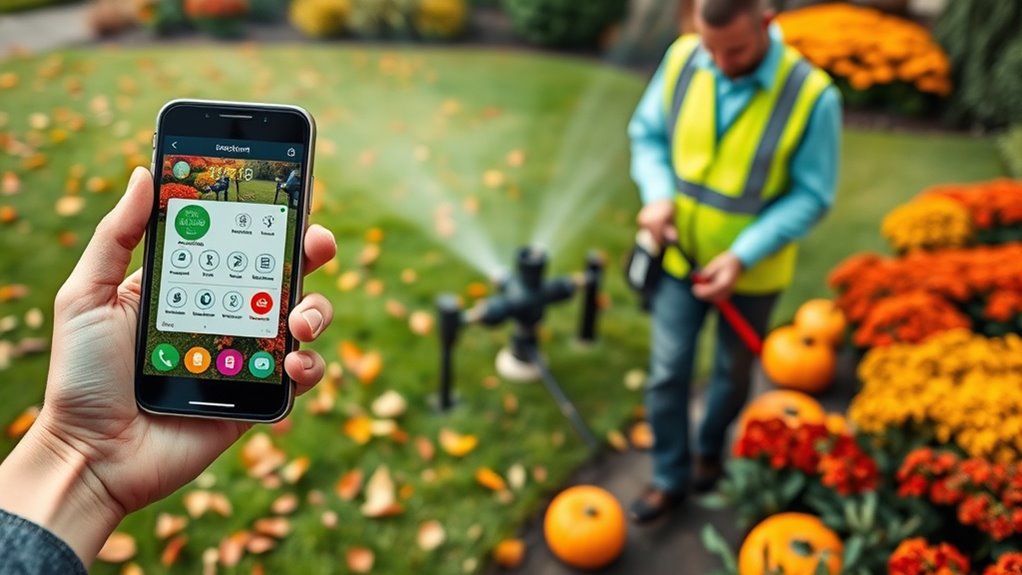
While many maintenance tasks can be handled on your own, scheduling a professional inspection can catch issues that might otherwise go unnoticed. A trained technician can perform a thorough system evaluation to ensure your smart irrigation system functions efficiently through fall and winter. Consider scheduling a professional inspection if: 1. You notice inconsistent watering or dry patches in your lawn. 2. The system doesn’t respond to your app or control panel properly. 3. You see leaks or damaged components during your own checks. A professional inspection helps identify hidden problems, such as faulty valves or wiring issues, that could cause damage or inefficiency later. Additionally, system components like sensors and controllers should be checked to guarantee optimal performance. Investing in an expert’s evaluation now saves you time, money, and headaches down the line, ensuring your irrigation system stays in top shape year-round.
Frequently Asked Questions
How Do I Identify Leaks in My Smart Irrigation System?
To identify leaks in your smart irrigation system, start with leak detection by observing unusually wet areas or water pooling around your yard. Next, perform valve inspection by listening for hissing sounds or checking for constant running valves. Turn off zones one at a time to see if the leak stops, helping you pinpoint the exact location. Regularly inspecting your system guarantees efficient watering and prevents water waste.
What Safety Precautions Should I Take During Winterization?
During winterization, you should prioritize safety to protect your system and yourself from winter weather hazards. Turn off the water supply and drain the system to prevent frost damage. Wear protective gear like gloves and eye protection when handling tools or chemicals. Be cautious of icy surfaces to avoid slips. Properly disconnect and store components, ensuring frost protection measures are in place, so your system stays safe through the cold months.
Can I Automate Fall Maintenance Tasks Remotely?
Yes, you can automate fall maintenance tasks remotely with system automation and remote scheduling features. By setting up your smart irrigation system for automatic shutoff, draining, and protection measures, you won’t need to manually intervene. This way, you guarantee your system is properly winterized, even if you’re not physically present. Remote management gives you peace of mind, knowing your system’s fall maintenance is handled efficiently and reliably.
How Often Should Software Updates Be Performed?
Think of your smart irrigation system as a garden that needs regular watering and care. Software updates are like nourishing rain that keeps it healthy and thriving. You should perform software updates whenever they’re available, typically every few months, to guarantee ideal performance. Incorporate maintenance scheduling to stay on top of updates, preventing bugs and enhancing features. This way, your system remains resilient, efficient, and ready to serve your garden all year round.
What Are Common Signs of System Malfunction Before Winter?
Before winter, you should watch for signs like inconsistent watering, which may indicate sensor calibration issues. Check for frozen or damaged winterizing filters that could block water flow. Also, listen for unusual noises or leaks, suggesting system malfunctions. Addressing these signs early helps prevent freezing damage, ensuring your smart irrigation system functions properly after winter. Regularly inspecting and maintaining these components keeps your system reliable year-round.
Conclusion
By following this fall maintenance checklist, you’ll keep your smart irrigation system in top shape for years to come. Taking the time now to inspect, clean, and protect your system can save you headaches and money down the road. Remember, a stitch in time saves nine—address issues early before they turn into bigger problems. Stay proactive, and your lawn will thank you come spring!