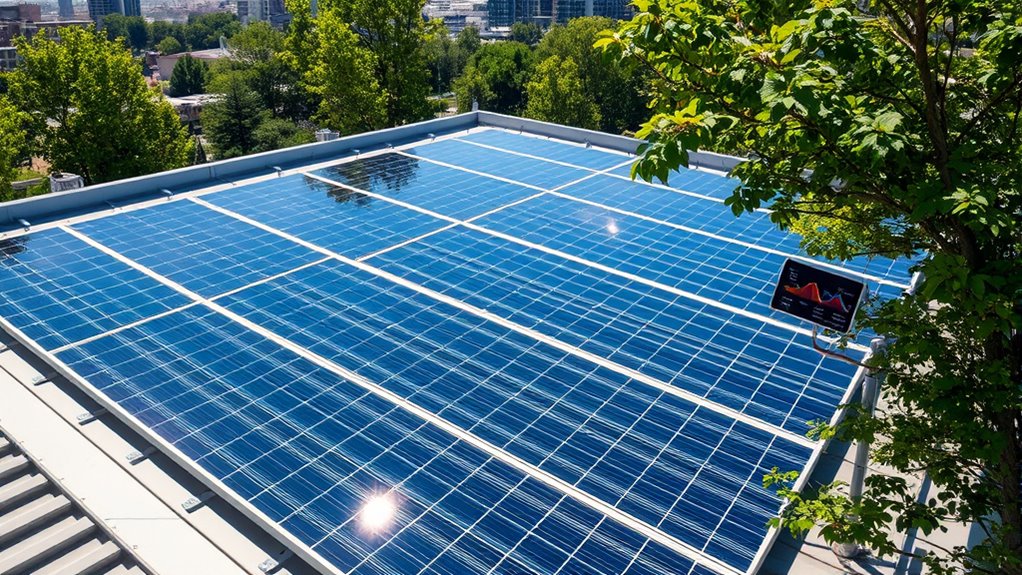

Integrating solar panels with a smart energy management system helps you maximize renewable energy use, improve efficiency, and reduce costs. It allows you to coordinate solar production, storage, and consumption seamlessly. You can store excess energy, feed surplus back into the grid, and prioritize saving on energy bills. With real-time monitoring and adaptive controls, your system becomes more responsive and resilient. Keep exploring to discover how this integration can transform your energy setup even further.
Key Takeaways
- Connect solar panels to a centralized smart platform for real-time monitoring and control of energy flow.
- Use intelligent algorithms to optimize charging/discharging of batteries based on production and consumption patterns.
- Enable bidirectional energy flow, feeding excess solar power back into the grid for incentives or credits.
- Automate energy management to reduce reliance on grid power during peak hours and maximize renewable use.
- Analyze system data to forecast energy demands, improve efficiency, and support sustainable energy practices.
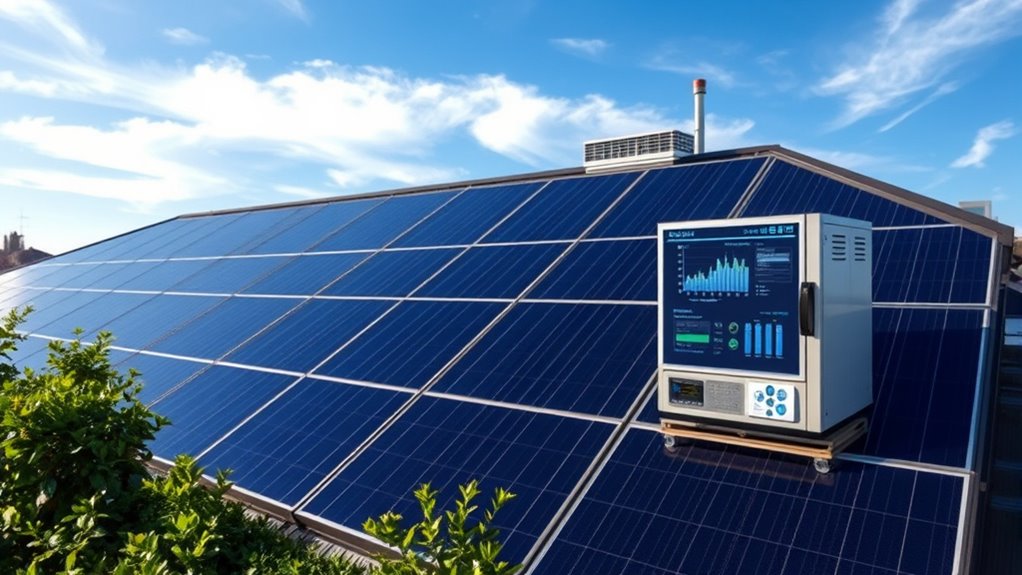
As solar panels become more affordable and widely adopted, integrating them with smart energy management systems offers homeowners and businesses a powerful way to optimize energy use. With these systems, you can seamlessly coordinate your solar energy production, storage, and consumption, ensuring maximum efficiency and cost savings. One key aspect is battery optimization, which involves intelligently managing your energy storage to match your household or business needs. Instead of simply storing excess solar power for later use, smart systems analyze patterns and forecast energy demands, deciding when to charge or discharge your batteries. This way, you’re not wasting energy or relying heavily on the grid during peak hours, which can save you money and reduce your carbon footprint.
Grid integration is another essential component. When your solar panels generate more energy than you need, the system can automatically feed the surplus back into the grid, often earning you credits or incentives. Conversely, during periods of low sunlight, the system pulls power from the grid intelligently, prioritizing your stored energy and renewable sources before turning to external sources. This bidirectional flow of energy enhances your independence from traditional energy providers and makes your overall energy consumption more resilient and sustainable. Smart energy management systems monitor grid conditions, weather forecasts, and your usage habits in real time, adjusting energy flows accordingly. This dynamic interaction helps you balance your energy needs while supporting grid stability, especially important during peak demand times.
Implementing these systems isn’t just about equipment; it’s about creating an integrated ecosystem. As you connect your solar panels, batteries, and grid interface to a smart platform, you gain visibility and control through intuitive apps or interfaces. You can set preferences, monitor real-time performance, and receive alerts to optimize your setup. Additionally, understanding the impact of technology choices on overall efficiency can help you make more informed decisions. Over time, the system learns your habits, becoming more efficient at managing your energy flow, minimizing wastage, and maximizing renewable use. This intelligent approach not only reduces your energy costs but also contributes to a more sustainable grid by reducing reliance on fossil fuels.
In essence, combining solar energy with smart management systems transforms your energy setup into a responsive, efficient network. Battery optimization ensures your stored energy is used most effectively, while grid integration allows you to participate actively in a cleaner, more resilient energy landscape. By adopting this integrated approach, you’re taking a significant step toward energy independence, cost savings, and environmental responsibility—all with minimal effort on your part.
Frequently Asked Questions
How Do Smart Energy Systems Handle Variable Solar Panel Efficiency?
Smart energy systems handle variable solar panel efficiency by continuously monitoring performance and adjusting energy flow accordingly. They account for solar panel degradation over time and optimize efficiency through algorithms that balance load and storage. This way, you get the most out of your panels, ensuring consistent power supply and maximizing efficiency despite fluctuations. By intelligently managing energy, these systems keep your solar setup running smoothly and efficiently over its lifespan.
What Maintenance Is Required for Integrated Solar and Smart Energy Setups?
You need to perform regular cleaning protocols on your solar panels to guarantee peak efficiency, especially after dust or debris buildup. Additionally, system calibration is essential to keep your smart energy setup functioning accurately. Check connections and update firmware when necessary. By staying on top of cleaning and calibration, you’ll maximize energy output and prolong the lifespan of your integrated solar and smart energy system.
Can Existing Homes Easily Adopt Smart Solar Energy Management?
You can easily adopt smart solar energy management in your existing home, turning it into a powerhouse of efficiency. A simple home retrofit with smart energy monitoring devices makes this possible, allowing you to control and optimize your solar system effortlessly. Modern technology is so intuitive that you’ll wonder how you ever managed without it. Upgrading now helps you save money, reduce your carbon footprint, and stay ahead in energy innovation.
How Secure Are Smart Energy Management Systems From Cyber Threats?
Smart energy management systems face cybersecurity vulnerabilities, but with proper security measures, they can be quite secure. You should guarantee strong passwords, regular software updates, and network encryption to protect your data privacy. Manufacturers often implement security protocols, but staying vigilant and monitoring for suspicious activity helps prevent cyber threats. By taking these steps, you can confidently enjoy the benefits of a smart energy system without compromising your security.
What Is the Typical Cost Savings Timeline With Integrated Solar Solutions?
Think of your investment as planting a seed that will grow over time. Typically, with integrated solar solutions, you’ll see cost savings within 3 to 7 years, depending on your energy usage and local incentives. This period is called the cost recovery or investment timeline. After that, your system continues to save money, turning your initial outlay into a fruitful harvest of reduced utility bills and energy independence.
Conclusion
By integrating solar panels with smart energy management, you harness the power of renewable energy while maintaining control over your consumption. It’s like having both the sun’s energy and your own intelligence working together—one fuels the future, the other optimizes it. While solar panels can generate clean power, smart systems guarantee you use it wisely. Together, they create a sustainable balance, proving that technology and nature can work hand in hand for a brighter, smarter tomorrow.