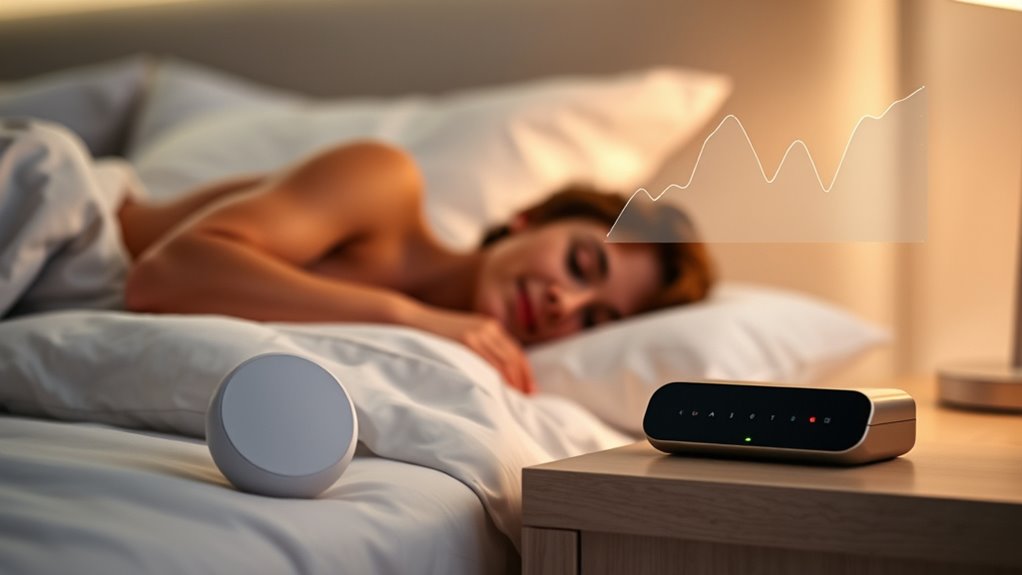

Using smart sensors to track your sleep quality gives you real-time data on sleep stages, environmental factors, and disruptions. They monitor movement, heart rate, and room conditions to identify patterns and issues like light sleep or frequent waking. This information helps you make informed adjustments to your sleep habits and environment. By understanding what affects your sleep, you can improve its quality. Keep exploring to discover how to optimize your sleep even further.
Key Takeaways
- Smart sensors continuously collect real-time data on sleep stages, movement, heart rate, and environmental factors influencing sleep quality.
- They analyze sleep patterns to identify disruptions, irregular stages, and areas needing improvement.
- Environmental monitoring helps optimize room temperature, lighting, and noise levels for better sleep conditions.
- Personalized insights and recommendations support healthier sleep habits and adjustments to sleep schedules.
- User-friendly data access empowers individuals to make informed decisions and proactively improve sleep quality.
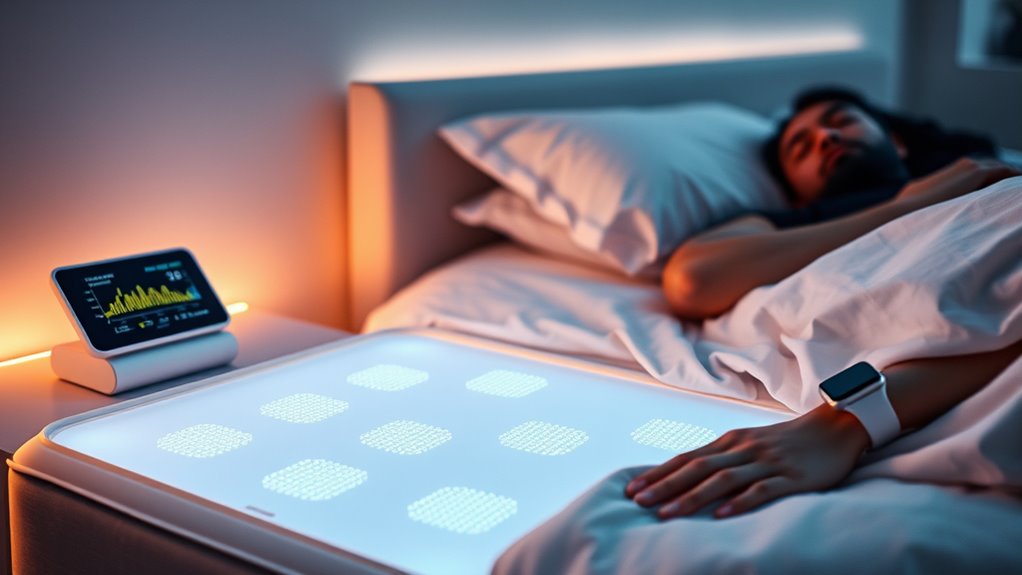
Have you ever wondered how technology can help you get better sleep? If you’re tired of waking up feeling unrested, using smart sensors to track your sleep quality might be just what you need. These devices gather real-time data about your sleep cycle and environment, giving you valuable insights into what’s happening while you rest. By analyzing your sleep patterns, smart sensors can identify disruptions that you might not notice on your own, such as frequent awakenings or irregular sleep stages.
Your sleep cycle, which includes light, deep, and REM sleep, plays an essential role in how rested you feel. Smart sensors monitor these stages by tracking movements, heart rate, and breathing patterns. Once you understand your sleep cycle, you can make adjustments to improve its quality. For example, if the sensors reveal that you spend too much time in lighter sleep stages, you might consider changing your bedtime routine or optimizing your sleep environment. Recognizing the timing and duration of each sleep stage helps you establish a more consistent sleep pattern, ultimately leading to more restorative rest.
The sleep environment also considerably impacts your sleep quality. Factors like room temperature, lighting, noise levels, and even mattress firmness influence how well you sleep. Smart sensors can monitor these environmental elements, providing you with actionable feedback. For instance, if your device detects that your room is too bright or noisy during sleep hours, it can suggest using blackout curtains or white noise machines. Some sensors even connect to your smart home systems, allowing you to automate adjustments like dimming lights or lowering the thermostat at bedtime. This creates an ideal sleep environment tailored specifically to your needs, which can make falling asleep faster and staying asleep easier. Additionally, understanding sleep environment factors helps you optimize your surroundings more effectively for better rest.
Using these sensors isn’t just about collecting data; it’s about creating a personalized approach to sleep health. The insights you gain can motivate you to make small but meaningful changes—whether that’s adjusting your sleep schedule, refining your sleep environment, or adopting relaxation techniques. Over time, this proactive approach helps you develop healthier sleep habits and reduces issues like insomnia or frequent awakenings. Technology makes it easier to understand your sleep as a whole, rather than just guessing whether you’re getting enough rest. With smart sensors, you’re empowered to take control of your sleep health, ensuring each night’s rest is as restorative as possible.
Frequently Asked Questions
How Accurate Are Smart Sensors Compared to Traditional Sleep Studies?
Smart sensors generally provide good sensor accuracy, but they may not match the precision of traditional sleep studies. You can rely on their data reliability for tracking trends and overall sleep patterns, but they might miss subtle details like specific sleep stages. While convenient, keep in mind that smart sensors offer a helpful overview, but for detailed insights, a professional sleep study remains the gold standard.
Can Smart Sensors Detect Sleep Disorders Like Sleep Apnea?
Smart sensors can assist in sleep disorder detection, including sleep apnea, but they aren’t a substitute for professional diagnosis. They monitor breathing patterns and movement, helping identify irregularities. However, sensor calibration is essential for accuracy; improperly calibrated sensors might miss or misinterpret signs of sleep disorders. If you suspect sleep apnea, it’s best to consult a healthcare professional for thorough testing, as smart sensors serve as helpful preliminary tools.
Do Smart Sensors Work for Children and the Elderly?
Smart sensors certainly serve children and the elderly well, providing personalized sleep insights. You should prioritize child safety, ensuring sensors are non-intrusive and securely placed. Regular sensor calibration guarantees accurate data, helping caregivers monitor sleep patterns effectively. By choosing user-friendly, safe sensors, you can confidently track sleep quality, support health, and enhance rest, all while keeping your loved ones comfortable and secure through smart, simple sleep solutions.
How Secure Is My Sleep Data Stored by These Sensors?
Your sleep data stored by smart sensors is generally secure, thanks to data encryption that safeguards your information from unauthorized access. Manufacturers also have privacy policies outlining how they handle your data, including storage and sharing practices. However, it’s essential to review these policies carefully, keep your device’s software updated, and use strong passwords to ensure your sleep data remains private and secure.
Are There Any Health Risks Associated With Using Smart Sleep Sensors?
You’re right to wonder about health risks—studies show that 20% of users experience skin irritation from smart sensors. While generally safe, privacy concerns exist since some devices collect sensitive sleep data. Additionally, device compatibility issues may cause improper readings, leading to false health alerts. It’s wise to follow manufacturer instructions, make sure proper hygiene is maintained, and choose reputable brands to minimize potential risks and safeguard your health and privacy.
Conclusion
By using smart sensors to track your sleep, you can gather real-time data that helps you understand your sleep patterns better. This technology confirms that consistent monitoring improves sleep quality over time. Imagine a visual graph showing your sleep stages fluctuating night after night—this reveals patterns and triggers for unrest. So, embracing smart sensors isn’t just about data; it’s about empowering you to make informed choices for healthier, more restful nights.