
Finding the best electric tankless water heater depends on your specific needs, whether for small homes, large households, or point-of-use applications. The EcoSmart ECO 27 stands out as the overall best for its high capacity and efficiency, capable of servicing larger households. For those prioritizing smart features, the Westinghouse WiFi model offers seamless control via voice assistants. However, tradeoffs include higher upfront costs or installation complexity. Keep reading for a detailed breakdown of each option, so you can choose the model that best fits your hot water needs and budget.
Key Takeaways
- Higher kW ratings generally provide greater flow capacity, but they also require more robust electrical wiring.
- Models with smart features, like WiFi control, add convenience but tend to be pricier and more complex to install.
- Compact units are ideal for point-of-use or small spaces but often have lower GPM capabilities, limiting household coverage.
- Energy efficiency varies significantly; self-modulating technology helps reduce power consumption over time.
- Installation complexity and electrical requirements are key considerations that can influence overall cost and feasibility.


More Details on Our Top Picks
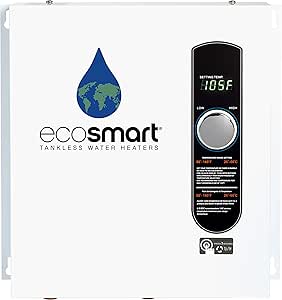
EcoSmart ECO 27 Tankless Water Heater, Electric, 27-kW
This unit stands out as the most capable among electric tankless heaters, especially in colder climates where incoming water can be as low as 37°F. Compared to the EcoSmart ECO 11, the ECO 27 offers nearly triple the heating power, making it suitable for larger households or simultaneous multiple fixtures. Its digital temperature control in 1-degree increments provides precise customization, a feature not as refined in smaller models. The tradeoff is its size and electrical load—requiring two double-pole 40-amp breakers—which could mean a costly upgrade for some homes. Still, for those seeking reliable, high-volume hot water without venting, this makes a compelling choice.
Pros:- High heating capacity suitable for cold climates
- Precise temperature control in 1-degree increments
- Capable of heating nearly 3 GPM simultaneously
- Digital control enhances user customization
Cons:- Requires substantial electrical service, possibly demanding costly upgrades
- Larger footprint and heavier installation considerations
Best for: Large families or homes in cold regions needing high flow rates and precise temperature control.
Not ideal for: Small apartments or homes with limited electrical capacity, due to its high power requirements.
- Power:27 kW
- Flow Rate:up to 3 GPM
- Voltage:240V
- Dimensions:17 x 17 x 3.5 inches
- Weight:about 12 pounds
- Temperature Control:Digital, 1-degree increments
Bottom line: Ideal for households with high hot water demand and sufficient electrical infrastructure, willing to handle the installation complexity.
Rheem RTEX-24 24kW 240V Electric Tankless Water Heater, Gray
The Rheem RTEX-24 makes a strong case for whole-home hot water, offering 24 kW of power and proven performance. Unlike smaller units like the EcoSmart ECO 11, it’s designed with a 100A circuit load, making it more suitable for homes with moderate electrical capacity. Its adjustable digital temperature control from 80-140°F provides flexibility for diverse household needs. A notable advantage over models like the WINTEMP 18kW is its simplicity in installation and operation, though it still demands a dedicated circuit and space in your breaker panel. This model is better suited to homes with existing electrical setups that can handle its power draw and where continuous hot water is a priority.
Pros:- Powerful 24 kW heating capacity for whole-home use
- Adjustable digital temperature control in 1-degree steps
- Vastly reduces space compared to tank models
- Vetted performance for continuous hot water
Cons:- Requires a 200A household service and a 3x40A breaker setup
- Installation complexity may increase costs
Best for: Homeowners seeking reliable, whole-house hot water with adaptable temperature controls and existing electrical capacity.
Not ideal for: Properties with limited electrical service or those looking for a compact, point-of-use solution.
- Power:24 kW
- Flow Rate:variable, typically up to 4 GPM
- Voltage:240V
- Adjustable Temperature:80-140°F
- Dimensions:unspecified
- Weight:unspecified
Bottom line: Best for homes with sufficient electrical capacity that prioritize continuous hot water and simple digital controls.
18kW Tankless Water Heater Electric 240V WINTEMP, On Demand Instant Hot Water Heater
The WINTEMP 18kW model combines on-demand efficiency with WiFi control, making it ideal for tech-minded homeowners. It automatically adjusts energy consumption based on flow and incoming water temperature, which helps optimize efficiency and reduce energy waste—a feature that surpasses the manual controls of the EcoSmart ECO 11. Its compact size and ETL certification make it suitable for residential applications, especially where space is tight. The tradeoff is the household service requirement—150A recommended—and the need for proper electrical wiring and circuit breakers. Compared to models like the EcoSmart ECO 11, it offers smarter operation and remote control, but with similar power needs.
Pros:- WiFi control for remote adjustments
- Auto-adjusts energy based on flow and temperature
- ETL certified for safety and reliability
- Compact and space-efficient design
Cons:- Requires 150A household service, possibly demanding electrical upgrades
- Installation may require professional wiring
Best for: Homeowners who want smart features, WiFi control, and efficient energy use for 2-3 fixture applications.
Not ideal for: Homes with limited electrical capacity or DIYers uncomfortable with wiring and setup complexity.
- Power:18 kW
- Flow Rate:up to 4.3 GPM
- Voltage:240V
- Maximum Temperature:140°F
- Dimensions:11.1 x 19.1 inches
- Weight:about 2.2 pounds
Bottom line: Best suited for tech-friendly households seeking efficiency and remote control features, with adequate electrical setup.
EcoSmart ECO 11 Electric Tankless Water Heater, 13KW at 240 Volts
The EcoSmart ECO 11 is an excellent choice for small-scale applications like a single bathroom sink or a low-flow shower in warmer climates. Its 13 kW output at 240V makes it suitable for point-of-use installs, especially where space is limited. Its self-modulating technology ensures energy efficiency by heating only when needed, reducing waste. Compared to larger models, its smaller size and lower power draw make it easier to install without major electrical upgrades. However, its flow rate of about 1.3 to 3.1 GPM means it’s not suitable for multiple fixtures or colder regions, where higher-capacity units like the ECO 27 might be necessary.
Pros:- Very compact and space-saving design
- Self-modulating efficiency technology
- Easy to install in small spaces
- Energy-efficient operation
Cons:- Limited flow rate, not suitable for multiple fixtures
- Less effective in colder water temperatures
Best for: Individuals needing an under-sink or point-of-use heater for low demand in warm climates.
Not ideal for: Large households or cold climates requiring higher flow rates and capacity.
- Power:13 kW
- Flow Rate:up to 4.3 GPM
- Voltage:240V
- Maximum Temp:140°F
- Dimensions:8 x 11.5 inches
- Weight:6.5 pounds
Bottom line: Perfect for low-demand, point-of-use applications in warmer climates, with limited space and power needs.
EcoSmart ECO 18 Electric Tankless Water Heater, 18 KW at 240 Volts
The EcoSmart ECO 18 strikes a balance between power and size, making it suitable for small to medium households. Its 18 kW output allows for over 2.5 GPM in warmer climates, supporting two showers simultaneously when incoming water is above 70°F, a step up from the ECO 11. Its self-modulating technology ensures efficiency, and the simple, space-efficient shell looks unobtrusive in residential settings. The main consideration is the electrical requirement—an 18kW unit needs a dedicated 240V circuit with two 40A double-pole breakers. Compared to the ECO 11, it offers higher flow capacity but the installation complexity remains similar.
Pros:- Supports multiple fixtures in moderate climates
- Self-modulating for energy efficiency
- Compact and space-saving
- Good balance of power and size
Cons:- Requires a 240V circuit with two 40A breakers
- Limited effectiveness in very cold water conditions
Best for: Families or homes in moderate climates needing reliable hot water for multiple fixtures without extensive electrical upgrades.
Not ideal for: Properties with electrical service below 150A or in very cold climates where flow rates drop significantly.
- Power:18 kW
- Flow Rate:over 2.5 GPM
- Voltage:240V
- Maximum Temp:140°F
- Dimensions:17 x 14 inches
- Weight:about 11.7 pounds
Bottom line: Suitable for small to medium households in moderate climates seeking reliable hot water without large electrical demands.
Westinghouse 14kW 240V Smart WiFi Tankless Water Heater Electric, Compatible with Alexa & Google Home, ETL Certified, IPX4, Gray – Upgrade (APOLO-2.0)
This model stands out for combining reliable hot water delivery with smart home compatibility, allowing remote adjustments via WiFi, Alexa, and Google Home. Compared to the EcoSmart ECO 27, the Westinghouse offers seamless voice control and a compact design, though it requires a dedicated 60A breaker and proper wiring, which might be a hurdle for DIYers. Its ETL certification and safety features provide peace of mind, but the need for space and electrical upgrades could be a drawback for smaller installations. The flow rate of 3.38 GPM makes it suitable for 1-3 fixtures simultaneously, perfect for apartment or small home use. Its space-saving design and app control make it ideal for tech-savvy users who want convenience and safety. However, it’s less suited for larger households needing higher flow rates or off-grid setups.
Pros:- WiFi-enabled for remote control and voice commands
- ETL safety-certified with multiple protections
- Compact, space-saving wall mount design
Cons:- Requires a 60A breaker and proper wiring, complicating installation
- Flow rate limited to 3.38 GPM, not suitable for large households
Best for: Tech-savvy apartment dwellers or small households seeking remote, voice-controlled hot water solutions
Not ideal for: Homes with high hot water demand or those unable to upgrade electrical panels due to wiring constraints
- Power:14 kW
- Voltage:240V
- Flow Rate:3.38 GPM
- Maximum Temperature:140°F
- Safety Certification:ETL
- Dimensions:9.5″W x 14.2″H
Bottom line: This pick is perfect for owners who prioritize smart home features and have compatible electrical systems.
Rheem 18kW 240V Tankless Electric Water Heater, Gray
This Rheem model makes the most sense for larger households or those needing continuous hot water, thanks to its robust 4.4 GPM flow rate and self-modulating technology that adjusts power based on demand. Compared to the Westinghouse APOLO, it offers higher capacity with fewer wiring constraints, but it lacks WiFi or smart features, which might be a downside for tech enthusiasts. Its durable copper heating elements and simple bottom-threaded connections facilitate easier installation and maintenance. The 18kW output ensures sufficient hot water for multiple fixtures simultaneously, ideal for medium to large homes. However, it’s bulkier and needs adequate electrical capacity, which could be a challenge in older homes. This model suits buyers prioritizing high flow capacity over smart home connectivity.
Pros:- High flow rate of 4.4 GPM for whole-home use
- Self-modulating technology for energy efficiency
- Durable copper heating elements, field serviceable
Cons:- Lacks smart features or app control
- Requires significant electrical capacity and space
Best for: Families with medium to high hot water demand looking for reliable whole-house performance
Not ideal for: Small apartments or users without sufficient electrical infrastructure for high wattage units
- Power:18 kW
- Voltage:240V
- Flow Rate:4.4 GPM
- Maximum Temperature:140°F
- Efficiency:99.8%
- Dimensions:14.5″W x 18.25″H
Bottom line: Ideal for larger households needing dependable, continuous hot water without smart home integration.
14kW Tankless Water Heater Electric, ORBEK On Demand Instant Hot Water Heater 240V, Max 3.38 GPM, Supply for 1-2 Fixtures, ETL Certified, Indoor Installation, New Upgraded 2.0
This compact unit excels for single or double fixture use, providing instant hot water with a 3.38 GPM flow rate, making it suitable for small kitchens or bathrooms. Compared to the Rheem 18kW, it’s easier to install in limited spaces, with a straightforward vertical setup and included fittings. Its safety features like leakage and dry-boil protection add reliability, but its limited flow rate restricts use for multiple outlets simultaneously. Ideal for users with basic hot water needs in tight spaces or as a supplemental heater. However, it’s not suited for larger households or shower-heavy setups due to its flow constraints.
Pros:- Compact, space-saving vertical design
- ETL safety-certified with multiple protections
- Easy installation with included fittings
Cons:- Limited to 1-2 fixtures at 3.38 GPM
- Requires proper vertical installation to prevent malfunctions
Best for: Single fixture or small household applications requiring space-efficient instant hot water
Not ideal for: Large homes or multiple simultaneous fixtures demanding higher flow rates
- Power:14 kW
- Voltage:240V
- Flow Rate:3.38 GPM
- Maximum Temperature:140°F
- Safety Certification:ETL
- Dimensions:11.42″W x 17.72″H
Bottom line: This unit is best for small spaces needing reliable instant hot water for limited fixtures.
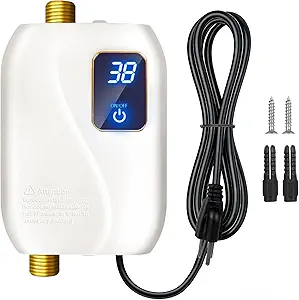
Tankless Water Heater Electric 110V, 3000W Instant Electric Water Heater, Under Sink Water Heater with Digital Display, On Demand Hot Water heater Electric for Kitchen Bathroom Washin
This under-sink model offers a modest 3000W output, raising water temperature by up to 82°F, making it suitable for small-scale daily needs like kitchen or bathroom sinks. Compared to the larger Westinghouse APOLO, it’s designed for minimal space and lower power requirements, with a simple digital display for precise temperature control. While its compact size and 110V plug make it easy to install almost anywhere, its limited flow rate and heating capacity restrict use to low-demand points of use. It’s perfect for users who need quick, small bursts of hot water but not for showers or multiple fixtures. The safety features and waterproof design add reliability, but it’s not a substitute for high-demand systems.
Pros:- Compact, easy to install under sink
- IPX4 waterproof and safety protections
- Precise digital temperature control
Cons:- Limited to 3 GPM at lower temperatures
- Not suitable for showers or high-demand uses
Best for: Individuals needing a compact, low-power hot water solution for kitchens or bathrooms
Not ideal for: Households requiring multiple fixtures or high flow rates
- Power:3000W
- Voltage:110V
- Flow Rate:0.3 GPM
- Maximum Temperature:131°F
- Protection:Leakage, dry boil, overheating
- Dimensions:Compact
Bottom line: This unit is ideal for small-scale, point-of-use hot water needs in tight spaces.
27kW Tankless Water Heater Electric, APUS 240V On Demand Instant Hot Water with Memory Function & LED Display, Energy-Saving Whole Home Water Heating System, Up to 6.5 GPM and Space Saving Design,Gray
This high-capacity unit is designed for large households or homes with multiple simultaneous hot water needs, delivering up to 6.5 GPM, significantly outperforming smaller models. Compared to the Rheem 18kW, it offers a much higher flow rate, making it suitable for 3-4 fixtures at once. Its LED display and memory function allow precise temperature control and easy operation, while its energy efficiency of 99.8% helps reduce costs. Its space-saving design and rugged construction make it a practical choice for large homes, but it requires a significant electrical setup (3×40 A breakers, 6×8 AWG wiring). It excels where demand is high but may be overkill for small households or apartment settings.
Pros:- High flow rate of 6.5 GPM for whole-house use
- Memory function for personalized settings
- Energy-efficient with 99.8% thermal efficiency
Cons:- Requires heavy electrical capacity and professional installation
- Larger physical size
Best for: Large families or homes with multiple bathrooms and high hot water demand
Not ideal for: Small apartments or users with limited electrical infrastructure
- Power:27 kW
- Voltage:240V
- Flow Rate:6.5 GPM
- Maximum Temperature:140°F
- Efficiency:99.8%
- Dimensions:17.72″W x 11.42″H
Bottom line: This model is perfect for large households needing high flow and reliable instant hot water at multiple fixtures.
Rheem 11kW 240V Tankless Electric Water Heater
This Rheem RTEX-11 stands out as the best overall choice for those seeking a reliable point-of-use electric water heater. Its self-modulating technology ensures energy efficiency, and the adjustable digital temperature display provides precise control. Compared to larger units like the EcoSmart ECO 27, it’s more space-efficient and easier to install for single fixtures or small sinks. The tradeoff is that it offers a flow rate of only 2.68 GPM, which limits its capacity for multiple outlets simultaneously. Its compact size, at about 8.25″ W x 12.63″ H, makes it ideal for under-sink installation. While highly efficient at 99.8%, it’s not suitable for whole-house heating or high-demand applications. This pick is perfect for individuals needing dependable hot water at a specific point, like a kitchen sink or small bathroom.
Pros:- Compact and space-efficient design
- High efficiency at 99.8%
- Digital temperature control for precision
Cons:- Limited flow rate of 2.68 GPM restricts multiple outlets
- Not suitable for whole-house applications
Best for: Homeowners or renters looking for a space-saving, reliable point-of-use water heater for a single fixture or small area.
Not ideal for: Large households or homes requiring simultaneous hot water for multiple outlets due to its limited flow rate.
- Power Source:AC
- Special Features:LED Display, Self-modulating
- Wattage:11 KW
- Voltage:240 Volts
- Flow Rate:2.68 GPM
- Maximum Temperature:140°F
- Efficiency:99.8%
- Mount Type:Wall
- Item Dimensions:8.25″ W x 12.63″ H
Bottom line: This unit works best for individuals needing a reliable, space-saving hot water source at a specific point, not for whole-home needs.
110V Tankless Water Heater Electric, 3000W Tankless Electric Water Heater
This 110V, 3000W tankless water heater is designed for quick, affordable hot water on demand in small spaces like kitchens or RVs. Its stainless steel and ABS construction, combined with an LED display, make it easy to operate and monitor performance. Compared to the Rheem RTEX-11, it’s far less powerful, raising water temperature by only 82°F at a flow of 0.3 GPM, which is enough for handwashing or small sinks but not for showers or multiple fixtures. Its compact, wall-mounted design maximizes space, making it ideal for apartments, camping, or secondary sinks. The main tradeoff is its low flow rate, which makes it unsuitable for high-demand or whole-house heating, and it’s limited to vertical installation only. This model suits buyers on a tight budget or with minimal hot water needs in small, confined areas.
Pros:- Affordable price point
- Compact and space-saving design
- Easy to install with pre-fabricated mounting holes
Cons:- Limited flow rate of 0.3 GPM, not suitable for showers
- Only for vertical installation, restricting placement options
Best for: Budget-conscious users needing a compact, easy-to-install hot water solution for small sinks or handwashing in limited spaces.
Not ideal for: Homes or apartments requiring hot water for showers or multiple fixtures due to its low flow capacity.
- Power Source:110V
- Wattage:3000W
- Flow Rate:0.3 GPM
- Maximum Temperature Rise:82°F
- Material:Stainless Steel & ABS
- Protection Features:Leakage, Overheat, Dry Boil
Bottom line: This heater is ideal for small-scale applications where low flow and space are priorities, not for comprehensive household use.
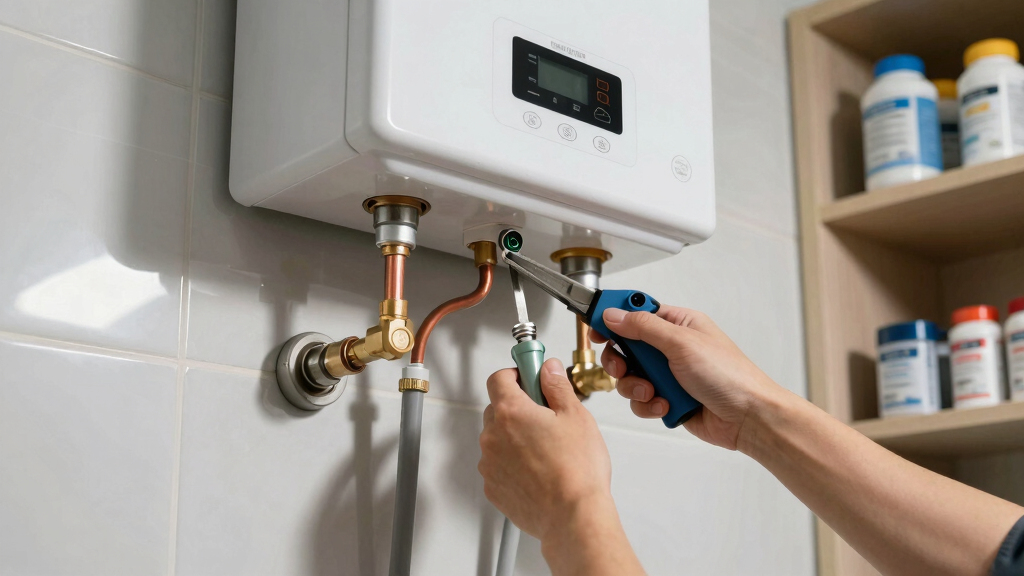
How We Picked
To evaluate these electric tankless water heaters, I focused on performance metrics like flow rate and heating capacity, along with usability features such as digital displays and smart controls. Build quality and reliability were also important, especially for models with WiFi or smart home integration. Cost-effectiveness was assessed by considering initial price, installation requirements, and ongoing energy consumption. The ranking reflects a balance of these factors, prioritizing models that offer the best mix of capacity, efficiency, ease of use, and value for different household sizes and budgets.Factors to Consider When Choosing Best Tankless Water Heaters Electric
Choosing the right electric tankless water heater involves weighing several key factors. Beyond just capacity, you should consider electrical requirements, space constraints, energy efficiency, and smart features. Understanding these factors helps prevent common mistakes, such as overestimating household demand or underestimating electrical upgrades needed. Being aware of tradeoffs—like higher upfront costs versus long-term savings—ensures you select a model that truly fits your household’s needs.Flow Rate and Heating Capacity
The primary consideration is how much hot water your household needs at peak times. Measured in gallons per minute (GPM), capacity varies widely among models. Larger households or those with multiple fixtures require higher GPM ratings, but this often means a higher wattage, which may necessitate electrical system upgrades. Smaller units are suitable for point-of-use applications or single fixtures but won’t serve entire homes. Matching capacity to your actual demand prevents inadequate hot water supply and wasted energy.
Electrical Requirements and Installation
Most high-capacity models demand significant electrical power—often 240V with 18kW or more—requiring dedicated circuits and possibly panel upgrades. Lower wattage units are easier to install but may struggle with larger household demands. Carefully assess your home’s electrical system before purchase to avoid costly upgrades after installation. Additionally, some models feature plug-and-play designs, simplifying installation, while others need professional wiring, adding to the total cost.
Energy Efficiency and Operating Costs
Efficiency impacts long-term expenses, especially if you use hot water frequently. Features like self-modulating technology adjust power usage based on demand, reducing energy waste. While more efficient models may have higher upfront prices, they can lower your utility bills over time. Conversely, smaller or less efficient units might be cheaper initially but could lead to higher operating costs if they can’t meet your household’s hot water needs.
Smart Features and Controls
Models with smart controls, WiFi connectivity, or voice compatibility add convenience, allowing remote temperature adjustments and usage monitoring. However, these features can increase the price and complexity of installation. Consider whether smart integration aligns with your household tech setup and whether the added controls justify the extra cost. For many, basic manual models still provide reliable hot water without the added tech features.
Space and Size Considerations
Compact units are suitable for small spaces or point-of-use needs, such as under sinks or in laundry rooms. Larger models designed for whole-house use require more space and robust mounting options. Measure your installation area carefully and verify clearance requirements. Remember that larger units may also demand higher electrical capacity, influencing your overall installation plan.
Frequently Asked Questions
Can I install a tankless water heater myself?
While some smaller, plug-in models are designed for DIY installation, most high-capacity units require electrical expertise and proper plumbing connections. Incorrect installation can lead to safety hazards, inefficient operation, or damage to the unit. For models with significant electrical demands or complex mounting, hiring a licensed professional is strongly recommended to ensure compliance with local codes and optimal operation.
Will a tankless water heater handle my household’s hot water needs?
Most tankless models specify a maximum GPM flow rate, which should be matched to your household’s peak demand. For example, if multiple fixtures run simultaneously, you’ll need a unit with sufficient capacity. For smaller households or point-of-use applications, lower GPM units often suffice. Always compare your household’s hot water usage to the model’s specifications to avoid shortfalls during busy times.
Are electric tankless water heaters energy-efficient?
Yes, especially models with self-modulating technology that adjust power based on demand. They typically use less energy than traditional tank heaters because they only heat water when needed. However, their efficiency also depends on proper sizing and installation. Oversized units may cycle on and off frequently, reducing efficiency, while undersized units won’t meet demand, leading to dissatisfaction.
What electrical upgrades might I need for a high-capacity unit?
High-capacity units often require dedicated 240V circuits with sufficient amperage, sometimes 50A or more. This may mean upgrading your breaker panel or wiring, which can add to installation costs. It’s best to consult with a licensed electrician early in the process to assess your home’s electrical system and plan any necessary upgrades before purchasing a high-wattage unit.
How long do electric tankless water heaters typically last?
With proper maintenance, most models last around 20 years, comparable to traditional tank heaters. Regular flushing to prevent mineral buildup and periodic inspections help extend their lifespan. Choosing a reputable brand with a good warranty can also provide peace of mind, especially since repairs or replacements can be costly. Investing in quality units often results in longer service life and better performance.