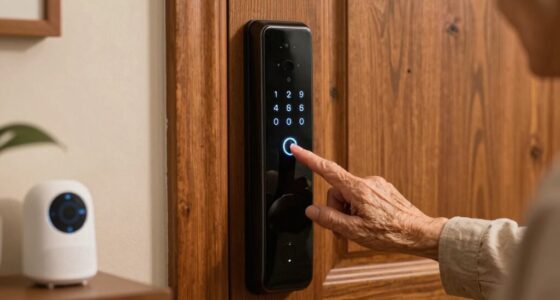
Start small by adding simple smart devices like voice-controlled speakers and smart bulbs in your most-used rooms. Focus on features that save time, energy, and effort, such as thermostats and smart plugs. Keep the system manageable by gradually expanding at your own pace, ensuring you don’t feel overwhelmed. With a few key upgrades, you’ll enjoy a more convenient, responsive home. If you want to uncover more tips, keep exploring how to build your smart home step by step.
Key Takeaways
- Start with simple, impactful upgrades like smart lights and voice control to build confidence gradually.
- Focus on user-friendly devices that simplify daily tasks and reduce manual effort.
- Prioritize essential features like energy management for immediate convenience and savings.
- Expand your system gradually, adding devices at your own pace to avoid feeling overwhelmed.
- Keep the setup scalable and manageable, emphasizing practicality and ease of use from the start.
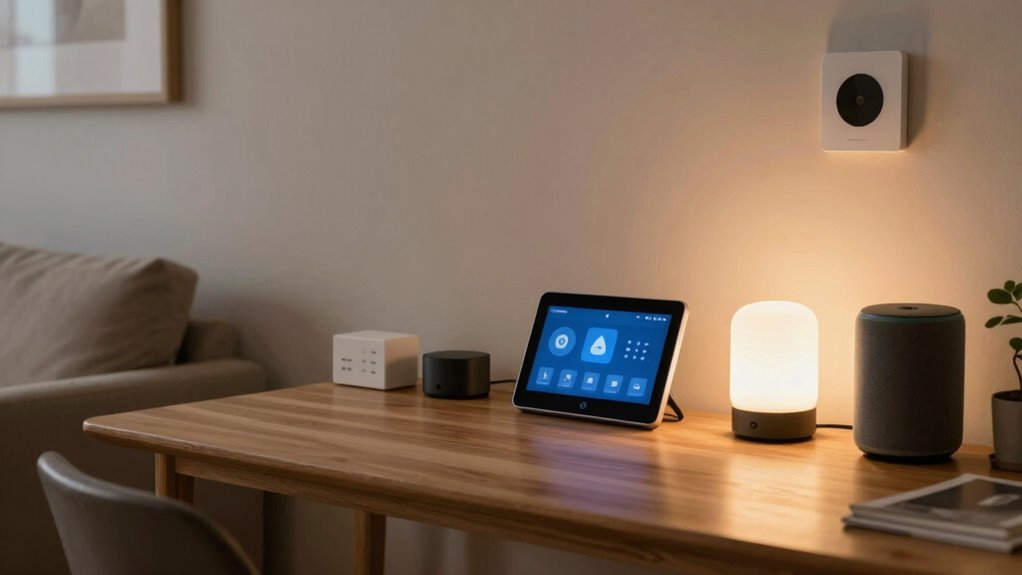
A smart home starter plan is the perfect way to begin transforming your house into a more convenient, efficient space. You don’t have to overhaul everything at once; instead, focus on simple, impactful upgrades that make daily life easier. One of the easiest ways to start is by incorporating voice control. With a few smart speakers or voice assistants, you can control lights, thermostats, and even appliances just by speaking. Imagine telling your device to turn off the lights or adjust the temperature without hunting for switches or remotes. Voice control provides an intuitive way to manage your home, making routines smoother and reducing the clutter of manual controls.
Start your smart home journey with voice control for effortless management of lights, thermostats, and appliances.
Alongside voice control, energy management is a key component of a helpful smart home setup. Smart thermostats and energy monitors allow you to track and optimize your power usage effortlessly. You can set your thermostat to adjust automatically based on your schedule or preferences, ensuring you’re not wasting energy when you’re away or asleep. These devices often come with apps that give you real-time insights into your energy consumption, so you can identify ways to save on utility bills without sacrificing comfort. Implementing energy management tools early in your smart home plan helps you create a more sustainable household while also reducing expenses. Additionally, understanding the benefits of smart devices can help you make more informed choices as you expand your setup. Exploring smart device compatibility can further enhance how seamlessly your devices work together. Being aware of compatibility issues ensures your system functions smoothly and reduces frustration during upgrades.
Starting small with a few core devices can make the transition feel less overwhelming. For example, install smart light bulbs in commonly used rooms so you can control lighting with your voice or through an app. These bulbs often allow you to set schedules or create mood lighting, adding convenience without complicating your daily routine. Pairing this with a smart plug for devices like coffee makers or lamps offers even more control and automation. As you get comfortable, you can expand your system gradually, integrating more devices at your own pace. Utilizing user-friendly interfaces can help you get accustomed to managing your smart home without feeling overwhelmed. Incorporating initial setup tips can also streamline the process and help you avoid common pitfalls.
The key is to keep your smart home plan manageable and user-friendly. Focus on devices that genuinely improve your daily life—those that save you time, energy, or effort. By starting with voice control and energy management, you set a foundation that’s both practical and scalable. You’ll find that a few thoughtful upgrades can make your home feel smarter and more responsive, without feeling like an overwhelming project. This approach helps you enjoy the benefits of a connected home while maintaining control and comfort every step of the way.
smart voice control speaker
As an affiliate, we earn on qualifying purchases.
As an affiliate, we earn on qualifying purchases.
Frequently Asked Questions
How Do I Choose the Right Smart Home Devices for Beginners?
To choose the right smart home devices for beginners, start by checking device compatibility with your existing setup. Focus on brands known for reliability to guarantee your devices work smoothly and last longer. Consider your needs—whether security, lighting, or voice control—and pick simple, user-friendly options. Avoid overcomplicating things; instead, opt for devices that integrate well with your preferred ecosystem, making your smart home experience enjoyable and stress-free.
Is Professional Installation Necessary for a Starter Plan?
Don’t bite off more than you can chew; professional installation isn’t always necessary for your starter plan. With DIY installation, you can set up compatible devices easily, especially if they’re user-friendly and designed for beginners. Just make certain your devices are compatible with your system before you start. If you’re comfortable with tech projects, you’ll likely enjoy customizing your smart home without needing professional help.
Can I Upgrade My Plan Later if I Want More Features?
Yes, you can upgrade your plan later if you want more features. The upgrade options are designed to offer feature flexibility, so you can easily add more devices or advanced functionalities as your needs evolve. This way, you won’t feel locked into your initial plan. Simply contact your provider or use their app to explore upgrade options and customize your smart home setup whenever you’re ready for more.
What Is the Average Cost of a Basic Smart Home Setup?
The average cost of a basic smart home setup typically ranges between $200 and $500. You’ll want to contemplate smart home aesthetics, choosing devices that blend seamlessly with your decor. Device compatibility is vital, so make sure the gadgets you select work well together and with your existing systems. Starting with essential devices like smart bulbs and hubs helps keep costs manageable while creating a functional, attractive smart home environment.
How Secure Are Smart Home Devices From Hacking?
Think of your smart home devices as guarded castles—strong but not invincible. They’re generally secure thanks to data encryption, which shields your information, but they’re still vulnerable to unauthorized access if you don’t use strong, unique passwords or keep software updated. Stay vigilant by enabling two-factor authentication and regularly reviewing device security settings. With these precautions, you can enjoy the convenience without the constant worry of hacking.
smart LED light bulbs
As an affiliate, we earn on qualifying purchases.
As an affiliate, we earn on qualifying purchases.
Conclusion
With your smart home starter plan in place, you step into a world where lights gently glow as you arrive, and your devices work seamlessly in harmony. It’s a comforting rhythm—each device a note in your daily symphony—making life simpler without the overwhelm. As you settle in, you feel the gentle hum of progress, a quiet promise that your home is smarter, safer, and more welcoming—ready to embrace every new day with ease and confidence.
smart thermostat for home
As an affiliate, we earn on qualifying purchases.
As an affiliate, we earn on qualifying purchases.
smart plug for appliances
As an affiliate, we earn on qualifying purchases.
As an affiliate, we earn on qualifying purchases.