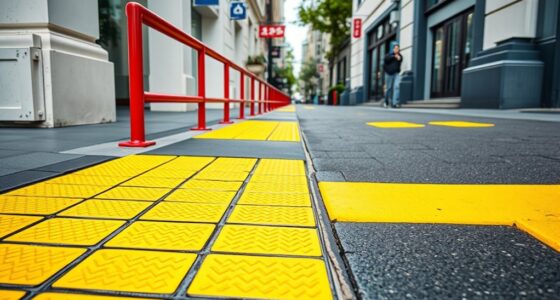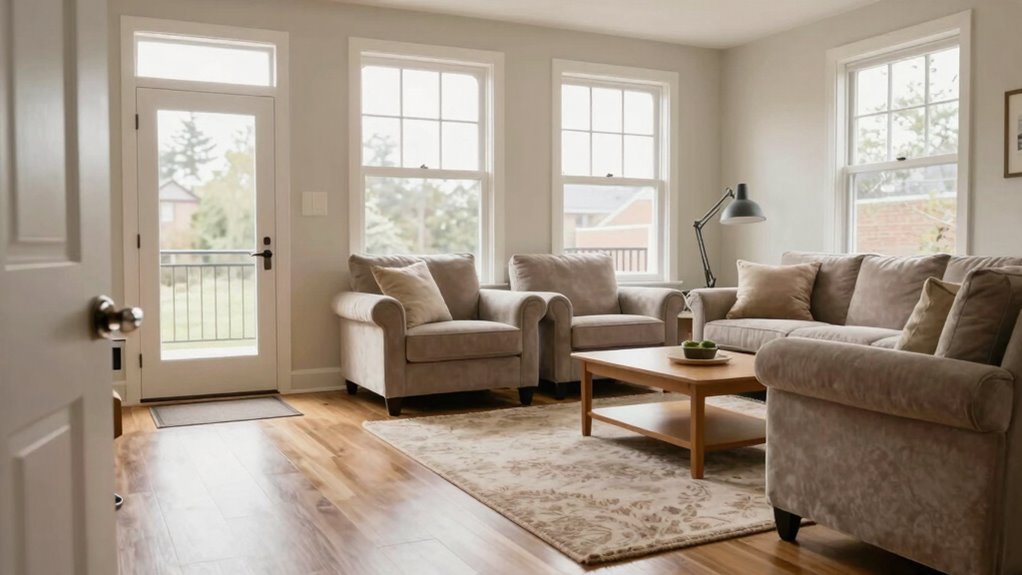

An age-friendly home seamlessly combines smart technology, such as voice-controlled lighting and secure locks, with practical modifications like wider doorways and no-slip flooring to boost safety and independence. It features accessible kitchens, open layouts, and step-free entrances, making daily tasks easier. Sustainability touches, like energy-efficient appliances and eco-friendly elements, blend with safety features to create a welcoming, adaptable space. Keep exploring to discover how these thoughtful updates help maintain comfort and security over time.

Get decor and gifts delivered free — and shop member deals
- Fast, free delivery on millions of items
- Access to Prime Big Deal Days deals on October 6–7
- Prime Video, Amazon Music and more included
Key Takeaways
- Incorporates smart technology for automation, safety, and convenience, like voice-controlled lighting and emergency alert systems.
- Features universal accessibility with wide doorways, lever handles, step-free entry, and non-slip flooring for easy mobility.
- Uses practical home modifications such as adjustable kitchen counters and open layouts to facilitate movement and reduce hazards.
- Includes sustainable elements like energy-efficient appliances and biodiversity-friendly features to promote environmental well-being.
- Emphasizes thoughtful, small-scale adaptations that support aging in place while maintaining aesthetic appeal.

Have you ever considered how your home can adapt to support your changing needs as you age? It’s not about turning your space into a nursing home or sacrificing comfort for functionality. Instead, age-friendly home design seamlessly integrates features that make daily living safer, easier, and more enjoyable, without disrupting your lifestyle. One of the key elements is incorporating smart technology. With smart devices, you can control lighting, thermostats, door locks, and even appliances with a simple voice command or a tap on your phone. These innovations reduce the need to move around unnecessarily and help you maintain independence longer. For example, motion-activated lighting can eliminate the risk of tripping in dark hallways, while smart locks give you keyless entry, making it easier to let in visitors or caregivers without fumbling for keys. Incorporating biodiversity-friendly features can also enhance your home environment by supporting local ecosystems and promoting sustainable living practices. Additionally, integrating energy-efficient appliances and systems can contribute to environmental sustainability and lower utility costs.
Smart technology enhances safety and independence with voice control, motion sensors, and keyless entry.
Universal accessibility plays an essential role in creating a home that adapts to your changing needs. It’s about designing spaces that are easy to navigate and use, regardless of physical ability. Wide doorways and hallways, for example, provide enough space to move comfortably with mobility aids like walkers or wheelchairs. Installing lever-style door handles instead of knobs makes opening doors effortless for those with limited hand strength. A step-free entryway ensures you won’t be tripped up by thresholds, and a no-slip flooring surface adds safety underfoot. These features benefit everyone, not just those aging, and they contribute to a more comfortable, adaptable living environment.
In a typical home, these adjustments might seem small, but they make a significant difference in how you move through and experience your space. Think about a kitchen designed with accessible counters at different heights, making cooking easier whether you’re standing or seated. An open-plan layout minimizes obstacles, allowing for more fluid movement. Smart technology can also include emergency alert systems that you can easily access if needed, providing peace of mind for both you and your loved ones. These features don’t have to be expensive or intrusive; they blend into your home’s aesthetic while offering substantial safety and convenience benefits. Exploring home automation options can further enhance your home’s functionality and ease of use.
Ultimately, age-friendly home design isn’t about drastic renovations but about thoughtful, practical modifications that support your independence. By prioritizing smart technology and universal accessibility, you create a space that adjusts to your needs over time, making aging in place a comfortable reality. This approach ensures your home remains a safe, welcoming sanctuary—one that adapts seamlessly as you grow older.
As an affiliate, we earn on qualifying purchases.
Frequently Asked Questions
How Do I Balance Safety With Home Aesthetics?
You can balance safety with aesthetics by choosing color coordination that complements your decor while highlighting safety features. Opt for lighting solutions like soft, warm lights that improve visibility without compromising style. Incorporate secure, stylish handrails and non-slip flooring that blend seamlessly into your home’s design. By integrating functional safety features thoughtfully, you guarantee your space remains attractive and secure, making it easier to navigate comfortably and confidently.
What Budget Options Are Available for Age-Friendly Upgrades?
You can find budget-friendly age-friendly upgrades by exploring assistive technology like grab bars or non-slip mats, which are affordable and effective. Using accessible materials, such as easy-to-reach shelves or lever handles, also keeps costs low. DIY projects and repurposing existing furniture can save money, while shopping sales or secondhand stores offers quality options at a fraction of the price. Small changes make a big difference without breaking the bank.
How Can I Personalize Safety Features Without Creating Clutter?
You can personalize safety features by choosing decorative accents that blend seamlessly with your decor, like stylish grab bars or elegant railings. Incorporate technology integration, such as smart sensors or motion-activated lighting, to enhance safety without adding clutter. Keep these features sleek and minimalistic, ensuring they complement your home’s aesthetic while providing essential safety. This approach allows you to customize your space, maintaining style and functionality effortlessly.
Are There Specific Brands Known for Age-Friendly Products?
You might find that brands like Moen, Kohler, and OXO focus on age-friendly products, blending smart technology and universal design seamlessly. Coincidentally, their innovations make everyday tasks easier and safer without clutter. These companies prioritize accessibility, offering grab bars, lever handles, and non-slip mats that adapt to your needs. By choosing their products, you guarantee your home is both stylish and functional, supporting independence at any age.
How Do I Involve Family Members in the Redesign Process?
You involve family members in the redesign process by holding collaborative discussions and listening to everyone’s needs and concerns. Encourage open communication to foster family involvement and guarantee all voices are heard. You can create a shared vision for the age-friendly design, making the redesign collaboration more effective. Including everyone from the start helps build consensus, making the home more comfortable and functional for all ages.
Conclusion
Creating an age-friendly home means thinking ahead and making small changes that make a big difference. By prioritizing safety, accessibility, and comfort, you guarantee your space adapts to your needs over time. Remember, a house that’s built with care today can become your sanctuary tomorrow. As the saying goes, “A stitch in time saves nine”—investing in thoughtful design now helps you enjoy years of comfort without worry.
Halloween Picks
halloween
As an affiliate, we earn on qualifying purchases.