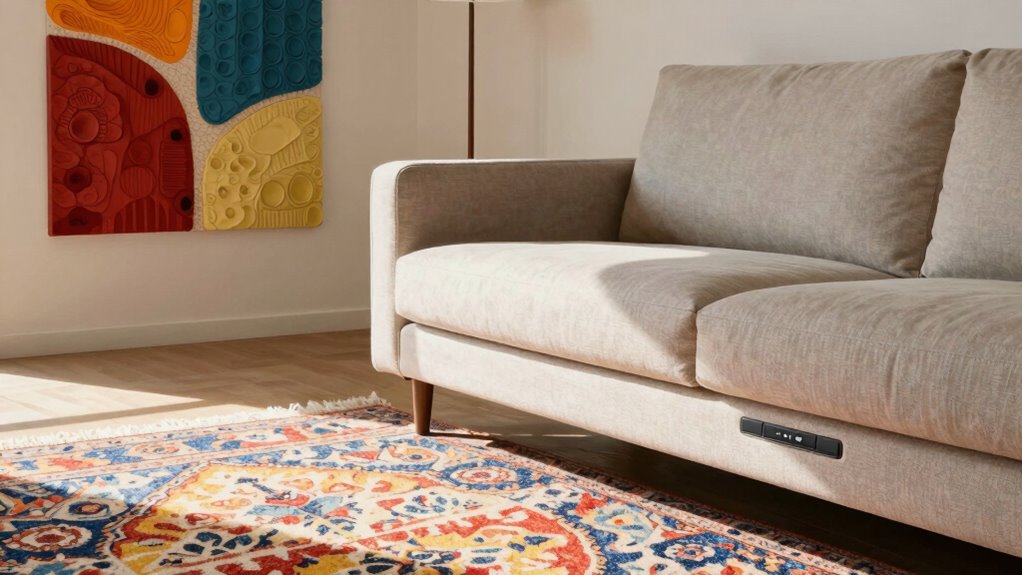

To blend accessibility into decor so it looks intentional, focus on integrating features like lever handles, rounded-edged furniture, and accessible controls naturally within your design. Choose soothing, cohesive color schemes and soft lighting to create a calming environment that feels stylish and welcoming. Incorporate textures and sensory-friendly elements subtly, ensuring they enhance rather than disrupt your space’s look. Thoughtful placement and versatile decor make accessibility feel seamless. Keep exploring for more ideas on creating beautiful, inclusive spaces.

Get decor and gifts delivered free with Prime
- Fast, free delivery on millions of items
- Prime Video, Amazon Music and more included
- Member-only deals all year
Key Takeaways
- Integrate accessible features seamlessly with the overall design, avoiding a clinical or institutional appearance.
- Choose decor elements that are both functional and stylish, reflecting intentional design choices.
- Use soft, muted color palettes to create visual harmony and reduce stress for all users.
- Incorporate sensory-friendly textures and lighting that enhance comfort without sacrificing aesthetics.
- Prioritize detail-oriented, adaptable furniture and fixtures that support accessibility naturally.
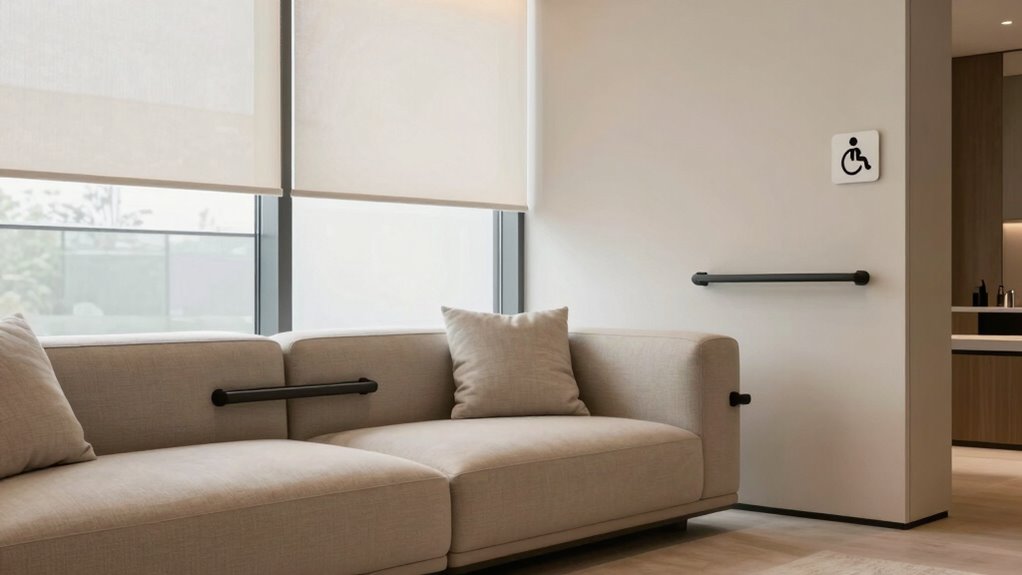
Have you ever considered how accessible decor can transform a space for everyone? When you design with accessibility in mind, you create an environment that’s welcoming and functional for all, whether or not someone has specific needs. The key is to blend these elements seamlessly so that accessibility feels intentional, not like an afterthought. One effective way to do this is by incorporating sensory-friendly designs. These designs focus on reducing overwhelming stimuli and providing calming elements, which benefits everyone, especially those sensitive to light, sound, or textures. Think about using soft, natural lighting instead of harsh fluorescent bulbs, and adding plush rugs or textured wall panels that provide comfort without cluttering the space. These choices can subtly enhance the ambiance, making your decor both stylish and considerate.
Incorporate soft lighting and textured accents to create calming, inclusive, and stylish spaces for everyone.
Another essential aspect is choosing inclusive color schemes. Instead of relying solely on trendy or bold color combinations, select palettes that are easy on the eyes and provide visual harmony. Soft, muted tones like gentle blues, warm earth tones, and pastel shades can make a space feel inviting and calm. When done intentionally, these colors can help reduce visual stress for individuals with sensitivities and create a cohesive look that ties the decor together. You can also incorporate high-contrast elements thoughtfully—such as contrasting trim or furniture—so that key features are easily identifiable for those with visual impairments. By carefully balancing color choices, you make your space more accessible without sacrificing style.
Blending accessibility into your decor isn’t just about functionality; it’s about making design choices that feel natural and integrated. For example, selecting furniture with rounded edges not only looks sleek but also minimizes injury risk. Installing lever handles on doors and faucets simplifies use for people with limited dexterity, and placing controls at accessible heights ensures everyone can operate them comfortably. When these details are incorporated thoughtfully, they reinforce the design’s intentionality. It’s also helpful to choose versatile decor elements—like modular furniture or adjustable lighting—that can adapt to different needs. This approach ensures your space remains inclusive without appearing overly specialized or institutional.
Ultimately, making accessibility look intentional is about paying attention to details and embracing inclusive design principles. When you thoughtfully incorporate sensory-friendly elements and inclusive color schemes, your decor becomes more than just attractive—it becomes functional and welcoming for everyone. By doing so, you create a space that’s not only stylish but also genuinely considerate, demonstrating that great design can be both beautiful and accessible.
As an affiliate, we earn on qualifying purchases.
Frequently Asked Questions
How Do I Balance Style and Accessibility in Decor?
To balance style and accessibility, prioritize functional design that complements your decor. Use color contrast thoughtfully to highlight key features without clashing with your aesthetic. Arrange furniture with clear pathways and strategic placement to guarantee ease of movement. Incorporate accessible elements—like stylish grab bars or adjustable furniture—so they blend seamlessly. This approach allows you to create a space that’s both visually appealing and navigable for everyone, without sacrificing style.
What Are Affordable Accessibility-Friendly Decor Options?
You can find budget-friendly tips by choosing versatile, accessible furniture like adjustable-height tables or non-slip rugs. Incorporate stylish adaptations such as colorful, tactile accents or modern, easy-to-reach storage solutions. Opt for open shelving and contrasting colors to improve visibility and independence. DIY projects, like painting or repurposing items, also add a personal, accessible touch without breaking the bank. These small changes make your decor both functional and fashionable.
How Can I Personalize Accessible Decor?
To personalize accessible decor, start by choosing colors with strong contrast to highlight key features, making them easier to identify. Incorporate tactile textures like textured rugs, fabrics, or wall art to add sensory interest and help you feel more connected to your space. Mix personal items, like framed photos or unique decor pieces, with functional elements. This combination guarantees your space reflects your personality while remaining accessible and visually engaging.
Are There Any Common Decorating Mistakes to Avoid?
Imagine a room where every element feels balanced, not chaotic. Avoid common decorating mistakes like poor color contrast, which can make accessibility tools hard to see, and clutter that overwhelms and distracts. Instead, use bold, clear contrasts and keep surfaces tidy. This approach guarantees your space is both beautiful and functional, welcoming everyone without sacrificing style. Remember, thoughtful design turns accessibility into an art form, not an afterthought.
How Can I Update Decor for Changing Accessibility Needs?
To update your decor for changing accessibility needs, incorporate adaptive design principles and universal decor elements. You can add adjustable-height furniture, leverage contrasting colors for better visibility, and replace knobs with lever handles. Keep safety in mind by adding non-slip rugs and adequate lighting. Regularly assess your space to verify it remains functional and aesthetically pleasing, making small adjustments over time to meet evolving needs seamlessly.
Conclusion
By weaving accessibility seamlessly into your decor, you turn your space into a symphony where every note matters. Think of your home as a garden—each element carefully chosen to nurture inclusivity and beauty alike. When accessibility is intentional, it doesn’t stand out like a sore thumb; instead, it harmonizes effortlessly with your style. Embrace these thoughtful touches, and watch your space bloom into a welcoming sanctuary for everyone who enters.
Fall Picks
fall essentials
As an affiliate, we earn on qualifying purchases.