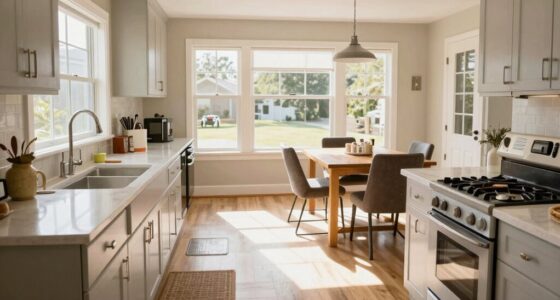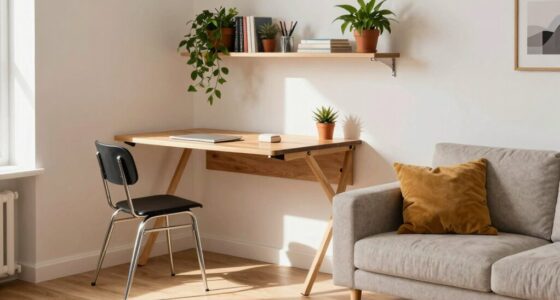
To support your independence, focus on each room’s design moves. In the kitchen, install voice-activated appliances and motion-sensor lighting. Enhance safety in the bathroom with grab bars and anti-slip mats. In the bedroom, lower closet rods and add smart lighting. Keep pathways clear and furniture safe in the living room. At entryways, add ramps, wider doorways, and good lighting. These thoughtful modifications can make daily routines smoother. Keep exploring for more ideas to create a safer, more accessible home.

Get decor and gifts delivered free with Prime
- Fast, free delivery on millions of items
- Prime Video, Amazon Music and more included
- Member-only deals all year
Key Takeaways
- Incorporate voice-activated appliances and smart lighting for hands-free control in each room.
- Install safety features like grab bars, anti-slip mats, and rounded furniture edges to prevent falls.
- Use accessible storage solutions such as pull-out shelves and lower closet rods for easier access.
- Ensure clear pathways and adequate lighting to reduce obstacles and enhance visibility.
- Add assistive technology and environmental controls tailored to each room’s specific needs.
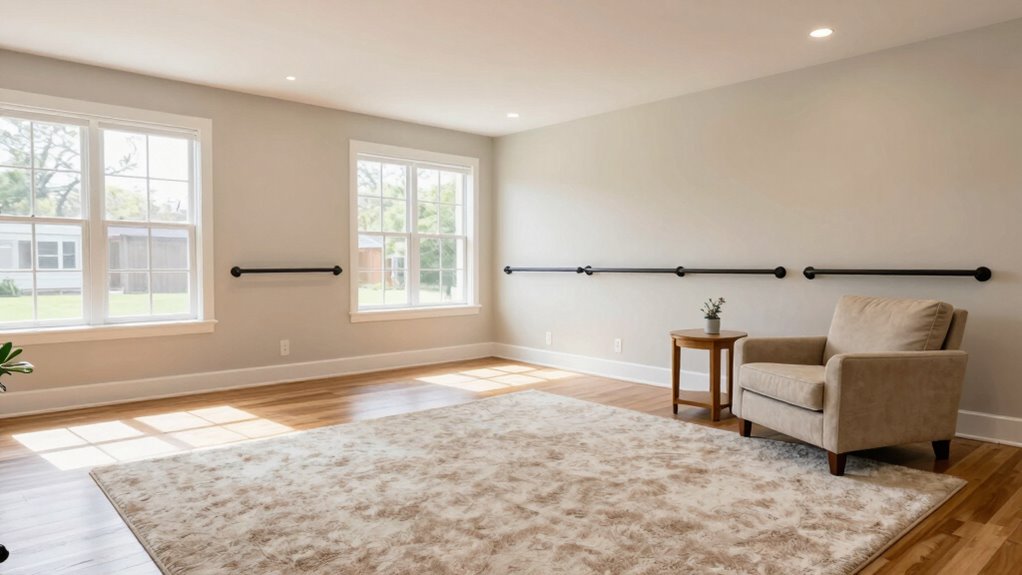
Creating an accessible and supportive home environment is essential for fostering independence, especially as mobility and daily needs change. When you focus on room-by-room design moves, you can make your space safer and more functional, empowering you to manage daily tasks with confidence. One of the most effective ways to do this is by incorporating assistive technology. In the kitchen, for example, you can install voice-activated appliances or motion-sensor lights that make cooking and cleanup easier without requiring complex maneuvers. In the bathroom, consider grab bars, anti-slip mats, and handheld showerheads that support safe mobility and reduce the risk of falls. These devices, combined with safety modifications, create a more secure environment, giving you peace of mind and greater independence.
Moving into the bedroom, you want to optimize both safety and ease of access. Lowering closet rods and installing pull-out shelves can make it easier to reach clothes and essentials. Consider smart lighting that turns on automatically when you enter the room or voice-controlled bedside lamps that you can operate without having to get out of bed. These assistive technology solutions minimize obstacles and physical strain, helping you stay independent longer. When designing the living room, focus on creating clear pathways free of clutter and furniture with rounded edges to prevent injuries. You might add remote-controlled blinds or smart thermostats to adjust the environment effortlessly, ensuring comfort without unnecessary effort. Safety modifications like sturdy furniture and non-slip rugs further enhance security. Incorporating home safety features can make a significant difference in reducing hazards and supporting ongoing independence.
In the entryway or hallway, installing ramps and wider doorways can accommodate mobility aids like wheelchairs or walkers. Lever-style door handles are easier to operate than knobs, and installing a bench or sturdy chair nearby provides a safe spot to rest during transitions. Outside the home, consider adding well-lit pathways and motion-activated security lights to prevent accidents and enhance safety during evening hours. These small but impactful modifications support your independence by making every space easier and safer to navigate, regardless of your mobility level. Additionally, integrating assistive technology such as smart home devices and mobility aids further enhances safety and accessibility throughout your home. Regularly assessing your home’s layout for potential hazards and making adjustments can also significantly improve your confidence in moving around safely. Staying aware of evolving independence needs and adapting your environment accordingly can help you maintain your autonomy longer.
Throughout your home, integrating assistive technology and safety modifications at each room level creates an environment that adapts to your evolving needs. These strategic moves not only reduce the risk of accidents but also enable you to perform daily activities more independently. By thoughtfully redesigning each space, you foster a sense of control and confidence, making your home a true sanctuary that supports your independence every step of the way.
Products Worth Considering

eufy Security SoloCam E42 4-Camera Kit, 4K Solar Security Cameras with HomeBase 3

Shark IZ362H Cordless Anti-Allergen Stick Vacuum, Red

eufy Security Video Doorbell E340 Kit with Chime, 2K Resolution and 8GB Local Storage
As an affiliate, we earn on qualifying purchases.
Frequently Asked Questions
How Do I Assess Individual Needs for Independence in Each Room?
You start with a personalized assessment by observing how you use each room and identifying any challenges or obstacles you face. Consider your daily routines and where you feel most dependent. Then, implement adaptive strategies like adjusting furniture heights or adding assistive devices. Regularly review your needs, and adapt your environment accordingly to promote independence, ensuring each space supports your abilities and makes daily tasks easier and more comfortable.
What Budget-Friendly Modifications Can Enhance Independence?
You can boost independence with affordable upgrades that make daily tasks easier. Think safety enhancements like non-slip rugs, grab bars, and improved lighting—these small changes can dramatically reduce accidents. Consider simple modifications like lever-style door handles or motion-activated lights. These budget-friendly solutions not only promote safety but also empower you to move freely and confidently through your space, transforming your environment into one that truly supports your independence.
Are There Universal Design Principles Applicable Across All Rooms?
You can apply universal accessibility principles across all rooms by ensuring wide doorways, low-threshold entrances, and lever hardware for easy use. Prioritize aesthetic integration by choosing stylish, functional modifications that blend seamlessly with your decor. Maintain good lighting, clear pathways, and adaptable furniture to support independence everywhere. These universal design principles create a more inclusive environment, making each space safer and more accessible without sacrificing style or comfort.
How Can Technology Support Independence in Home Design?
You can boost independence at home by integrating smart technology and adaptive furniture. Smart devices, like voice-activated lights and thermostats, let you control your environment effortlessly. Adaptive furniture adjusts to your needs, providing support and comfort. These innovations enable you to perform daily tasks more independently, reducing reliance on others. By choosing the right technology and furniture, you create a safer, more accessible space that adapts to your evolving needs.
When Should Professional Consultation Be Considered for Home Modifications?
You should call in a professional when your stairs safety feels more like a game of chance, or when lighting improvements still leave you stumbling in the dark. If DIY fixes aren’t doing the trick or you’re unsure about safe modifications, it’s time to get expert advice. Professionals can guarantee your home is truly accessible, preventing falls and making daily life safer and more comfortable. Don’t leave safety to chance—consult an expert.
Conclusion
By applying these room-by-room design moves, you’re not just creating a space; you’re crafting a sanctuary of independence—much like Daedalus’s labyrinth, where every turn and detail empowers you rather than confines. With thoughtful adjustments, you’ll navigate your home with confidence, embracing autonomy at every corner. Remember, a well-designed space is your personal Minotaur’s maze, guiding you safely and confidently through each day’s journey.