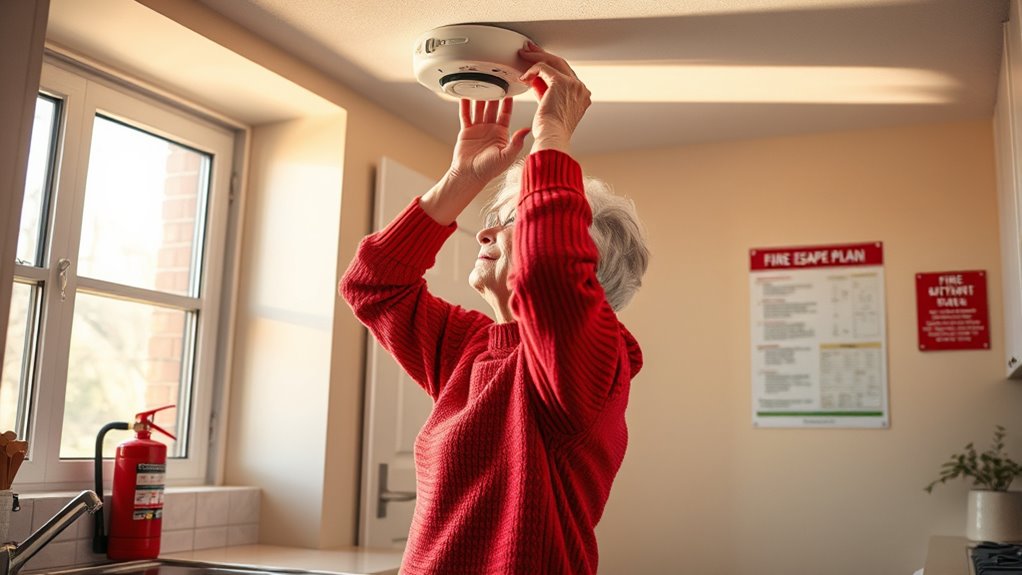

To reduce fire risk while living alone, stay attentive in the kitchen, never leave food unattended, and keep flammable items away from heat sources. Test and maintain smoke alarms monthly, replacing batteries annually, and consider interconnected alarms for better safety. Keep escape routes clear, have flashlights ready, and practice fire plans regularly. For added protection, explore specialized devices like alarms with visual alerts. Keep these simple tips in mind to safeguard your home—and discover more ways to stay safe.
Key Takeaways
- Regularly test and maintain smoke alarms, replacing batteries annually and ensuring proper placement on each home level.
- Stay attentive in the kitchen, avoid distractions, and use timers to prevent cooking fires.
- Keep escape routes clear, practice fire drills, and install alarms with visual or vibrating alerts if needed.
- Keep emergency supplies like flashlights and extra batteries accessible for power outages and fire situations.
- Consider interconnected alarms and additional safety devices like strobe lights for enhanced awareness and protection.
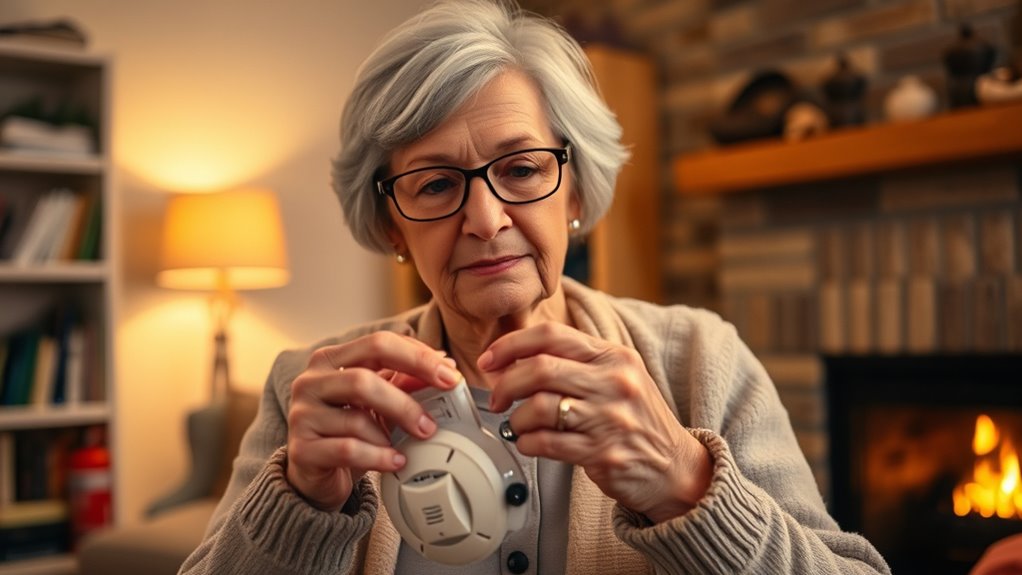
Living alone as an older adult can be both rewarding and challenging, especially when it comes to fire safety. One of the most common risks you face is kitchen fires, which makes cooking safety a top priority. Always stay attentive when you’re preparing food, never leave the stove unattended, and keep flammable items like dish towels or paper towels away from heat sources. Using timers can help remind you when to check on your cooking, reducing the chance of accidental fires. If you’re frying or grilling, stay nearby and avoid distractions like watching TV or talking on the phone. Remember, a small oversight can quickly turn into a dangerous situation.
Another essential aspect of fire safety is smoke alarm maintenance. Make sure your smoke alarms are working properly by testing them monthly and replacing batteries at least once a year. Some alarms have a test button that emits a loud sound when pressed—use this to verify functionality. If your smoke alarm is hardwired into your home’s electrical system, consider having it checked regularly by a professional to verify it’s functioning correctly. Keep a clear space around your smoke alarms, avoiding dust or cobwebs that can interfere with their sensors. It’s also wise to have at least one smoke alarm on each level of your home, especially near bedrooms and the kitchen. In addition, consider installing interconnected alarms so that when one detects smoke, all alarms sound simultaneously, alerting you even if you’re in another room.
Living alone means you need to be extra vigilant about your safety devices. Keep a flashlight and spare batteries nearby in case the power goes out during a fire or emergency. Make sure your home has an accessible and clear escape route and practice your fire escape plan regularly so you know exactly what to do if a fire occurs. If you have mobility challenges, consider installing smoke alarms with strobe lights or vibrating alerts to notify you of danger. Maintaining your cooking safety habits, combined with diligent smoke alarm upkeep, drastically reduces your risk of fire-related accidents. Staying proactive and prepared gives you peace of mind, allowing you to enjoy your independence without unnecessary worry. Remember, fire safety isn’t just about reacting to emergencies but preventing them altogether through simple, consistent actions. Additionally, exploring fire prevention devices can provide extra peace of mind by enhancing your home’s safety features.
Frequently Asked Questions
How Can I Get a Fire Safety Assessment for My Home?
You can get a fire safety assessment for your home by contacting your local fire department or community safety organization. They often offer free or low-cost home safety evaluations that focus on emergency planning and fire prevention. During the assessment, they’ll check your smoke alarms, escape routes, and electrical systems, helping you identify risks. This proactive step guarantees your home stays safe, and you’re prepared in case of emergencies.
What Are the Best Fire Alarm Options for Seniors?
You should consider a smart home fire alarm system with features like voice alerts, easy testing, and wireless connectivity. These alarms can send automatic alerts to your emergency contacts if smoke is detected, providing extra safety. Look for models that are simple to operate, have loud alarms, and integrate with your smart home devices. Regularly test your alarms and keep emergency contacts updated to guarantee prompt assistance when needed.
How Often Should I Replace My Smoke Detector Batteries?
You should replace your smoke detector batteries at least once a year, but don’t forget to check them monthly. Battery maintenance is vital—if the detector starts to beep, change the batteries immediately. Proper detector placement, like on the ceiling or high on a wall, enhances safety. Keep an eye on your detectors, and stay alert—timely battery changes could be the difference between safety and disaster.
Are There Community Programs for Fire Safety Assistance?
Yes, there are community programs that offer fire safety assistance. You can participate in local community outreach initiatives or volunteer fire programs that provide safety education and resources. These programs often include home safety assessments, fire drills, and installation of safety devices. Contact your local fire department or community center to find out about available services. Taking advantage of these programs helps you stay informed and prepared, reducing fire risks in your home.
What Should I Do if I Smell Smoke but See No Fire?
When you smell smoke but see no fire, don’t ignore it—better safe than sorry. Check your smoke detection system to make sure it’s working properly. If it’s functioning, activate your emergency preparedness plan by alerting others and calling emergency services. Stay calm and move to a safe area. Remember, a little precaution goes a long way in protecting yourself and your home from potential fire hazards.
Conclusion
By following these fire prevention tips, you’re taking control of your safety, much like Icarus carefully managing his flight. Remember, staying vigilant and prepared guarantees you don’t become a cautionary tale. Keep your home safe and your spirit resilient, so you can enjoy your independence with confidence. Just as the phoenix rises anew, your proactive efforts will help you emerge unscathed, proving that safety and independence go hand in hand.