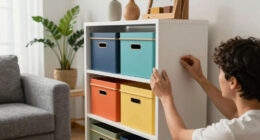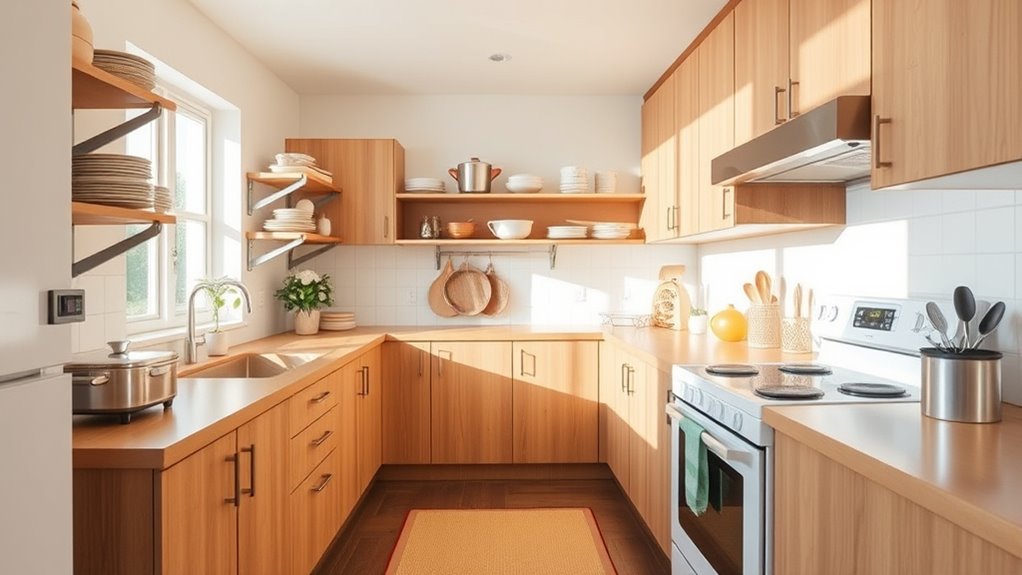

To set up a senior-friendly kitchen for safe cooking, focus on ergonomic tools with easy grips, lightweight utensils, and adjustable features. Keep frequently used items within arm’s reach and place appliances at accessible heights to reduce strain. Install good lighting, non-slip mats, and safety features like lever faucets and grounded outlets. Arranging the space for clear pathways and emergency access helps prevent accidents. If you’d like to learn more tips, keep exploring these helpful setup ideas.

Get decor and gifts delivered free — and shop member deals
- Fast, free delivery on millions of items
- Access to Prime Big Deal Days deals on October 6–7
- Prime Video, Amazon Music and more included
Key Takeaways
- Install ergonomic tools with easy-grip handles and lightweight design to reduce effort and strain during cooking.
- Keep frequently used items within arm’s reach and position appliances at accessible heights to minimize bending and stretching.
- Ensure bright, even lighting and non-slip flooring to enhance visibility and prevent slips or falls in the kitchen.
- Incorporate safety features such as grounded outlets, safety covers, and motion-activated lighting for added security.
- Maintain a clutter-free space with pull-out shelves and clear pathways to promote independence and quick emergency access.
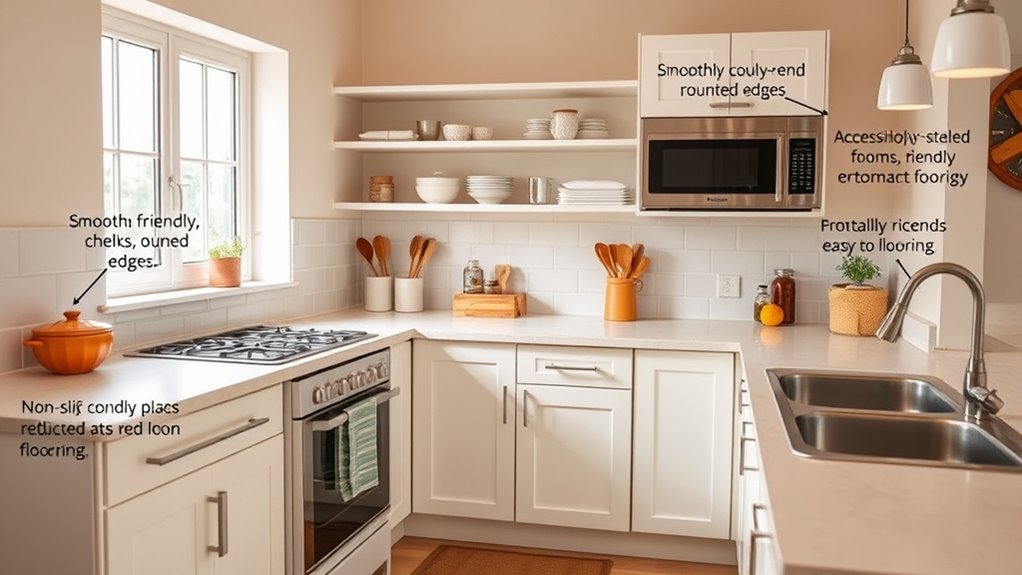
Creating a senior-friendly kitchen guarantees safety, independence, and ease of use for older adults. When designing this space, focus on incorporating ergonomic tools that reduce strain and make daily tasks more manageable. These tools are designed with comfort and accessibility in mind, featuring handles that are easier to grip, lightweight construction, and adjustable components to suit individual needs. Using ergonomic utensils and gadgets can substantially decrease the effort required to chop, stir, or lift, making cooking less tiring and safer. Additionally, ensuring emergency access is straightforward is essential. Clear pathways free of clutter allow quick movement, especially in urgent situations. Install lever-style faucets that are easier to operate than traditional knobs, enabling quick access to water without unnecessary effort. Placing frequently used items within arm’s reach minimizes stretching or climbing, reducing the risk of falls or accidents. It’s wise to keep a small, accessible emergency kit in the kitchen, stocked with essentials like a flashlight, first aid supplies, and a phone charger, so help is always within reach if needed. When setting up your kitchen, consider the placement of appliances and storage. Position the stove and oven at accessible heights to avoid bending or reaching over hot surfaces. Use pull-out shelves or drawers in cabinets to make it easier to access pots, pans, and ingredients without straining or risking spills. Good lighting is also essential for safety and independence. Bright, even lighting minimizes shadows and enhances visibility, helping to prevent accidents while cutting or handling hot items. Make sure electrical outlets are conveniently located and equipped with safety covers or grounded outlets to prevent shocks. Non-slip mats or rugs should be placed on floors to reduce the risk of slipping, especially in areas prone to spills. When choosing tools and appliances, prioritize those with intuitive controls and safety features. For example, induction cooktops often have automatic shut-off functions, offering peace of mind. Regularly check that all safety mechanisms are functional and that the environment remains clutter-free. You want to create a space where emergency access is effortless and everyday tasks are manageable. Incorporating advanced safety features such as motion-activated lighting and alert systems can further enhance safety. By thoughtfully selecting ergonomic tools and ensuring easy access to emergency supplies, you empower older adults to cook safely and confidently. Overall, the goal is to make the kitchen a secure, welcoming space that promotes independence without sacrificing safety. When you prioritize these considerations, you help ensure that cooking remains a joyful and safe activity for everyone in your home.
Frequently Asked Questions
What Are the Best Non-Slip Flooring Options for Seniors?
You should choose textured flooring or add non-slip mats to reduce fall risks. Textured flooring options like vinyl with a textured surface or rubber tiles provide better grip and stability. Non-slip mats can be placed in high-traffic areas or near sinks and stoves for extra safety. These options help prevent slips and falls, making your kitchen safer and more accessible for seniors.
How Can I Improve Lighting Without Causing Glare?
To improve lighting and reduce glare, you should add task lighting in key areas like countertops and stove tops. Use matte or diffused light fixtures to minimize harsh reflections, and position lights at angles that avoid direct glare into your eyes. Incorporate adjustable lighting options, like dimmers, to control brightness levels. This way, you enhance visibility while creating a comfortable, glare-free environment for safe, easy cooking.
Are There Easy-To-Reach Storage Solutions for Small Kitchens?
You can make your small kitchen more accessible with adjustable shelving, which lets you customize storage height for easy reach. Installing pull-out cabinets simplifies access to pots, pans, and pantry items, so you don’t have to bend or stretch. These solutions keep everything within arm’s reach, reducing strain and making cooking safer and more comfortable. With these upgrades, you’ll find your kitchen more organized and user-friendly every day.
What Safety Devices Can Prevent Kitchen Fires?
Think of your kitchen as a fortress against fire. You can fortify it with essential safety devices like fire extinguishers, ready to quench flames swiftly. Smoke detectors act as vigilant sentinels, alerting you early to danger. Together, they create a strong defense, helping prevent fires and ensuring your cooking space remains safe. Regularly check these devices to keep your fortress secure and your kitchen a safe haven.
How Can I Make Appliances More Accessible for Seniors?
To make appliances more accessible for seniors, you should focus on easy-to-use appliance controls with clear labels and simple interfaces. Replace traditional knobs with ergonomic handles that require less grip strength and are easier to turn. Consider height-adjustable shelves or countertops to reduce bending or reaching. These modifications help seniors operate appliances safely and comfortably, promoting independence while minimizing frustration or accidents in the kitchen.
Conclusion
By transforming your kitchen into a safe haven, you’re planting seeds for confidence and independence. Think of it as creating a warm, welcoming garden where every tool is within reach, and hazards are weeds pulled away. With these simple tweaks, you’ll turn cooking from a challenging obstacle into a joyful dance. Embrace these changes, and watch your kitchen become a sanctuary where safety and ease grow hand in hand, nourishing both body and spirit.
Halloween Picks
halloween
As an affiliate, we earn on qualifying purchases.