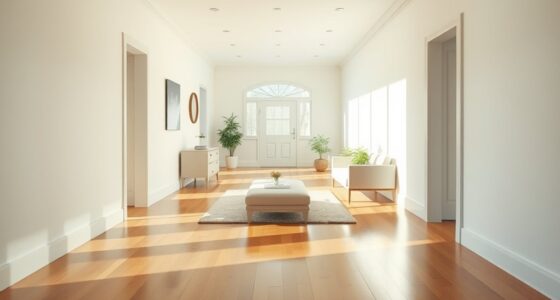
In beautiful homes, you often overlook hazards like indoor plants placed in narrow pathways, which can cause trips when you’re distracted or moving quickly. Hidden doorway passages, such as small steps or flooring changes, easily go unnoticed and can lead to falls. Rugs without non-slip backing or curled edges also pose hidden dangers. Clearing these hazards improves safety without sacrificing style. Keep going to discover more tips for a safer, yet stunning, home environment.

Get decor and gifts delivered free with Prime
- Fast, free delivery on millions of items
- Prime Video, Amazon Music and more included
- Member-only deals all year
Key Takeaways
- Indoor plants placed on floors or narrow pathways can create hidden obstacles and trip hazards.
- Slight flooring transitions, like small steps or different materials, often go unnoticed and cause trips.
- Rugs without non-slip backing or curled edges can easily catch feet and lead to falls.
- Furniture arrangements that block pathways or create tight corners increase the risk of tripping.
- Poor lighting or lack of visual cues around doorways and floor changes make hazards easy to overlook.

Even in the most stunning homes, hidden tripping hazards can pose a serious risk if you’re not careful. You might have invested in beautiful décor, stylish furniture, and eye-catching accents, but some hazards can still lurk unnoticed. One common oversight is the placement of indoor plants. While they add a touch of greenery and freshness, placing them on the floor or in narrow pathways creates obstacles that can easily trip you up. When you’re moving quickly or distracted, these plants might seem harmless, but they can cause serious falls if you’re not paying attention. To minimize this risk, keep indoor plants on sturdy tables or shelves, away from high-traffic areas. This simple adjustment helps preserve the aesthetic while keeping walkways clear and safe.
Another often overlooked hazard is hidden doorway transitions. Many homes have slight height differences or changes in flooring material between rooms that aren’t immediately obvious. For example, a doorway with a small step or a change from tile to carpet can become a trip hazard, especially if the transition isn’t clearly marked or if lighting is poor. These transitions tend to blend into the environment, making them easy to overlook. You might not notice a tiny step when rushing through a room, but catching your foot on it can lead to a fall. To prevent accidents, consider adding visual cues like contrasting rugs, floor tapes, or lighting that highlights these transitions. Making these changes enhances safety without detracting from your home’s visual appeal. Additionally, paying attention to flooring transitions can help identify potential hazards before they cause accidents. Regularly inspecting these areas and ensuring proper lighting can further reduce risks.
You also need to be aware of furniture placement that blocks pathways or creates tight corners. Even in beautifully decorated rooms, furniture can be positioned in ways that force you to navigate around obstacles. Over time, these arrangements can become dangerous, especially if you have guests or family members with limited mobility. Keep walkways wide enough for easy passage, and avoid placing bulky furniture in the middle of corridors. If you notice narrow gaps, rearrange pieces to improve flow and reduce tripping risks.
Furthermore, the placement of rugs and mats can be a hidden hazard. Rugs that don’t have non-slip backing or those that curl at the edges are common culprits. They can easily catch your foot and cause you to fall. Regularly check your rugs, secure loose edges, and use non-slip pads underneath to prevent slipping and tripping.
In a beautiful home, it’s easy to focus on aesthetics, but safety should never be sacrificed. By paying attention to indoor plant placements, hidden doorway transitions, furniture arrangement, and rug safety, you can enjoy your space without the fear of tripping hazards lurking just out of sight. Keeping safety considerations in mind helps maintain a harmonious balance between style and security.
non-slip rug pads for hardwood floors
As an affiliate, we earn on qualifying purchases.
As an affiliate, we earn on qualifying purchases.
Frequently Asked Questions
How Can I Identify Hidden Tripping Hazards in My Home?
To identify hidden tripping hazards, walk through your home slowly and pay close attention to the floor. Look for hidden floor cracks that might be uneven or raised, and check if any loose rugs aren’t secured properly. Keep an eye out for cords running across walkways or clutter that can cause falls. Regularly inspecting these areas helps you spot and fix hazards before they cause accidents.
What Are Some Common Furniture Arrangements That Increase Tripping Risks?
Imagine your home as a carefully curated garden; cluttered furniture arrangements can be weeds that trip you up. Avoid placing furniture in narrow pathways, and be mindful of decor placement that creates cluttered zones. Rug positioning is essential—ensure rugs are flat and secured, especially in high-traffic areas. Overcrowding furniture near entrances or walkways increases tripping risks, so arrange pieces to maintain clear, inviting routes.
How Often Should I Inspect My Home for Potential Hazards?
You should inspect your home for potential hazards at least once every three to six months. Regular home maintenance helps you catch tripping risks early and keeps hazard awareness sharp. Focus on areas like stairs, walkways, and cluttered spaces. By routinely checking for loose rugs, cords, or uneven flooring, you reduce the chance of accidents. Consistent inspections guarantee your home stays safe and beautiful, preventing overlooked hazards from causing injuries.
Are There Specific Lighting Tips to Reduce Tripping Accidents?
To reduce tripping accidents, guarantee your home is well-lit with ambient lighting that creates a warm, even glow, eliminating dark spots. Use pathway illumination along hallways, staircases, and entryways to clearly define walking areas. Consider installing motion-activated lights in less-frequented spots for added safety. Regularly check and replace bulbs to maintain consistent brightness. Proper lighting helps you see potential hazards early and navigate your home safely.
What Safety Products Can Prevent Tripping in Elegant Homes?
You can prevent tripping in your elegant home with smart rugs that stay securely in place and cord management solutions that hide or secure loose wires. These safety products combine practicality with style, reducing hazards without sacrificing aesthetics. By choosing non-slip rugs and organizing cords neatly, you create a safer environment. Stay proactive by regularly checking these safety features, ensuring your beautiful space remains both stunning and secure.
Conclusion
Remember, even the most stunning homes can hide hidden pitfalls. Like a well-tended garden needing constant care, your beautiful space requires regular attention to spot those sneaky tripping hazards. Don’t let unseen dangers become the weeds that mar your sanctuary. Stay vigilant, keep it tidy, and walk confidently through your home, knowing you’ve cultivated a safe haven. After all, a beautiful home is a thriving garden—cherish it, and it will flourish.
Halloween Picks
halloween
As an affiliate, we earn on qualifying purchases.