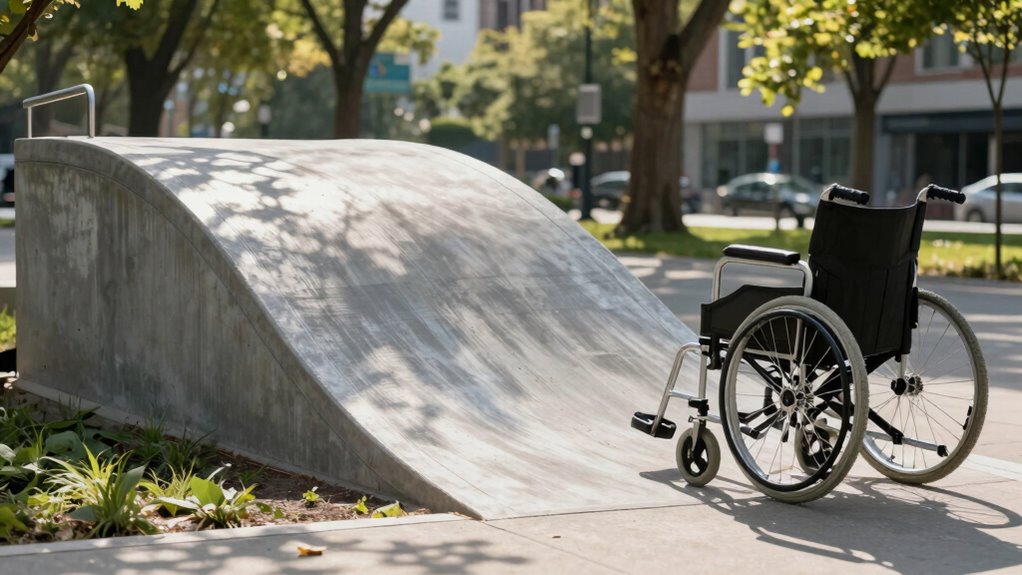
When using a wheelchair ramp, the slope formula is essential to safety. For every inch of rise, you should aim for 12 inches of run, creating a 1:12 ratio. Too steep, and it becomes hard to navigate, increasing accident risks. Opting for gentler slopes like 1:20 can help, especially for steeper entries. Choosing the right materials is also vital. Stick around, and you’ll discover more tips on effective ramp designs and maintenance for ideal safety.
Key Takeaways
- A proper slope ratio of 1:12 minimizes the risk of accidents, ensuring safer navigation for wheelchair users.
- Steeper slopes can lead to accidents; gentler slopes enhance ease of use and independence.
- Accurate measurements of vertical rise and horizontal distance are crucial for calculating the correct slope.
- Adhering to safety standards and guidelines fosters safer ramp design and reduces hazards.
- Regular maintenance and inspections ensure ramp integrity, preventing accidents from wear and tear.
Why Wheelchair Ramp Slope Matters
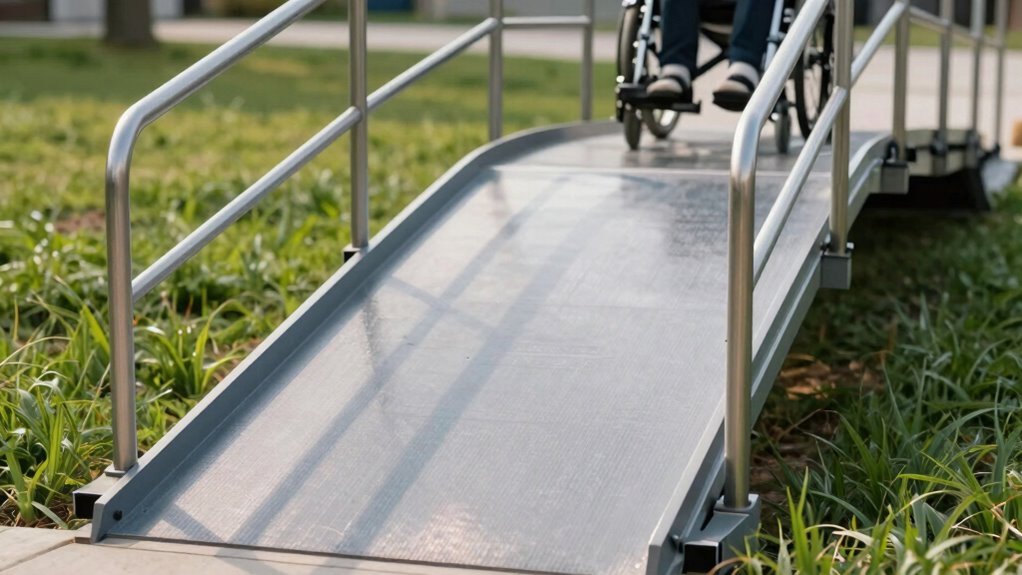
When considering wheelchair ramps, the slope plays an essential role in accessibility and safety. A proper slope guarantees that individuals using wheelchairs can navigate ramps without difficulty or risk of falling. You should adhere to safety standards and accessibility guidelines to create a ramp that’s both functional and secure. If the slope’s too steep, it becomes challenging to ascend or descend, potentially leading to accidents. On the other hand, a gentle slope promotes ease of use and encourages independence. By prioritizing the correct slope, you not only enhance usability but also foster confidence for those relying on the ramp. Additionally, understanding recommended slope ratios is vital for ensuring compliance with accessibility standards. Remember, a well-designed ramp can make a significant difference in someone’s daily life, promoting accessibility for everyone.
Measuring and Calculating Ramp Slope: A Step-by-Step Guide

To create a safe and effective wheelchair ramp, you need to know the ideal slope ratio. Start by measuring the distance and height of the area where the ramp will go. With these figures, you can calculate the proper slope for easy accessibility.
Ideal Ramp Slope Ratio
Understanding the ideal ramp slope ratio is essential for ensuring safety and accessibility. The recommended slope for wheelchair ramps is typically 1:12, meaning for every inch of height, there should be 12 inches of ramp length. This ratio minimizes the risk of accidents and enhances ramp accessibility for users.
Here’s a simple reference table to help with slope calculations:
| Height (inches) | Ramp Length (inches) |
|---|---|
| 1 | 12 |
| 2 | 24 |
| 3 | 36 |
| 4 | 48 |
| 5 | 60 |
Using this table, you can easily determine the appropriate ramp length based on your height measurements, ensuring safe access for everyone.
Measuring Distance and Height
After grasping the ideal ramp slope ratio, you’ll want to accurately measure the distance and height for your ramp. Start by determining the height you need to overcome—this is the vertical rise from the ground to the entry point. Next, take your distance measurements. Measure the horizontal distance from the base of the ramp to the wall or entry point.
Once you have these figures, you can calculate the slope using the formula: slope = height/distance. Make certain your ramp meets safety standards by keeping the slope within recommended limits. Double-check your measurements and calculations to guarantee a safe, accessible ramp. This precision helps prevent accidents and assures ease of use for everyone.
Recommended Slope Ratio for Wheelchair Ramps
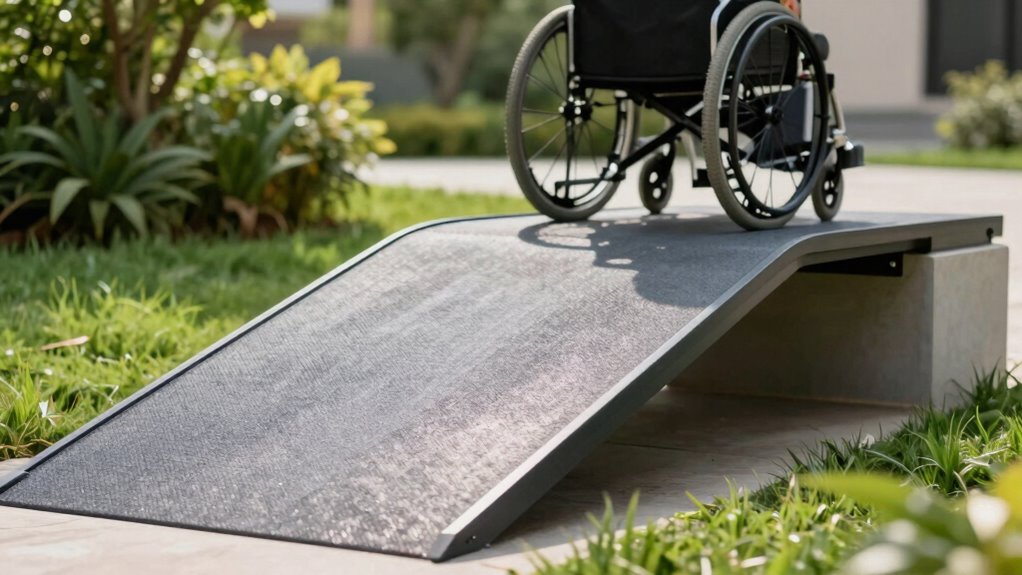
When choosing the right slope ratio for wheelchair ramps, it’s essential to guarantee safety and accessibility. The recommended slope guidelines often suggest a ratio of 1:12, meaning for every inch of vertical rise, you should have at least 12 inches of ramp run. This ratio meets accessibility standards set by the Americans with Disabilities Act (ADA), ensuring that ramps are manageable for users. If the ramp is longer or has a higher rise, you might consider a gentler slope, such as 1:20. Always evaluate the specific needs of the users and the environment. By adhering to these guidelines, you can create a safer and more accessible experience for everyone who relies on wheelchair ramps.
Top 5 Mistakes in Wheelchair Ramp Design and How to Avoid Them

When designing a wheelchair ramp, it’s easy to overlook essential details that can impact safety and usability. You might find that an incorrect slope ratio or insufficient surface material leads to serious issues. Let’s explore the top mistakes to avoid and how to guarantee your ramp is both functional and safe.
Incorrect Slope Ratio
One of the most critical mistakes in wheelchair ramp design is using an incorrect slope ratio. An improper slope can lead to slope violations, posing significant safety concerns for users. To guarantee safety, always adhere to recommended guidelines, typically a 1:12 ratio for wheelchair ramps.
Here’s a quick reference table to help you understand acceptable slope ratios:
| Slope Ratio | Maximum Rise (inches) | Ideal Length (feet) |
|---|---|---|
| 1:12 | 30 | 30 |
| 1:16 | 24 | 32 |
| 1:20 | 20 | 33 |
| 1:24 | 16 | 32 |
| 1:30 | 12 | 30 |
Insufficient Surface Material
Insufficient surface material can make a wheelchair ramp hazardous. When choosing the right materials, you need to prioritize surface durability to guarantee safety. Here are some common pitfalls to avoid:
- Using slippery materials: Smooth surfaces can lead to slips, especially in wet conditions.
- Neglecting weight capacity: Confirm the material types can support the weight of the user and the wheelchair.
- Ignoring weather resistance: Some materials deteriorate quickly in harsh weather, compromising safety.
- Overlooking maintenance needs: Choose materials that require minimal upkeep to maintain their durability.
- Choosing inappropriate surface textures: Selecting materials with proper traction properties is essential to prevent slips and falls.
What Materials Make the Best Wheelchair Ramps?

Choosing the right materials for wheelchair ramps is essential for guaranteeing safety and durability. Opt for aluminum or steel for their strength and ramp durability. These metals can withstand heavy use and harsh weather conditions, making them ideal for long-lasting ramps. If you prefer a lighter option, consider high-density plastic, which also offers good durability without the weight. Additionally, selecting materials that are compatible with the best live audio gear can help ensure the ramp’s environment remains safe and functional in multi-purpose or studio settings. Being aware of material compatibility can further prevent potential safety hazards and ensure the longevity of your ramp. Properly selecting materials also involves considering material maintenance, which can significantly extend the lifespan of your ramp. For the surface, always prioritize materials that provide excellent surface traction. Textured rubber or non-slip coatings can considerably reduce the risk of slips, especially in wet conditions. Incorporating weather resistance into your material choice can safeguard against environmental damage and improve overall safety. Remember, the right combination of materials not only enhances the ramp’s lifespan but also guarantees a safe and comfortable experience for users. Your choice will impact both functionality and safety every time someone uses the ramp.
Real-Life Examples of Effective Ramp Designs

When you look at effective ramp designs, you’ll find that real-life examples often highlight thoughtful planning and user-centered features. Here are four standout designs that emphasize adaptive features and safety enhancements:
- Urban Park Ramps: These ramps feature textured surfaces for better grip, ensuring accessibility even in wet conditions.
- Home Modifications: Ramps installed in residences often include handrails and gentle slopes, making navigation easier for all users.
- Commercial Entrances: Many businesses incorporate wide, low-angle ramps that accommodate various mobility aids, promoting inclusivity.
- Public Transit Stations: Some stations use automated ramps that deploy on demand, showcasing innovative adaptive features that prioritize user safety.
These examples demonstrate how thoughtful design can greatly improve accessibility and safety for everyone.
Tips for Maintaining Your Wheelchair Ramp for Safety
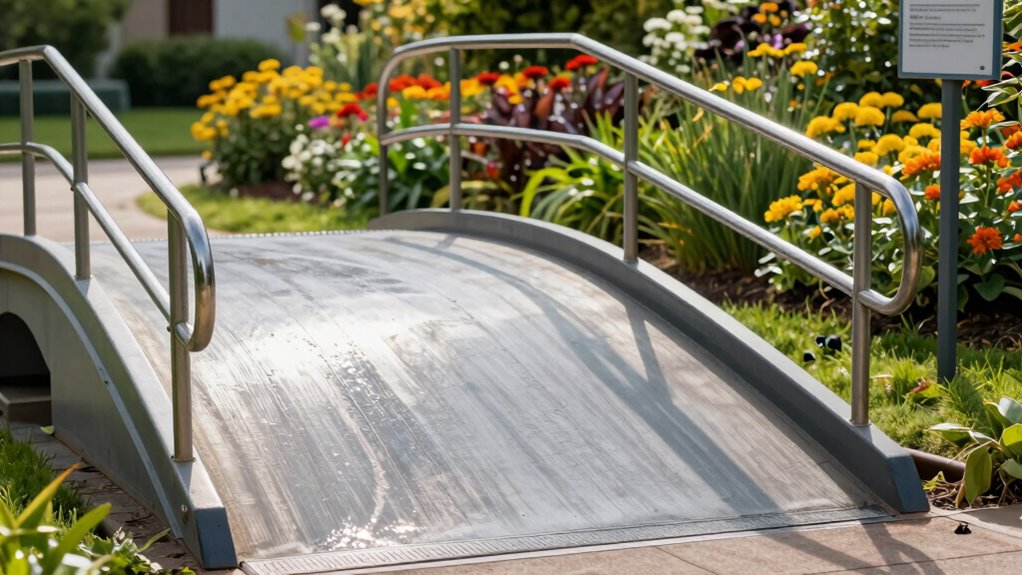
Effective ramp designs not only enhance accessibility but also require regular maintenance to secure safety. To keep your wheelchair ramp in top shape, schedule regular inspections. Check for any cracks, loose fittings, or signs of wear that could pose risks. Make certain the ramp’s slope remains compliant with safety standards.
Surface cleaning is essential, too. Remove dirt, debris, and any potential slipping hazards like leaves or ice. Use a non-slip cleaner designed for outdoor surfaces to maintain traction. If your ramp has railings, verify they’re sturdy and free of obstructions.
Frequently Asked Questions
What Are the Regulations for Wheelchair Ramp Installation?
When installing a wheelchair ramp, you need to follow specific regulations. The slope should typically be 1:12, meaning for every inch of height, there should be 12 inches of ramp length. Use sturdy ramp materials like wood or aluminum, ensuring they’re slip-resistant. Make sure the ramp’s width is at least 36 inches. Also, follow installation guidelines regarding handrails if the ramp exceeds a certain height. Always check local codes for compliance.
How Do Weather Conditions Affect Ramp Safety?
Weather conditions greatly affect ramp safety. Ice hazards can make surfaces dangerously slippery, while rain might reduce traction, increasing the risk of slips. Snow accumulation can obstruct the ramp, making it hard to navigate. To guarantee safety, consider using appropriate surface materials designed for wet or icy conditions. Regular maintenance is essential to remove snow and ice promptly, keeping the ramp safe for users in all weather scenarios.
Can Wheelchair Ramps Be Used for Other Mobility Devices?
Yes, wheelchair ramps can definitely be used for other mobility devices, like scooters and walkers. When you choose a ramp, consider mobility device compatibility to guarantee safety and ease of use. Alternative ramp materials, like aluminum or rubber, can offer better traction and durability, making them suitable for various devices. Always check the weight capacity and slope to confirm the ramp meets your specific needs for safe navigation.
How Often Should Ramps Be Inspected for Safety?
You should inspect ramps for safety at least once every six months. For example, imagine a community center where a ramp wasn’t checked regularly. After a heavy rain, it became slippery and caused a fall. Regular safety checks and ramp maintenance could’ve prevented that. By ensuring your ramps are in top shape, you protect everyone who uses them, reducing risks and creating a safer environment for all mobility devices.
What Are the Costs Associated With Wheelchair Ramp Construction?
The costs associated with wheelchair ramp construction can vary considerably based on material choices and design considerations. If you opt for wood, it might be cheaper upfront, but metal or concrete could offer more durability. Additionally, the ramp’s length, width, and any necessary features like handrails will impact the overall price. Always factor in installation costs and potential maintenance when budgeting for your ramp project to guarantee it meets safety and accessibility standards.
Conclusion
To sum up, ensuring your wheelchair ramp has the right slope is essential for safety. Just like a well-tuned chariot, a properly designed ramp can make all the difference in ease of access. By avoiding common mistakes and choosing the right materials, you can create a reliable and safe environment. Remember to maintain your ramp regularly—after all, a smooth ride today helps prevent accidents tomorrow. Your commitment to safety can truly empower mobility for everyone.