
Many designers still overlook the essential slope rule for wheelchair ramps, risking safety, legal compliance, and accessibility. The recommended ratio of 1:12 guarantees ramps are safe and manageable for users, but ignoring it leads to steep, unsafe inclines that discourage use or cause accidents. Proper design innovations can save space and improve safety, yet neglecting these guidelines remains common. If you keep exploring, you’ll discover how to create truly inclusive and compliant ramps that prioritize safety and independence.

Get decor and gifts delivered free with Prime
- Fast, free delivery on millions of items
- Prime Video, Amazon Music and more included
- Member-only deals all year
Key Takeaways
- Many ramps are built too steep, ignoring the essential 1:12 slope ratio, which compromises safety and accessibility.
- Overlooking the slope rule can lead to legal issues and non-compliance with ADA standards.
- Designers often neglect proper slope design, resulting in barriers for wheelchair users and diminished independence.
- Space constraints lead to innovative solutions like switch-back ramps, but proper slope must still be maintained.
- Awareness and enforcement of slope regulations are crucial for creating inclusive, safe environments for all users.
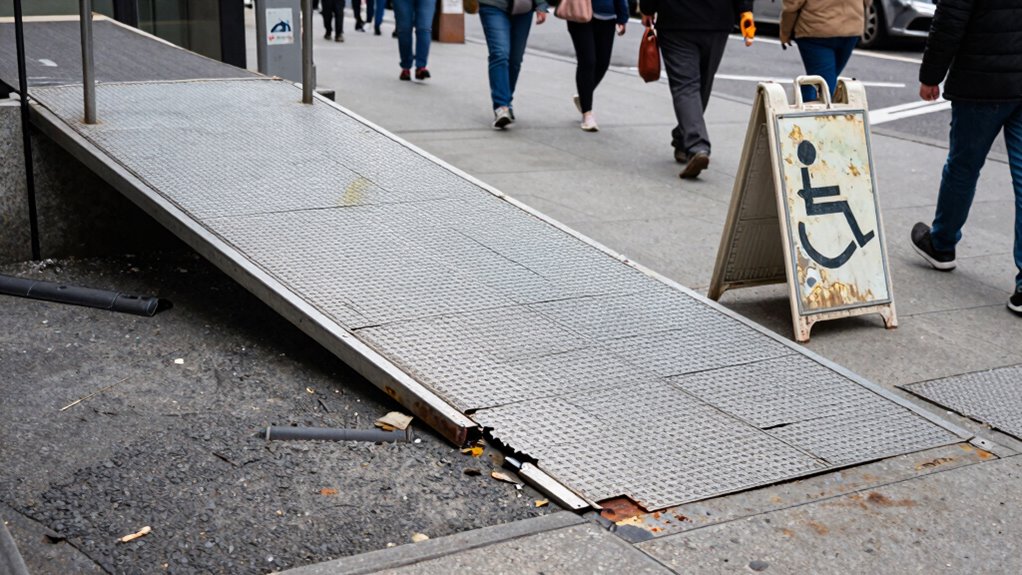
When designing wheelchair ramps, understanding the slope rule is essential for safety and accessibility. This rule isn’t just a guideline; it’s a critical component of accessibility standards that ensures people with mobility challenges can navigate spaces safely and independently. The slope of a ramp directly impacts whether it’s usable or dangerous. A gentle incline makes it easier for users to move up and down without strain or risk of falling, while an excessively steep slope can cause accidents, discourage use, or violate legal requirements. Despite its importance, many builders and designers still overlook or underestimate the significance of adhering strictly to the slope rule, resulting in barriers that compromise true accessibility.
The standard slope ratio recommended by most accessibility standards, such as the Americans with Disabilities Act (ADA), is 1:12. This means that for every inch of height, the ramp should extend at least 12 inches in length. This ratio strikes a balance between practicality and safety, allowing wheelchair users to ascend or descend comfortably without excessive effort. When this rule is ignored, ramps can become too steep, making it difficult or impossible for some users to navigate without assistance or risking injury. Conversely, overly long ramps can be impractical or aesthetically unpleasing, which is where design innovations come into play. Innovative solutions, like switch-back or spiral ramps, help address space constraints while maintaining the proper slope, showcasing how thoughtful design can uphold accessibility standards without sacrificing functionality.
Many designers focus on aesthetics or cost-saving measures, often neglecting the importance of the slope rule. This oversight not only violates legal accessibility standards but also disregards the user experience. Proper slope design isn’t just a technical requirement; it’s a matter of dignity and independence for those relying on wheelchairs. Incorporating design innovations, such as textured surfaces for better grip or modular ramp systems, can help ensure compliance without compromising safety. These innovations help make accessible pathways more practical, especially in tight or irregular spaces, proving that adhering to the slope rule doesn’t mean sacrificing creativity. In fact, thoughtful design can turn a simple ramp into a seamless, safe, and welcoming feature that truly serves its purpose. Recognizing the importance of accessible design is crucial to creating truly inclusive environments. Additionally, understanding the role of standards in shaping these designs ensures that safety and compliance remain at the forefront. A clear understanding of these standards can also influence overall project cost and construction time, emphasizing the importance of early planning. Moreover, consistent enforcement of accessibility guidelines encourages designers and builders to prioritize safety over shortcuts.
Ultimately, respecting the slope rule is about prioritizing safety, equality, and usability. When you pay close attention to accessibility standards and leverage design innovations, you create environments that are inclusive and compliant. Ignoring or rushing through the slope rule risks alienating users and facing legal consequences, but embracing it fosters a more equitable space. By understanding the importance of the slope ratio and applying innovative solutions, you ensure that everyone can access the spaces you design, making a real difference in their lives. Recognizing the importance of accessibility standards is crucial to creating truly inclusive environments.
Products Worth Considering

Ring Battery Doorbell and Chime (3rd Gen), Satin Nickel

Sonos Era 100 Wireless Smart Speaker, Black

Ring Battery Doorbell Plus, Satin Nickel
As an affiliate, we earn on qualifying purchases.
Frequently Asked Questions
How Do Different States Enforce Ramp Slope Regulations?
You’ll find that enforcement of ramp slope regulations varies by state, impacting accessibility standards nationwide. Some states actively inspect construction sites and impose penalties for non-compliance, while others lack strict enforcement, leading to construction challenges and inconsistent accessibility. As a result, building codes may be overlooked, making it harder for people with disabilities to access buildings comfortably. Staying informed about your state’s specific enforcement practices helps guarantee ramps meet safety and accessibility requirements.
Are There Alternative Solutions for Steep Terrain?
For steep terrain, you can explore terrain solutions like switchback paths or zigzag ramps, which reduce the overall slope. Slope alternatives such as elevators or lifts also work well in challenging areas, providing accessible options without steep inclines. These solutions guarantee accessibility while respecting the slope regulations, making it easier for everyone to navigate uneven terrain comfortably and safely.
What Are the Penalties for Non-Compliance?
If you don’t comply with accessibility standards for wheelchair ramps, you could face penalties like fines or legal action. Building permits often require adherence to these standards, and neglecting them can result in permit denial or withdrawal. You might also be liable for damages if someone gets injured due to non-compliance. Ensuring your ramps meet the proper slope and regulations protects you legally and guarantees safe access for everyone.
How Does Ramp Slope Impact Wheelchair Safety?
You should know that a proper ramp slope enhances wheelchair stability, preventing accidents. If the slope measurement is too steep, it becomes harder to control the wheelchair, increasing the risk of tipping or falling. A gentle slope provides safer navigation, especially for users with limited strength or balance. Keep the slope within recommended standards to guarantee safety, stability, and ease of movement, reducing potential hazards on your accessible ramp.
What Funding Options Exist for Compliant Ramps?
You can access funding grants and accessibility tax credits to help cover the costs of building compliant ramps. Local and federal government programs often provide these financial options, especially for organizations and property owners committed to accessibility. Applying for these grants and credits can considerably reduce your expenses, ensuring you meet slope regulations and improve safety. Check with your local housing authority or disability services for specific opportunities available in your area.
Conclusion
Remember, the slope rule isn’t just a guideline; it’s a gentle nudge toward understanding and kindness. When you overlook it, you might be missing a chance to make someone’s day a little easier, a little brighter. Sometimes, the smallest details carry the biggest weight—like a gentle incline that welcomes everyone. So, let’s keep the path smooth, not just for ramps, but for compassion to flow freely too. After all, a little effort goes a long way.