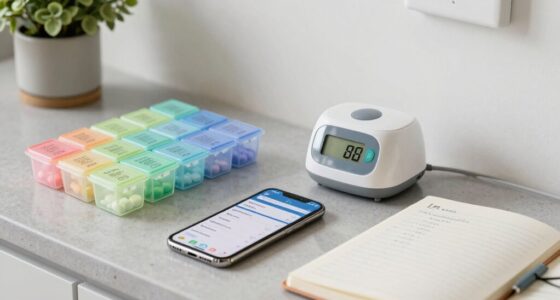
To create easier routines for meals, bathing, and check-ins, set specific times and stick to them. Prepare meals in advance or batch cook on weekends to save time. Keep essentials organized and follow a consistent sequence during baths. Schedule regular check-ins and use reminders to stay on track. Breaking routines into simple steps and reviewing them regularly helps keep things manageable. Keep practicing these habits, and you’ll discover even more ways to make daily routines smoother as you go.

Get decor and gifts delivered free with Prime
- Fast, free delivery on millions of items
- Prime Video, Amazon Music and more included
- Member-only deals all year
Key Takeaways
- Establish fixed times and prepare materials in advance for each routine to reduce decision fatigue.
- Keep essentials organized and create a consistent sequence to streamline bathing and meal prep.
- Schedule dedicated, non-negotiable slots for check-ins to build habit strength.
- Break routines into simple steps and review them regularly for ongoing relevance and ease.
- Use reminders and habit stacking to reinforce routines and make them automatic over time.
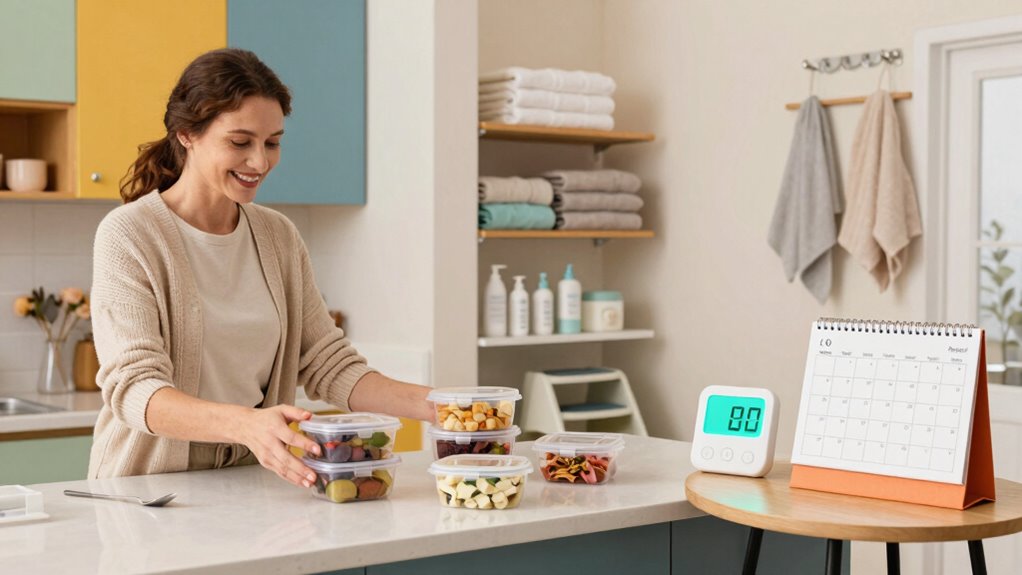
Establishing routines can feel overwhelming, especially when trying to simplify your daily tasks. But with a few strategic steps, you can make routines like meals, bathing, and check-ins much easier to manage. The key lies in effective time management and habit formation. When you plan your routines thoughtfully, you eliminate unnecessary decision-making, which saves mental energy and reduces stress. Consistency becomes easier to achieve when you set clear, realistic expectations for yourself, helping routines become second nature over time.
Start by breaking down each routine into simple, repeatable steps. For meals, decide on specific times for breakfast, lunch, and dinner, and prepare in advance when possible. Batch cooking on weekends or prepping ingredients ahead of time can *substantially* cut down daily meal preparation. This not only saves time but also helps you develop a structured approach to mealtimes, making the process more manageable. When you have a clear plan and stick to it, you’re less likely to feel overwhelmed by choosing what to eat or rushing through meals, which makes the process more manageable. Incorporating habit formation techniques can further enhance your ability to establish lasting routines.
Break routines into simple steps and prep ahead to save time and reduce overwhelm.
For bathing routines, set a specific time each day or every other day that works best for you. Keep your essentials organized and within easy reach, so you don’t waste time searching for soap or towels. Creating a consistent sequence—like washing your face first, then shampooing, followed by body wash—reinforces habit formation. Over time, this routine becomes automatic, freeing your mind from unnecessary decisions and making the process quicker and more comfortable. Additionally, maintaining a designated space for your bathing supplies can increase efficiency and reduce clutter, supporting a smoother experience. Using habit stacking can be an effective way to integrate bathing into your daily habits seamlessly.
Check-ins, whether for personal reflection, planning your day, or connecting with loved ones, benefit from dedicated time slots. Schedule these moments into your day, perhaps in the morning or evening, and treat them as non-negotiable appointments. Use reminders or alarms to prompt you, so it becomes a part of your daily rhythm. As you repeat these check-ins regularly, they become ingrained habits, helping you stay organized and emotionally balanced without feeling like an extra effort. Establishing consistent routines around these check-ins can support long-term emotional well-being and productivity. Consistently reviewing and adjusting these routines can help you stay flexible and responsive to your changing needs.
Products Worth Considering

Roborock Q7 M5+ Robot Vacuum and Mop with Self-Emptying Dock

Bose Lifestyle Ultra Wireless Soundbar with Dolby Atmos, Black

Philips Hue White and Color Ambiance Smart Retrofit Recessed LED Downlights, 5/6-Inch, 4-Pack
As an affiliate, we earn on qualifying purchases.
Frequently Asked Questions
How Do I Handle Unexpected Disruptions in My Routine?
When unexpected disruptions happen, stay calm and use flexibility strategies to adapt quickly. Incorporate disruption planning into your routine by having backup options for meals, baths, or check-ins. Adjust your schedule as needed, focusing on what’s most important. Communicate openly if others are involved, and don’t be hard on yourself. By staying flexible and planning for disruptions, you make your routine more resilient and easier to manage when surprises arise.
What Tools Can Help Me Stay Consistent With Routines?
You can stay consistent with routines by using tools like meal planning apps to organize your meals and keep you on track. Habit tracking apps help you monitor your progress and stay motivated. These tools make it easier to stick to your routines, even when disruptions happen. By setting reminders and reviewing your habits regularly, you’ll develop a steady rhythm that keeps you focused and organized every day.
How Can Routines Be Adapted for Different Age Groups?
You adapt routines for different age groups by balancing structure with flexibility. For young children, use age-appropriate strategies like visual schedules and simple choices, considering developmental considerations. As kids grow, introduce more independence and responsibility, adjusting routines to match their cognitive and emotional development. For teens, focus on autonomy and time management, while maintaining consistency. This way, routines evolve naturally, supporting growth at every stage while keeping daily tasks manageable and engaging.
What Are Signs My Routine Needs Adjusting?
You’ll want to adjust your routine if meal prep becomes stressful or your bathing schedule isn’t fitting your needs anymore. Notice if you’re rushing through check-ins or skipping them entirely. If you feel tired or overwhelmed, it’s a sign to revisit your routines. Flexibility helps maintain consistency, so tweak meal times, simplify tasks, or shift your bathing schedule to better suit your current lifestyle and energy levels.
How Do I Motivate Others to Follow Established Routines?
You can motivate others to follow routines by using motivational strategies like offering positive reinforcement and setting clear, achievable goals. Make routines engaging by incorporating fun activities or rewards that resonate with them. Show enthusiasm and lead by example, creating a supportive environment. When people see the benefits and feel involved, they’re more likely to stick with routines, making the process smoother and more enjoyable for everyone involved.
Conclusion
By simplifying your routines for meals, bathing, and check-ins, you make daily life much more manageable. Remember, Rome wasn’t built in a day, so start small and stay consistent. Over time, these habits will become second nature, saving you stress and energy. When things get overwhelming, take a deep breath and know that every little step forward counts. Keep pushing forward—your smoother days are just around the corner!