When setting privacy rules for indoor cameras to support caregivers, start by clearly defining which areas are monitored, focusing on common spaces while avoiding private zones like bedrooms or bathrooms unless agreed upon. Communicate openly with your loved ones to build trust, and consider technology that offers adjustable privacy settings. Respect boundaries to prevent discomfort and resistance, creating a supportive environment. If you want to learn more about balancing safety and dignity effectively, keep exploring options and strategies tailored to your needs.

Get decor and gifts delivered free with Prime
- Fast, free delivery on millions of items
- Prime Video, Amazon Music and more included
- Member-only deals all year
Key Takeaways
- Clearly define which areas are under surveillance, prioritizing common spaces over private areas like bedrooms and bathrooms.
- Communicate openly with loved ones about camera placement, purpose, and privacy boundaries to build trust.
- Use cameras with adjustable settings to control coverage and prevent over-surveillance.
- Avoid placing cameras in private spaces without explicit consent to respect personal privacy.
- Regularly review and update privacy rules as needs and comfort levels evolve.
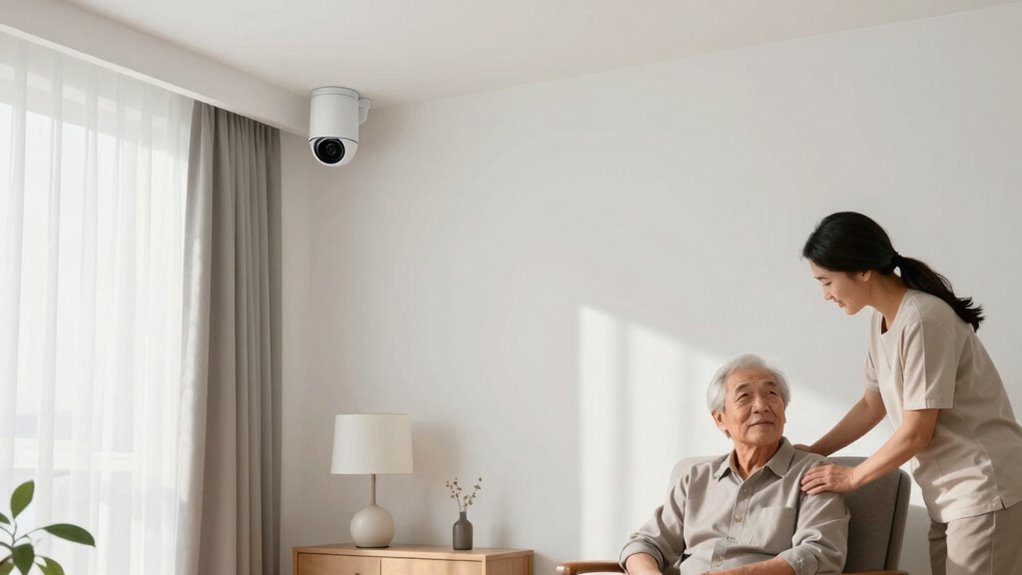
Have you ever wondered how indoor cameras can enhance caregiver support? One key aspect to guarantee is the quality of the video footage. Clear, sharp images ensure that you can accurately monitor your loved one’s activities and well-being. Poor video quality can lead to misinterpretations, making it harder to assess situations quickly and confidently. When choosing a camera, look for one with high resolution, ideally 1080p or higher, to capture detailed visuals. Good video quality is crucial for early detection of issues, whether it’s a fall, a medical emergency, or signs of distress. It also helps you distinguish between normal movements and potential problems, giving you peace of mind and better support for your loved one.
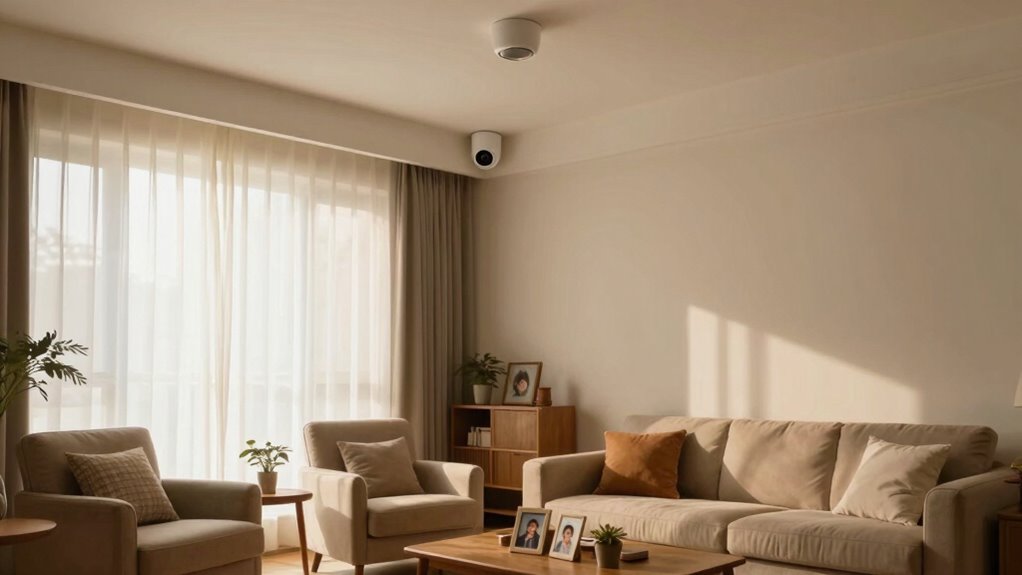
Another critical factor is camera placement. Where you position the camera can considerably impact how effectively you can monitor your loved one while respecting their privacy. You want to place cameras in common areas like the living room or kitchen, where daily activities happen, but avoid bedrooms or bathrooms unless you have explicit consent. Proper placement ensures that the camera captures the necessary angles without intruding on private moments. For instance, placing it at eye level and in well-lit areas enhances the video quality, reducing shadows and glare that could obscure important details. Additionally, avoid placing cameras near windows or reflective surfaces, as these can cause glare or distorted images. You should also take into account the camera’s field of view, opting for models with wide-angle lenses to cover more space with fewer devices. This approach not only provides an all-encompassing coverage but also reduces the number of cameras needed, making the setup less invasive.
Balancing good camera placement with high video quality allows you to monitor your loved one effectively without crossing privacy boundaries. While it’s tempting to cover every inch of the home, doing so may feel invasive and could cause discomfort or resistance. Instead, focus on strategic placement that provides sufficient oversight of key areas while respecting personal space. Remember, the goal is to support and protect, not to invade privacy. Open communication with your loved one about privacy rules and the purpose of monitoring fosters trust and understanding. Incorporating privacy-aware technology into your setup can further ensure that privacy considerations are maintained while still providing effective support. Proper camera technology can help balance safety and privacy, making the monitoring process more acceptable and comfortable for everyone involved. Paying attention to video quality and camera placement ensures your monitoring system remains both reliable and respectful—creating a supportive environment that upholds your loved one’s dignity. Additionally, selecting cameras with adjustable settings can help tailor the monitoring experience to respect privacy boundaries while maintaining safety.
Products Worth Considering

Ring Battery Doorbell (2nd Gen), Indoor Cam Plus, and Chime (3rd Gen) Bundle

Ring Battery Doorbell Plus (2nd Gen) and Indoor Cam Plus Bundle, Nickel Silver and White

LG C2 Series 65-Inch OLED evo 4K Smart TV (OLED65C2PUA, 2022)
As an affiliate, we earn on qualifying purchases.
Frequently Asked Questions
Can Indoor Cameras Be Accessed Remotely by Caregivers?
Yes, caregivers can access indoor cameras remotely, but you need to carefully consider camera placement and privacy concerns. Proper placement guarantees you monitor effectively without invading privacy. You should set clear boundaries and obtain consent from those being watched. Using secure, password-protected apps helps safeguard footage. Always communicate openly about camera use, respecting privacy concerns while balancing safety and support.
What Are the Legal Implications of Using Indoor Cameras?
Using indoor cameras requires careful attention to legal compliance and consent requirements. You must guarantee you’re following local laws and obtain explicit consent from those being monitored, especially if they’re adults or minors. Failing to do so can lead to legal issues like privacy violations or lawsuits. Always inform everyone involved about the camera’s purpose and secure proper consent to avoid legal complications.
How Do Cameras Affect the Mental Well-Being of Seniors?
Cameras can offer reassurance, but they might also subtly impact your loved one’s emotional privacy, leading to feelings of constant surveillance. This can cause surveillance anxiety, making seniors feel uneasy or watched, which may affect their mental well-being. You should balance the benefits of monitoring with respect for their emotional needs, ensuring they feel safe rather than scrutinized. Open conversations help ease worries and foster trust, promoting overall peace of mind.
Are There Options for Motion-Activated or Audio-Only Cameras?
Yes, you can find options for motion-activated or audio-only cameras. These cameras use motion detection features to alert you when movement occurs, helping you stay informed without constant monitoring. Audio monitoring allows you to listen in without visual access, respecting privacy while still keeping an eye on safety. Both options provide flexible, less intrusive ways to support caregivers and guarantee seniors’ well-being effectively.
How Long Is Recorded Footage Typically Stored?
Think of your footage like a diary—its storage duration varies. Typically, recorded footage is stored from a few days up to several months, depending on your device’s data retention settings. Many security systems allow you to customize this, so you’re in control. Be sure to check your camera’s privacy rules and storage options to guarantee your data isn’t kept longer than necessary, protecting both your privacy and peace of mind.
Conclusion
By setting clear privacy rules, you create a safe space where indoor cameras support your caregiving efforts without crossing boundaries. Think of these cameras as gentle guardians, like a lighthouse guiding ships safely home—always there, but never intrusive. When you prioritize privacy, you foster trust and security for everyone involved. Balancing care and privacy isn’t easy, but with mindful rules, you guarantee your loved ones feel protected and respected, like a warm blanket on a cold night.