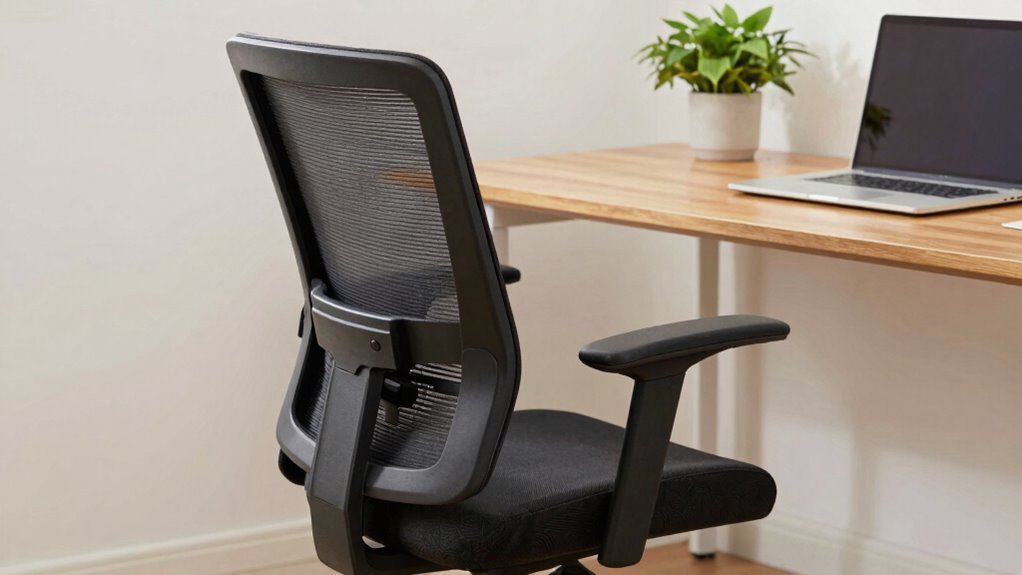

To choose seating that supports your posture, look for an adjustable chair that suits your body shape and allows you to modify height, tilt, and lumbar support. Opt for breathable, cushioned upholstery that encourages proper alignment without sinking or slouching. Make certain the backrest follows your spine’s natural curve and that the seat depth keeps knees at a 90-degree angle. A well-designed chair promotes comfort and helps prevent strain—discover more ways to optimize your seating setup if you keep exploring.
Key Takeaways
- Select an adjustable chair with customizable height, tilt, and lumbar support to fit your body and promote proper alignment.
- Prioritize breathable, cushioned materials like mesh or foam for comfort and airflow during extended sitting.
- Ensure the backrest follows your natural spine curve and provides adjustable lumbar support to maintain spinal health.
- Choose a seat with appropriate padding that distributes pressure evenly and prevents sinking or misalignment.
- Confirm the chair complements your workspace setup, supporting natural body posture and reducing fatigue during daily activities.
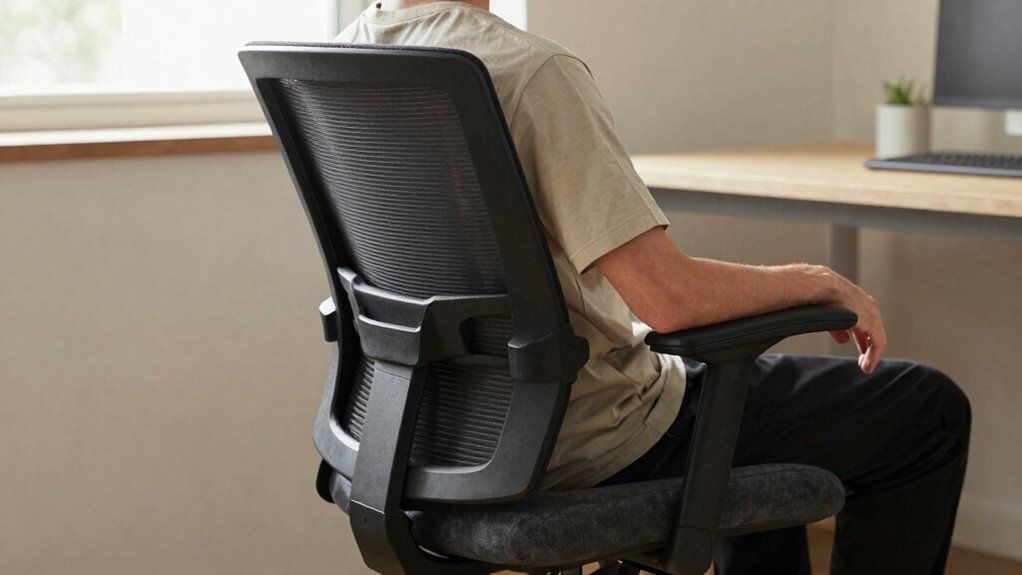
Choosing the right seating is vital for maintaining good posture and preventing discomfort or injury. When selecting a chair, you want to focus on how easily you can make ergonomic adjustments to fit your body’s needs. An adjustable chair allows you to modify the height, tilt, and lumbar support, guaranteeing your feet rest flat on the floor and your knees stay at a 90-degree angle. Proper ergonomic adjustments help keep your spine aligned and reduce the strain on your neck and shoulders, making it easier to sit comfortably for longer periods. Don’t overlook the importance of customizing your seat; a chair that adapts to your posture is much more effective than a fixed one that forces your body into unnatural positions. Additionally, selecting a chair with ergonomic features can significantly enhance your comfort and support throughout the day. Incorporating ergonomic design principles into your chair choice can further promote healthy sitting habits.
Seating material choices also play an important role in supporting your posture. Look for chairs with breathable, cushioned surfaces that provide enough padding to prevent pressure points, but not so soft that you sink in and lose support. High-quality upholstery made from mesh or foam can improve air circulation, keeping you cool and comfortable throughout the day. The material should also be durable enough to maintain its shape and support over time, guaranteeing consistent comfort and posture support. Avoid hard, rigid surfaces or overly plush cushions that can compromise your spinal alignment or cause you to slouch. Choosing appropriate upholstery can also help maintain proper posture by providing consistent support and comfort. Furthermore, the choice of seat padding can influence your overall pressure distribution, which impacts long-term comfort. Ensuring the seat material is easy to clean and maintain can also help sustain a hygienic sitting environment, promoting longer-term use.
Furthermore, pay close attention to the chair’s backrest. A well-designed backrest should follow the natural curve of your spine, especially supporting the lumbar region. If it’s adjustable, you can fine-tune the angle and height to fit your back’s contours, encouraging you to sit upright without slumping. The seat depth should allow you to sit back comfortably while still leaving a few inches of space between the edge of the seat and the back of your knees. This prevents pressure on your thighs and promotes better circulation. Proper backrest support is essential for maintaining spinal health over extended periods of sitting. Additionally, a backrest with lumbar support can help reduce fatigue and prevent long-term back pain, ensuring sustained comfort during extended work sessions.
Lastly, consider your overall workspace setup. Your seating choice should complement your desk height and monitor position, creating a seamless ergonomic environment. When your chair supports your posture through proper ergonomic adjustments and thoughtful seating material choices, you’re less likely to fight against your body’s natural alignment. Instead, you create a supportive environment that encourages good posture habits, reduces fatigue, and minimizes the risk of long-term injury. Making these deliberate choices guarantees that your seating works with your body, not against it, fostering comfort and health during your daily activities.
ergonomic adjustable office chair
As an affiliate, we earn on qualifying purchases.
As an affiliate, we earn on qualifying purchases.
Frequently Asked Questions
Can Ergonomic Chairs Improve Posture for All Body Types?
Ergonomic chairs can improve posture for all body types when designed with body diversity and universal ergonomics in mind. You benefit from adjustable features that accommodate different shapes and sizes, ensuring comfort and support. Look for chairs offering customizable lumbar support, seat height, and armrests, so you can find the right fit. By choosing inclusive designs, you promote better posture and reduce discomfort for everyone, regardless of body type.
How Often Should I Adjust My Chair for Optimal Support?
You should adjust your chair at least once every hour to stay comfortable and supported. Keep the chair height so your feet rest flat on the floor, and guarantee lumbar support stays snug against your lower back. Don’t wait until discomfort hits—regular tweaks help maintain proper posture, prevent strain, and keep your spine aligned. Even if you’re busy, a quick adjustment can make a significant difference in your comfort and health.
Are There Specific Materials That Better Support Posture?
You should look for chairs with memory foam cushions and breathable fabrics. Memory foam molds to your body, providing personalized support that helps maintain good posture. Breathable fabrics keep you comfortable during long periods of sitting, preventing overheating and discomfort. These materials work together to support your back and core, reducing strain and encouraging proper alignment. Choosing seating with these features helps you sit healthier and more comfortably throughout the day.
How Do I Know if a Chair Is Too Hard or Too Soft?
You’ll know if a chair is too hard or too soft by testing its cushion firmness and seat padding. If the seat feels uncomfortably firm, it may cause pressure points, making it hard to sit for long periods. Conversely, if it’s too soft, you might sink in and lose support, leading to poor posture. Look for a balance where the padding offers enough comfort without sacrificing support.
Can Standing Desks Replace the Need for Supportive Seating?
Standing desks can’t fully replace supportive seating, but they’re great as standing desk alternatives and encourage movement. To prevent discomfort, incorporate dynamic seating options like stability balls or height-adjustable chairs. This variety helps you shift positions and reduces strain. While standing desks boost activity, don’t forget to alternate with ergonomic chairs designed for proper posture, ensuring your body stays supported and comfortable during long work hours.
Conclusion
So, next time you plop onto that seemingly innocent chair, remember: you’re not just sitting—you’re auditioning for a role in “The Posture Chronicles.” Choose wisely, or risk turning your spine into a pretzel and your back into a sad, sagging billboard of neglect. Support your body like a VIP guest, not a discarded snack. Your future self will thank you—probably with a stiff neck and a crooked grin. Choose posture-supporting seating, or prepare for the ergonomic comedy of errors.
![A Better Way To Tie Your Gym Shorts. (Or Any Drawstring) [Video]](https://uniquegiftsanddecor.com/wp-content/uploads/2026/07/a-better-way-to-tie-your-gym-shorts-or-any-drawstring-video-featured-560x300.jpg)