
When deciding whether to rent or buy tools, consider your project needs, how often you’ll use the equipment, and your budget. Renting can save money for one-time jobs since it lowers upfront costs and includes maintenance. Buying makes sense if you often need the tools and want quick access without scheduling conflicts. Carefully weighing these factors helps you make smarter choices—continue exploring to discover which option best fits your situation.
Key Takeaways
- Assess your project frequency and duration to determine if renting or buying offers better value.
- Compare initial purchase costs with total rental fees over your expected usage period.
- Consider maintenance responsibilities; rentals often include servicing, while owners handle upkeep.
- Evaluate tool availability, quality, and whether you need the latest models or high-end equipment.
- Factor in long-term costs and your capacity to manage ownership responsibilities for an informed decision.

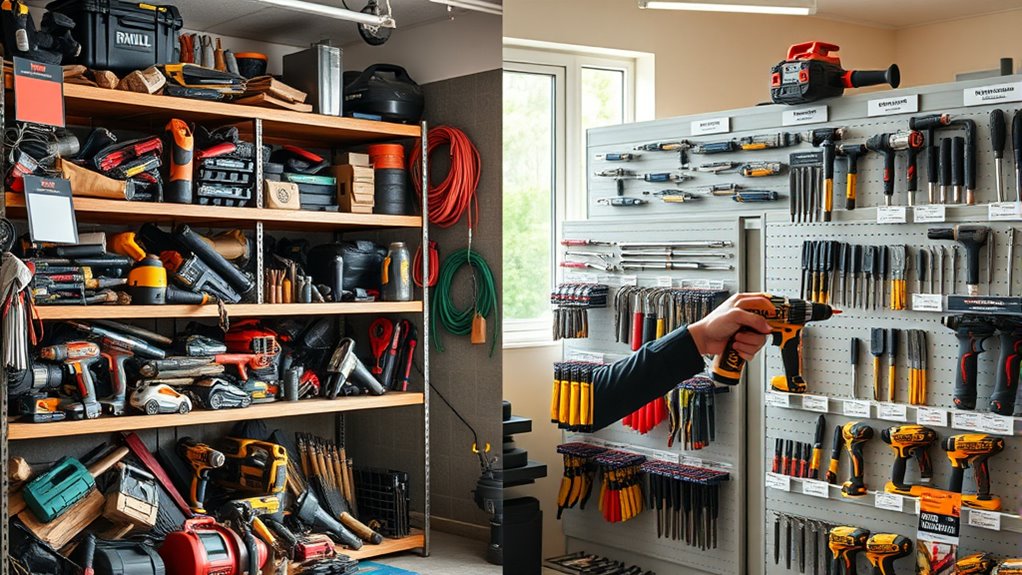
When deciding whether to rent or purchase tools, you need to contemplate how often you’ll use them and your budget. If you only need a tool for a one-time project or occasional tasks, renting might be the smarter choice. Rental costs tend to be lower upfront, and you avoid the expenses of tool maintenance and storage. Plus, renting often includes access to newer models, which can be more efficient and safer to operate. On the other hand, if you’re planning to use a specific tool frequently or for ongoing projects, buying could be more economical in the long run. Owning a tool means you’re not paying rental fees every time you need it, and you gain the convenience of having it readily available whenever you want.
Consider how often you’ll use tools and your budget to decide whether to rent or buy.
However, owning tools comes with responsibilities like tool maintenance. Proper upkeep ensures the tools stay in good condition and perform *to consider* , but it also involves time and costs—such as replacing worn parts or performing routine inspections. If you’re not inclined to handle maintenance tasks, renting might be preferable because the rental company typically takes care of servicing and repairs. Additionally, rental costs can fluctuate based on the duration and type of tool, so if you only need the tool for a short period, renting often proves more cost-effective. Be sure to factor in these rental costs against the expense of buying—sometimes, the initial purchase might seem steep, but it pays off if you’ll use the tool frequently.
Another aspect *to consider* is the quality and availability of tools. Rental outlets often stock high-quality, professional-grade equipment that might be too expensive to buy outright. This allows you to access top-tier tools without the full investment. Conversely, owning your tools means you don’t have to worry about availability or scheduling conflicts; you have your equipment on hand whenever you need it.
Ultimately, your decision hinges on how often you’ll use the tools and your willingness to handle tool maintenance. If you’re only an occasional user, renting reduces upfront costs and spares you from maintenance chores. If you’re a regular user and willing to invest time and effort into upkeep, buying can save money over time. Remember to compare rental costs carefully and consider the long-term implications of ownership versus renting. Making the right choice ensures you get the most value, whether you’re conserving cash or building a reliable toolkit for ongoing projects.
Frequently Asked Questions
How Do Rental Costs Compare Over Long-Term Projects?
Over long-term projects, rental costs can fluctuate due to factors like changing market rates and rental agreements. You might save money initially, but costs can add up if you rent for extended periods. Consider the cost fluctuation over time; sometimes buying is more economical if you need tools regularly. Evaluate your project’s duration and scope to decide whether rental agreements or purchasing will be more cost-effective in the long run.
What Are the Hidden Fees Associated With Renting Tools?
When renting tools, you should watch out for hidden fees like rental insurance and damage deposits. Rental insurance can add extra costs if you want protection against damages, while damage deposits are often required upfront and may not be fully refunded if damages occur. Always read the rental agreement carefully to understand these hidden fees, so you don’t face surprises that increase your expenses unexpectedly.
How Does Tool Maintenance Impact Buying Versus Renting Decisions?
Tool maintenance considerably influences your buying versus renting decision. When you buy, you’re responsible for maintaining tool longevity, which can lead to ongoing maintenance costs. Proper upkeep extends the lifespan but costs time and money. Renting often includes maintenance, saving you these expenses and effort. Consider how maintenance costs impact your budget and project frequency—if you’ll use a tool often, buying might be more cost-effective; for occasional use, renting could be smarter.
Are There Specific Tools Better Suited for Renting or Buying?
Like a chameleon changing colors, some tools adapt to various tasks, making them better for buying. Specialized tools, however, are often best rented because their versatility isn’t needed regularly, and they can be costly to own. For example, power washers or tile cutters are usually rented, while basic hand tools are worth buying. You’ll save money and space by choosing which tools are suited for renting or buying based on their use.
What Are the Environmental Impacts of Renting Versus Owning Tools?
Renting tools often has a lower environmental impact since it promotes eco-friendly practices by reducing waste and material consumption. When you rent, the tools are typically maintained and reused, supporting material sustainability. Owning tools may lead to increased resource use over time, especially if they become obsolete or unused. By choosing to rent, you help minimize your carbon footprint and support more sustainable practices in tool usage.
Conclusion
When deciding whether to rent or buy tools, remember that your choice can save you from endless headaches—or turn your project into a nightmare. Renting might feel like a tiny drop in your budget, but it keeps you flexible and stress-free. On the other hand, buying could make you the king or queen of DIY, wielding your tools like a superhero. Choose wisely, and your projects will be smoother than a buttered slide!