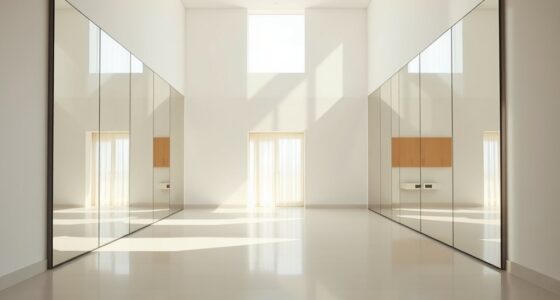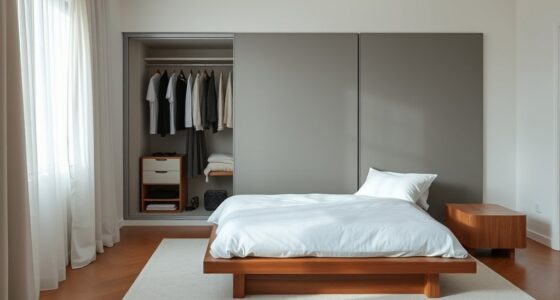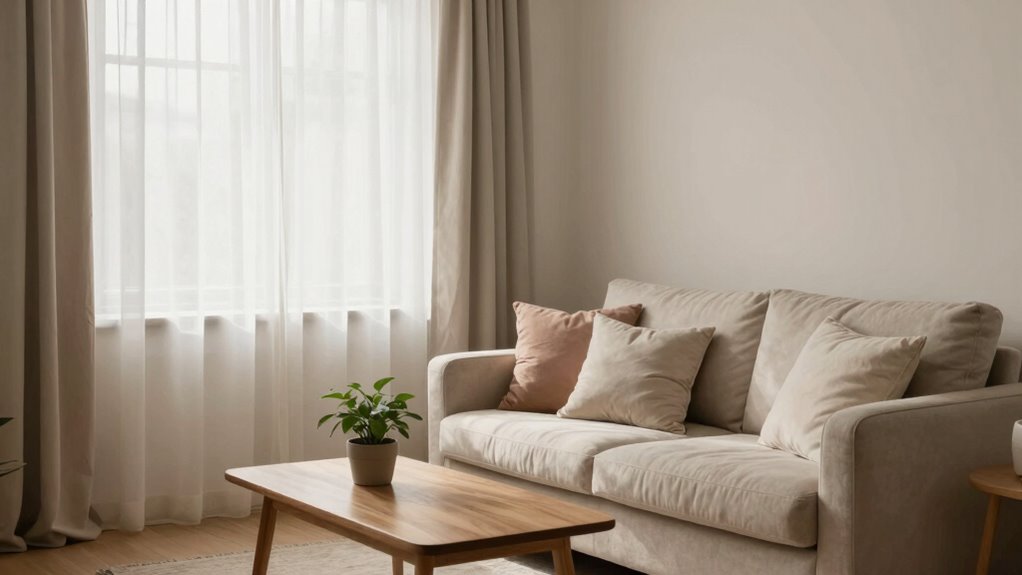

Choosing decor that quietly lowers visual stress involves selecting a simple, clutter-free space with coordinated, calming colors. Opt for soft, diffused lighting and avoid harsh contrasts or overly bright fixtures. Incorporate warm tones and harmonious decor elements to create a peaceful atmosphere. Reducing visual chaos and focusing on gentle, cohesive design helps promote relaxation and focus. If you want to uncover more ways to craft tranquility through decor, keep exploring the options that support sensory comfort.
Key Takeaways
- Choose decor with muted, calming color schemes to reduce visual overstimulation.
- Incorporate simple, uncluttered arrangements to minimize visual chaos.
- Use soft, diffuse lighting to create a gentle, relaxing ambiance.
- Coordinate decor elements for visual harmony, preventing sensory discord.
- Avoid high-contrast patterns and busy designs that can increase visual stress.
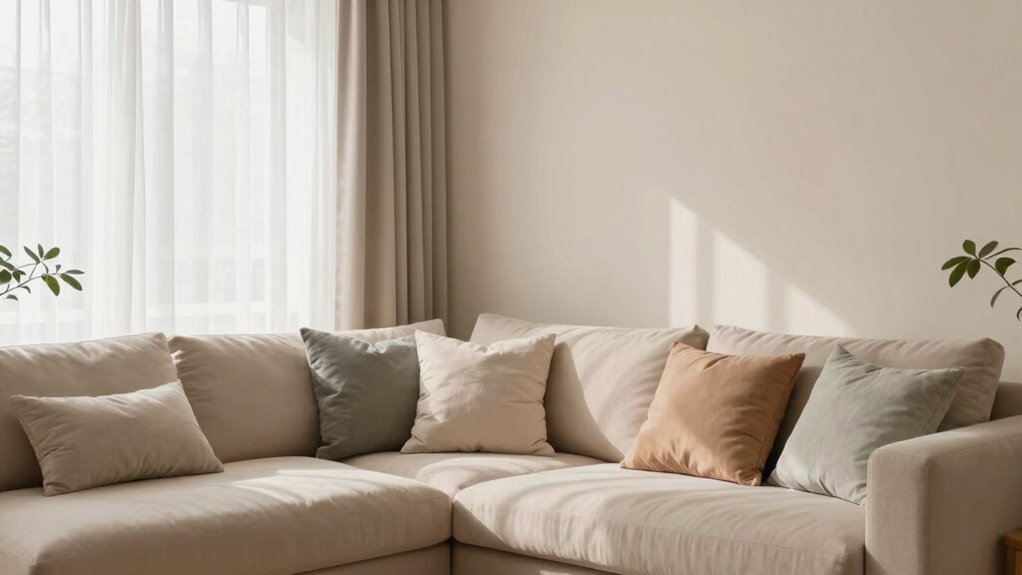
Choosing the right decor can make a significant difference in reducing visual stress, especially if you’re sensitive to busy or overwhelming environments. When your surroundings are cluttered or filled with harsh contrasts, your eyes strain more, making it harder to focus and relax. By intentionally selecting decor that emphasizes calming lighting effects and thoughtful color coordination, you can create a space that soothes your senses rather than overwhelms them. Additionally, incorporating lighting effects that promote a gentle ambiance can help minimize sensory overload and create a more peaceful environment. Lighting effects play a vital role in setting the tone of a room. Bright, direct lighting can be jarring, so opt for softer, diffused light sources instead. Use lamps with warm-colored bulbs or fixtures that scatter light evenly across the space. Dimmable lights are especially helpful because they allow you to adjust brightness based on your mood or activity. Avoid flickering or overly bright fluorescents, which can cause discomfort and increase visual fatigue. Instead, consider ambient lighting that gently fills the room, creating a calm and inviting atmosphere. Proper lighting design can also enhance the overall sense of tranquility by reducing harsh shadows and glare, which can heighten sensitivity and contribute to sensory overload. Incorporating visual harmony through coordinated decor elements can further support a soothing environment. Paying attention to color schemes can also significantly influence the overall calming effect.
calming LED table lamps with dimmable warm light
As an affiliate, we earn on qualifying purchases.
As an affiliate, we earn on qualifying purchases.
Frequently Asked Questions
Can Color Alone Reduce Visual Stress Effectively?
Yes, color alone can effectively reduce visual stress by leveraging color psychology and promoting mood enhancement. When you choose calming hues like soft blues or gentle greens, you create an environment that soothes your eyes and calms your mind. These colors help decrease visual fatigue and anxiety, making spaces more comfortable. By intentionally selecting colors that foster relaxation, you actively support your well-being and reduce visual stress naturally.
Are There Specific Textures Recommended for Calming Decor?
You should opt for textured walls and soft textiles to create a calming environment. Textured walls with gentle patterns or matte finishes reduce glare and visual noise, easing stress. Soft textiles like plush cushions, cozy throws, and smooth curtains add tactile comfort and warmth, promoting relaxation. Combining these elements helps your space feel soothing, minimizes sensory overload, and supports visual comfort, making it ideal for calming decor.
How Quickly Can Decor Changes Impact Visual Comfort?
You can notice decor changes impacting visual comfort fairly quickly, often within days or weeks. Choosing decor that’s durable guarantees your calming updates last, while budget-friendly options let you experiment without stress. When you incorporate soft, muted colors and simple textures, your eyes relax faster. Small updates like new curtains, wall art, or rugs can create a more soothing environment promptly, making a noticeable difference in your visual stress levels.
Does Lighting Influence the Effectiveness of Decor Choices?
Lighting greatly influences how decor choices affect your visual comfort. Ambient shadows can create uneven lighting that strains your eyes, while natural illumination helps highlight colors and textures softly, reducing stress. When your decor complements natural light, it enhances visual clarity and minimizes discomfort. So, you should consider how ambient shadows and natural illumination interact with your decor, optimizing the overall environment to promote calm and reduce visual stress.
Can Decor Modifications Benefit All Types of Visual Sensitivities?
Decor modifications can benefit all types of visual sensitivities by creating calming decor aesthetics and supporting sensory integration. You can choose soft colors, minimize clutter, and use gentle lighting to reduce overstimulation. These changes help everyone feel more comfortable, enhancing focus and reducing stress. By prioritizing visual harmony and sensory-friendly elements, you cater to a diverse range of sensitivities, making your space more inclusive and soothing for all.
Conclusion
Choosing calming decor can considerably reduce visual stress, helping you feel more at ease in your space. Did you know that over 60% of people report feeling calmer with softer, neutral tones around them? By intentionally selecting soothing colors and simple designs, you create an environment that promotes relaxation and focus. Small decor choices have a powerful impact—so next time you decorate, think quietly and intentionally to nurture your mental well-being.