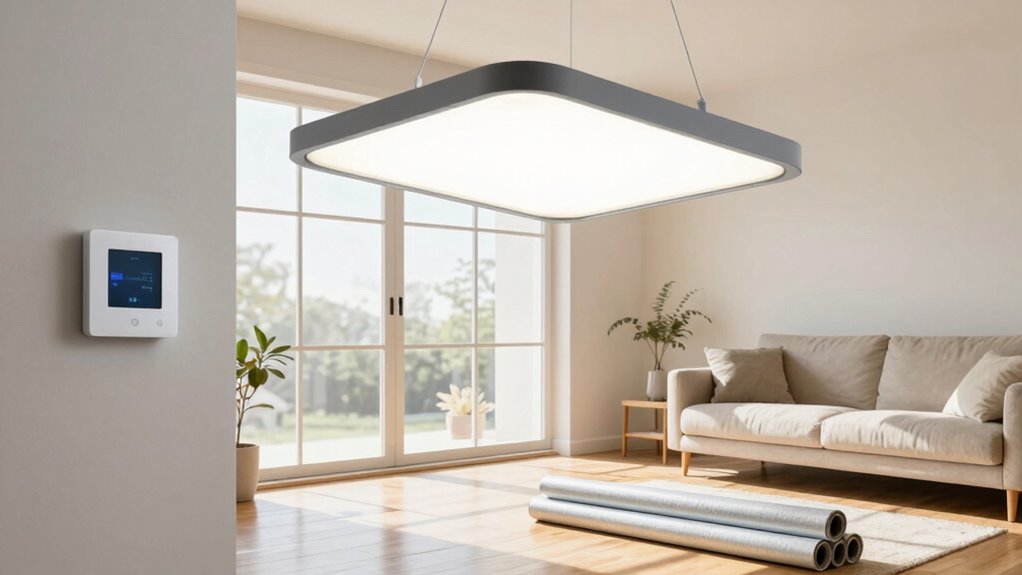

To build a more efficient home step-by-step, start with small, cost-effective upgrades like improving insulation or sealing leaks, which save money and reduce environmental impact over time. Add smart technology, such as thermostats, to optimize heating and cooling. Consider installing solar panels gradually, taking advantage of incentives and expanding as your budget allows. Focus on continuous improvements that enhance energy management and sustainability. Keep exploring more ideas to maximize your home’s efficiency and long-term savings.
Key Takeaways
- Prioritize small, cost-effective upgrades that gradually improve home efficiency and reduce environmental impact.
- Install a smart thermostat to optimize heating and cooling, saving energy and increasing comfort.
- Implement solar panels gradually, starting with a small system to lower utility bills and increase sustainability.
- Combine renewable energy sources with energy management upgrades for maximum efficiency gains.
- Plan upgrades over time to avoid large upfront costs while steadily enhancing overall home sustainability.
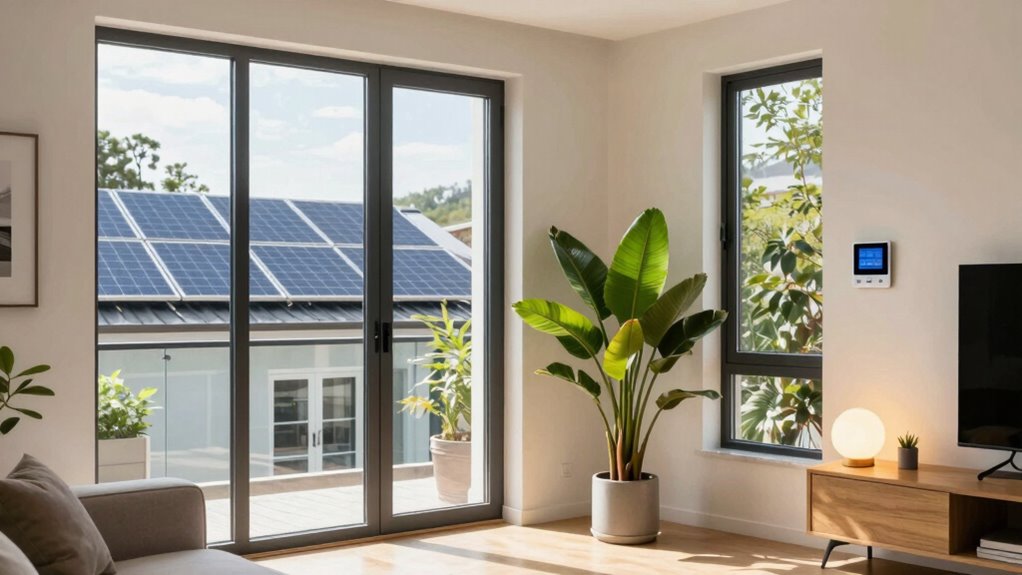
Making your home more efficient doesn’t have to happen all at once. Small, strategic upgrades can add up over time, saving you money and reducing your environmental impact. One of the most effective first steps is investing in a smart thermostat. Unlike traditional thermostats, a smart thermostat learns your schedule and adjusts the temperature accordingly, ensuring your home isn’t wasting energy when you’re not there or during the night. Installing one is straightforward and can lead to considerable savings on your heating and cooling bills. Plus, many models allow remote control via your smartphone, giving you the convenience to tweak your home’s temperature from anywhere. Over time, you’ll notice the comfort level improves while your energy consumption drops, making it a smart investment. Proper home energy management is essential for maximizing efficiency and savings.
Another impactful upgrade is installing solar panels. While the upfront cost might seem intimidating, the long-term benefits are substantial. Solar panels harness sunlight to generate electricity, cutting your reliance on grid power and reducing your utility bills. Depending on your location and home’s size, solar panels can produce enough energy to cover a significant portion of your household needs. This not only leads to direct savings but also helps you reduce your carbon footprint. Installing solar panels can be done in stages—start with a small system that offsets your most energy-intensive appliances, then expand over time as your budget allows. Many areas also offer tax incentives or rebates that can make the transition more affordable. Additionally, solar energy can increase your home’s value and appeal to eco-conscious buyers. Incorporating renewable energy sources like solar can further enhance your home’s efficiency and sustainability. Investing in energy-efficient upgrades can also compound the benefits and accelerate your savings.
As an affiliate, we earn on qualifying purchases.
Frequently Asked Questions
What Is the Most Cost-Effective Upgrade for Energy Efficiency?
The most cost-effective upgrade for energy efficiency is improving insulation and replacing windows. Insulation improvements help keep warm or cool air inside, reducing energy costs. Window replacements with energy-efficient models minimize drafts and heat transfer. By focusing on these upgrades first, you considerably lower your home’s energy consumption, saving money long-term. These upgrades offer quick returns on investment and make your home more comfortable year-round.
How Long Does Each Upgrade Typically Take?
The duration of each upgrade varies, but DIY projects like sealing windows or installing LED lighting typically take a few hours to a weekend. Larger upgrades, such as insulation or solar panel installation, might take several days or weeks. You should plan your budget carefully, considering the complexity of each task. Good budget planning helps you allocate time wisely, ensuring you don’t rush essential upgrades or overspend on less impactful improvements.
Are There Government Incentives for Home Efficiency Improvements?
Think of government incentives like hidden treasures; you just need to know where to look. Yes, there are government rebates and tax credits available for home efficiency improvements. These incentives can substantially offset costs, making upgrades more affordable. For instance, programs like the Energy Star rebate or federal tax credits for solar panels reward your efforts to save energy, turning your home into a more efficient, cost-saving haven over time.
How Do I Prioritize Which Upgrades to Do First?
Start by evaluating your home’s biggest energy drains, like poor insulation or outdated HVAC systems. Prioritize DIY projects that save money and improve efficiency first, such as sealing leaks or installing programmable thermostats. Use budget planning to allocate funds wisely, focusing on upgrades with the highest return on investment. This approach guarantees you make meaningful improvements gradually, building toward a more efficient home without overwhelming your finances.
Can I Upgrade My Home’s Efficiency Without Professional Help?
Yes, you can upgrade your home’s efficiency without professional help. Did you know that simple DIY tips can save you up to 10% on energy bills? Focus on budget planning for cost-effective upgrades like sealing leaks, adding insulation, or installing programmable thermostats. With patience and research, you can make impactful changes yourself, reducing costs and increasing comfort without needing a licensed pro.
Conclusion
Just like tending to a garden, building a more efficient home happens one thoughtful upgrade at a time. Each step you take nurtures your space, helping it flourish into a sanctuary that’s both comfortable and eco-friendly. Remember, patience and persistence are your best tools—small changes accumulate into a thriving, sustainable haven. Keep planting those upgrades, and watch your home blossom into a masterpiece of energy efficiency, one thoughtful choice at a time.