
To guarantee safe heating and cooling during extreme weather, schedule regular professional inspections and maintenance at least once a year. Check filters, burners, and electrical connections regularly, replacing filters as needed to prevent system strain. Keep gas appliances free of debris and seek expert help for any issues beyond your skill level. Proper upkeep reduces risks like fires or leaks and keeps your system running efficiently. If you want to learn more, there’s important safety advice you shouldn’t miss.
Key Takeaways
- Schedule annual professional inspections to ensure heating and cooling systems operate safely before extreme weather hits.
- Regularly replace or clean filters to prevent system strain and maintain proper airflow during temperature fluctuations.
- Check gas appliances for leaks and proper pilot light functioning to reduce fire and leak risks.
- Keep appliances clean and debris-free, inspecting electrical connections and burners regularly for safe operation.
- Use noise reduction technology and follow safety protocols to ensure reliable, safe heating and cooling during extreme conditions.
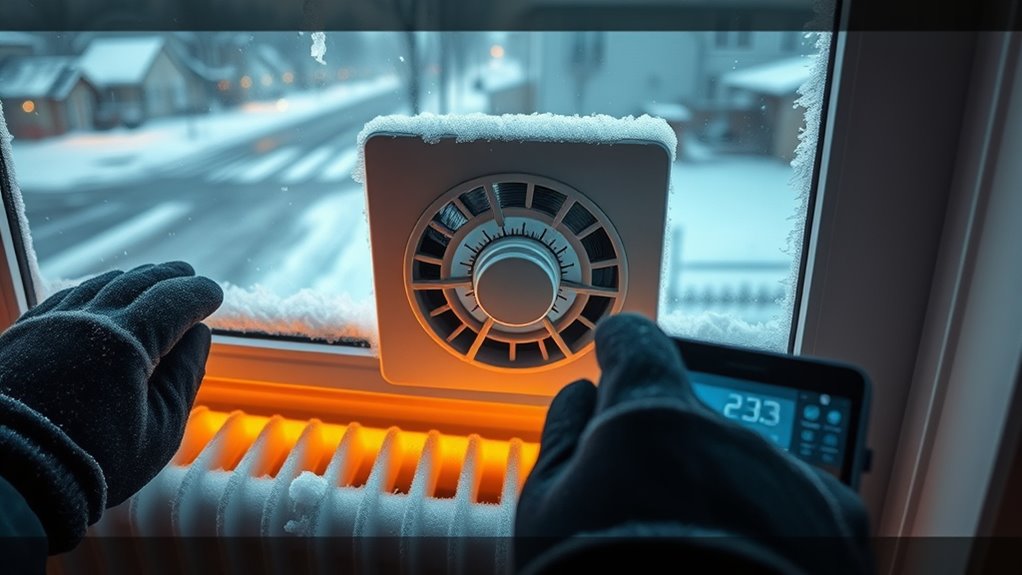
Next, prioritize appliance maintenance. Whether you’re using a central furnace, a heat pump, or air conditioning units, regular inspections and servicing are key to safety and efficiency. Schedule professional checkups at least once a year, especially before extreme weather hits. These technicians will examine filters, burners, electrical connections, and safety controls, ensuring everything operates correctly and safely. Replace filters regularly—clogged filters reduce airflow, strain the system, and can cause overheating or system failure. For gas appliances, ensure that pilot lights are functioning and that no leaks are present. Keep all appliances clean and free of dust or debris that could cause malfunctions. Also, follow manufacturer instructions for upkeep, and never attempt repairs beyond your skill level. Faulty or poorly maintained appliances not only waste energy but pose serious safety risks, from electrical fires to gas leaks. Additionally, utilizing noise reduction technology in heat pumps can help maintain a peaceful environment while ensuring safe operation.
Frequently Asked Questions
How Often Should I Schedule Professional HVAC Inspections During Extreme Weather?
You should schedule professional HVAC maintenance and inspections at least twice a year, especially during extreme weather. Inspection frequency is vital to guarantee your system functions efficiently and safely. In hot summers or cold winters, consider more frequent checkups—every 3 to 4 months—to prevent breakdowns. Regular inspections help identify issues early, improve energy efficiency, and keep your heating and cooling systems running smoothly during extreme conditions.
What Are the Best Portable Heating Options for Emergencies?
Imagine wrapping yourself in a warm blanket on a chilly night—that’s how reliable portable heaters can feel in an emergency. Opt for electric space heaters or propane portable heaters as your emergency heat sources; they quickly warm a room and are easy to move. Choose models with tip-over and overheat protection for safety. Keep one nearby, ready to activate when the weather turns harsh, ensuring you stay safe and warm.
How Can I Prevent Carbon Monoxide Poisoning With Heating Devices?
You should install carbon monoxide detectors near your heating devices and throughout your home to alert you of dangerous levels. Always follow heater safety tips, such as keeping space heaters away from flammable objects and never using unvented or faulty heaters indoors. Regularly inspect and maintain your heating devices, and never run a generator or grill inside. These precautions help prevent carbon monoxide poisoning effectively.
Are There Specific Safety Tips for Using Window Air Conditioning Units?
To keep safe using a window air conditioning unit, prioritize proper unit installation to prevent accidents. Guarantee the window is sturdy and the unit is securely anchored to avoid falls. Regularly check for window safety by inspecting the frame and seals, and keep the area clear of obstructions. Follow manufacturer instructions carefully, and avoid blocking airflow vents. These steps help maintain safety and efficiency during cooling.
How Do I Maintain Indoor Air Quality During Heating and Cooling?
Think of indoor air as a gentle stream flowing through your home. To keep it pure, use air filtration systems that act like filters catching debris and allergens. Regularly change filters and ventilate rooms to refresh the flow. Keep humidity levels balanced to prevent mold. By maintaining this flow, you make certain of healthier indoor air, making your space feel fresh and safe during heating and cooling seasons.
Conclusion
As you navigate extreme weather, remember that comfort isn’t just about staying warm or cool; it’s about safety. While a cozy heater feels like a blessing in the cold, an overheated space can be dangerous. Conversely, a cool sanctuary in a heatwave offers relief, but neglecting proper ventilation can pose health risks. Balancing these elements guarantees your safety isn’t sacrificed for comfort, proving that sometimes, the most important thing is knowing when to turn the heat down or up.