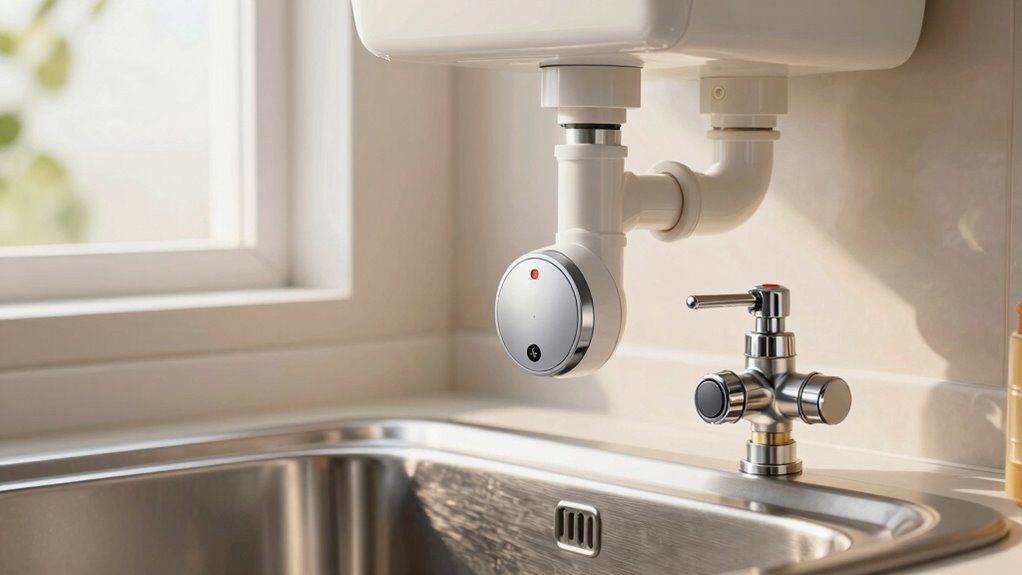

Using leak sensors paired with auto shutoff systems is the best way to prevent water damage. Leak sensors detect moisture early near sinks, pipes, or water heaters and send alerts to your phone. The auto shutoff instantly stops the water flow, preventing flooding and costly repairs. Regularly testing and maintaining these systems keeps them effective. Want to learn how to choose and maintain the right setup for your home? Keep exploring for expert tips.

Get decor and gifts delivered free with Prime
- Fast, free delivery on millions of items
- Prime Video, Amazon Music and more included
- Member-only deals all year
Key Takeaways
- Combining leak sensors with auto shutoff systems provides immediate detection and response, minimizing water damage.
- Regular testing and maintenance ensure reliable operation of both sensors and shutoff mechanisms.
- Smart home integration allows centralized control and instant alerts for enhanced water damage prevention.
- Auto shutoff systems automatically cut water supply when leaks are detected, ideal for when homeowners are away.
- Choosing systems with easy setup, battery management, and compatibility maximizes long-term protection.
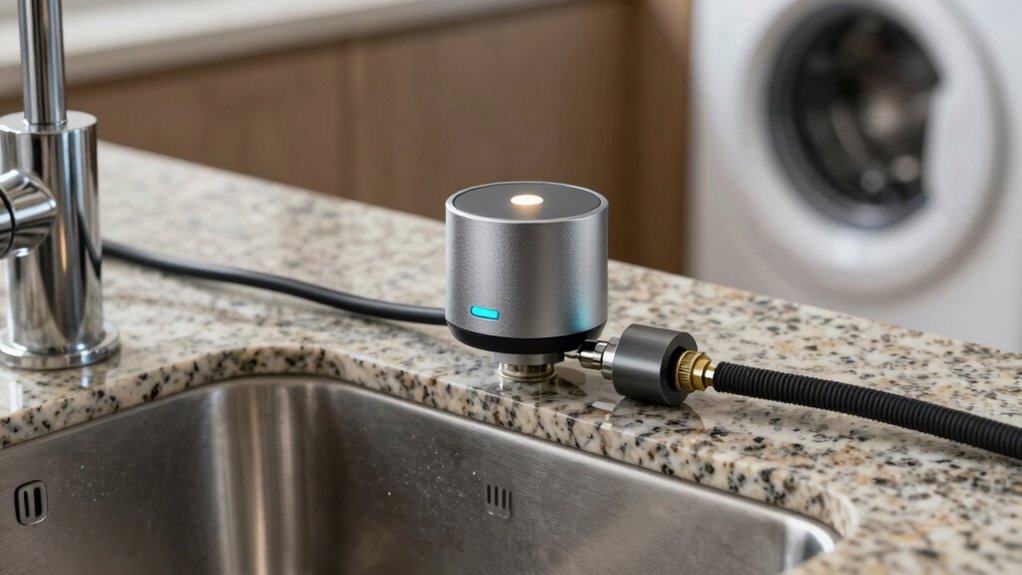
Have you ever worried about hidden leaks causing costly water damage? It’s a common concern, especially since leaks often develop silently and can cause extensive destruction before you even realize there’s a problem. That’s where leak sensors and auto shutoff systems come into play. They form a powerful duo that helps protect your home by detecting leaks early and stopping the flow of water before damage occurs. If you’re considering increasing your home’s defenses, understanding how these systems work together is vital.
Leak sensors are small devices that you place near potential trouble spots—under sinks, behind appliances, near water heaters, or along pipes. When they detect moisture, they send an immediate alert, often through your smartphone or a connected home hub. This early warning gives you a chance to address minor issues before they escalate. Many modern leak sensors now feature smart home integration, which means you can monitor your entire system from a single app or voice command. This seamless connectivity makes it easier to keep tabs on your home’s plumbing, even when you’re away. Additionally, some sensors can be customized to trigger other smart devices, enhancing your overall home safety.
Adding an auto shutoff feature takes leak protection to the next level. Once a sensor detects water, the system automatically shuts off the main water supply, preventing further leakage. This automation is especially helpful if you’re not home or unable to respond quickly. It’s a proactive approach that minimizes water damage and reduces repair costs. You won’t need to worry about waking up to a flooded basement or discovering a burst pipe after the fact. Instead, the auto shutoff acts instantly, stopping the flow of water in real time. Incorporating smart home technology can further improve the responsiveness of these systems, allowing for even more reliable protection.
To maximize these benefits, proper maintenance tips are essential. Regularly test your leak sensors to verify they’re working correctly, and replace batteries as needed. Keep the sensors clean and free from dust or debris that could interfere with their operation. Also, ensure your smart home system is up to date, so integration remains seamless. Connecting these devices with other smart home features, like automated alerts or water valves, enhances their effectiveness and simplifies management. Understanding the importance of home maintenance can help you prevent issues before they happen. Furthermore, familiarizing yourself with common water damage prevention strategies can increase your home’s resilience.
Investing in leak sensors and auto shutoff systems offers peace of mind, but it’s your ongoing maintenance that keeps everything functioning smoothly. When integrated with your smart home setup, these systems become a powerful line of defense against water damage. They’re easy to set up, require minimal upkeep, and provide an invaluable layer of protection that saves you time, money, and stress in the long run.
Products Worth Considering

Samsung 48-Inch S90H OLED 4K Smart TV (2026)

Samsung 42-Inch S90H OLED 4K Smart TV Bundle

LG C2 Series 65-Inch OLED evo 4K Smart TV (OLED65C2PUA, 2022)
As an affiliate, we earn on qualifying purchases.
Frequently Asked Questions
How Do Leak Sensors Detect Water Leaks Accurately?
You can guarantee leak sensors detect water leaks accurately by placing them strategically in high-risk areas like under sinks or near appliances. Their detection technology, often using moisture-sensitive probes or electronic sensors, quickly identifies even small amounts of water. Proper sensor placement maximizes coverage, and advanced detection tech minimizes false alarms, giving you peace of mind and swift response to potential leaks before they cause significant damage.
Can Auto Shutoff Systems Prevent All Types of Water Damage?
Think of auto shutoff systems as a vigilant lighthouse guiding you through stormy waters. While they excel at flood prevention, they can’t prevent all water damage, especially from hidden leaks or slow drips. Proper sensor calibration is key to maximizing their effectiveness. You need to combine these systems with regular inspections to catch issues early, ensuring your home stays safe from unpredictable water threats.
Are Leak Sensors Compatible With Smart Home Systems?
Yes, leak sensors are compatible with smart home systems, allowing you to integrate them seamlessly for smart alerts and automation. However, you might face compatibility issues depending on the brand and model of your smart home hub or platform. Always check the sensor’s specifications and supported integrations before purchasing to guarantee smooth operation and effective water damage prevention. Proper compatibility makes managing leaks easier and more efficient.
What Is the Typical Maintenance Required for Leak Sensors?
You need to regularly check your leak sensors’ sensor placement to guarantee they’re correctly positioned where leaks might occur. Battery maintenance is also essential; replace or recharge batteries as needed to keep sensors operational. Keep the sensors clean and free of dust or debris, and test them periodically to confirm they detect water accurately. Proper maintenance ensures your leak sensors stay reliable, helping prevent water damage effectively.
How Long Does It Take for an Auto Shutoff to Activate?
Once water is detected, the auto shutoff typically activates within seconds to a minute, depending on your water sensor placement and system setup. To guarantee quick response, place water sensors strategically near appliances and potential leak points. This quick activation is vital for effective flood prevention strategies, minimizing water damage. Regular maintenance and testing of your sensors can also help ensure they respond promptly when needed.
Conclusion
When leak sensors and auto shutoff work together, it feels like a coincidence that your home stays dry and safe, almost like they’re guarding it behind the scenes. You might not think about water damage until it’s too late, but with this powerful duo, you’re always one step ahead. It’s a reminder that sometimes, the best protection happens when technology and timing align perfectly—saving you from unexpected surprises and peace of mind you never knew you needed.