To build a photo preservation station at home, choose a clean, well-lit space free from dust, humidity, and direct sunlight. Gather archival storage supplies like acid-free boxes, photo sleeves, and folders, and set up digital tools such as a high-resolution scanner and external drives for backups. Keep the area climate-controlled and well-ventilated to prevent mold, and label everything clearly. Proper handling and routine maintenance are key—continue exploring for detailed tips to create a lasting preservation system.

Get decor and gifts delivered free with Prime
- Fast, free delivery on millions of items
- Prime Video, Amazon Music and more included
- Member-only deals all year
Key Takeaways
- Select a clean, well-ventilated, and climate-controlled area free from dust and direct sunlight.
- Gather archival-grade storage materials like acid-free boxes, sleeves, and folders.
- Set up a dedicated work surface with good lighting for handling and digitizing photos.
- Incorporate digital tools such as a high-resolution scanner and backup storage solutions.
- Establish routines for inspecting, cleaning, and updating both physical and digital collections.
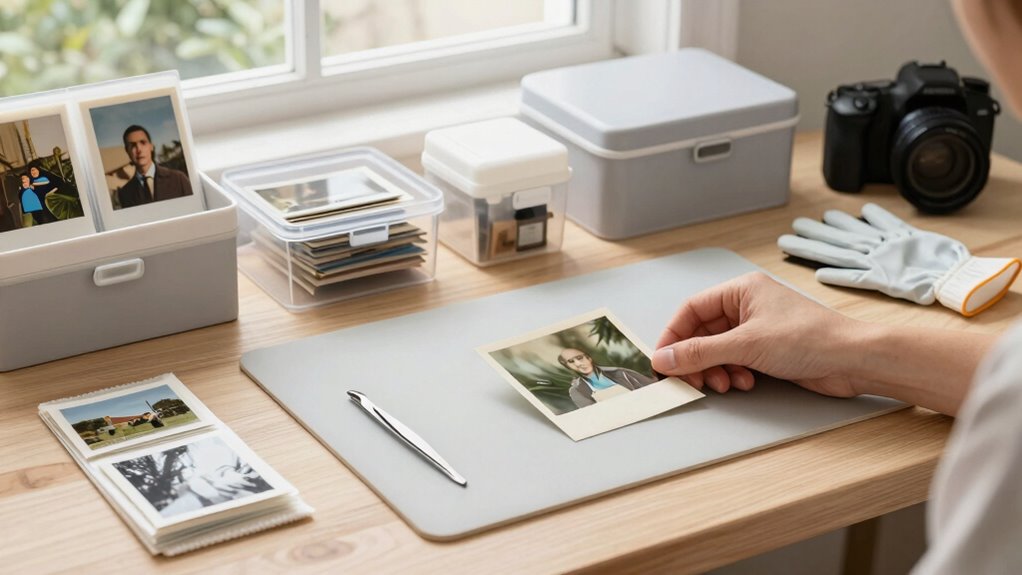
Creating a dedicated photo preservation station at home is an indispensable step to protect your treasured memories from deterioration. This space allows you to properly handle, organize, and safeguard your photos with minimal risk of damage over time. To start, you’ll want a clean, well-lit area that’s free from dust, humidity, and direct sunlight. Once you’ve chosen the spot, gather the necessary supplies, such as acid-free storage boxes, photo sleeves, and archival quality folders. These materials are vital because they prevent acids from damaging your photos, helping them last for generations.
Create a dedicated, well-lit space with acid-free supplies to protect and organize your treasured photos.
One of the most effective ways to preserve your photos is by digital scanning. By digitizing your images, you create a backup that’s immune to physical deterioration, such as fading, tearing, or discoloration. Use a high-resolution scanner to capture every detail, and save the files in multiple locations—cloud storage, external drives, or both—to guarantee your memories are safe even if something happens to your physical copies. Digital scanning also makes it easier to share photos with family and friends without risking damage to the original prints.
Next, organize your physical photos using acid-free storage options. Acid-free boxes, envelopes, and sleeves prevent the acids in traditional paper and cardboard from seeping into your photos, which can cause yellowing and brittleness over time. Store your prints upright or flat, depending on their size, and keep them in a cool, dry environment. Avoid attics or basements, where temperature and humidity fluctuate, accelerating deterioration. Label each storage container clearly so you can easily locate specific photos later, reducing unnecessary handling that might cause tears or creases. Proper storage techniques are essential for maintaining the integrity of your collection over the years. Additionally, ensuring that your storage area has good ventilation can help prevent mold and mildew growth. Regularly air out your storage space and check for signs of excess moisture to further protect your collection. Maintaining a stable environment with climate control can significantly extend the lifespan of your photographs.
In your preservation station, set aside a dedicated workspace for handling your photos with clean hands or cotton gloves. Avoid touching the emulsion side of photographs to prevent fingerprints and oils from causing damage. Incorporating proper handling procedures can minimize physical stress on your prints and keep them in pristine condition. Regularly check your stored photos for signs of deterioration, and update your digital backups whenever you add new images. Incorporating proper storage techniques and maintaining your collection can extend the lifespan of your photos significantly, ensuring your memories endure for generations. A routine maintenance schedule will keep your collection in good shape and allow you to catch issues early.
Products Worth Considering

Philips Hue Secure Wired Video Doorbell, 2K, Black

Samsung 42-Inch S90H OLED 4K Smart TV Bundle

Ring Battery Doorbell Plus (2nd Gen) and Indoor Cam Plus Bundle, Nickel Silver and White
As an affiliate, we earn on qualifying purchases.
Frequently Asked Questions
What Is the Ideal Temperature for a Photo Preservation Station?
You should keep your photo preservation station at a temperature between 65-70°F, ensuring proper temperature regulation. Humidity control is equally important, ideally maintaining levels around 30-40% to prevent mold and deterioration. Regularly monitor these conditions to keep your photos safe. Consistent temperature and humidity control help preserve your photos’ quality and longevity, making your preservation station effective and reliable.
How Often Should I Clean My Preservation Supplies?
Did you know that dust and dirt can degrade photos in just a few months? You should clean your preservation supplies every three to six months to maintain ideal conditions. Regular cleaning routines prevent mold and dust buildup, which can damage your photos. Keep your supplies organized to make cleaning easier and more effective. Staying consistent with these routines helps preserve your photos for decades to come, ensuring they stay in pristine condition.
Can I Use Regular Household Items for Photo Storage?
You shouldn’t use regular household items for photo storage because they often contain acids or chemicals that can damage your photos over time. Instead, opt for archival materials designed for preservation, which are acid-free and help prevent deterioration. Keep your photos in a cool, dark place to minimize light exposure. Using proper archival storage guarantees your photos stay vibrant and intact for years to come.
What Are Common Mistakes to Avoid During Setup?
Avoid common mistakes like neglecting proper photo labeling and choosing the wrong storage containers. Guarantee your storage containers are acid-free and archival quality to prevent damage. Label each photo clearly with dates and descriptions to keep your collection organized. Don’t reuse old boxes that aren’t archival-safe, and avoid direct sunlight or high humidity areas. Proper setup helps preserve your photos and makes future access easier.
How Do I Handle Fragile or Damaged Photos Safely?
Handling fragile or damaged photos is like walking on thin ice—you must do it carefully. Wear cotton gloves to prevent oils from your skin from causing further harm, and use gentle handling techniques to avoid additional damage. Place photos in acid-free storage materials to support their preservation. Support weak areas with stiff, acid-free materials, and always handle photos by their edges to prevent further deterioration.
Conclusion
Creating a photo preservation station at home isn’t just about safeguarding memories — it’s about preserving history. Some believe that keeping photos in alkaline environments prevents deterioration, but recent studies suggest that acid-free storage might be just as effective. By combining proper materials with a dedicated space, you actively protect your cherished images. So, yes, with a little effort, you can guarantee your photos stay vibrant for generations, proving that thoughtful preservation truly makes a difference.